About this episode
Michele Morley sits down with Nicea DeGering, longtime host and anchor of Good Things Utah, for a candid conversation about comparison, reinvention, and what it really means to find purpose in midlife. After more than three decades in broadcasting, DeGering opens up about the pressure women put on themselves to have it all figured out, and why she believes peace, not perfection, is the real marker of success.
Why Comparison Steals Your Confidence
DeGering admits she still falls into the comparison trap, even after decades in the public eye. Scrolling social media, she finds herself thinking someone else is traveling, starting a new job, or moving effortlessly into the next phase of life, while she wonders what she is doing wrong. She points out that this habit of comparing your life to a curated highlight reel is nearly universal, and that the fix is not to eliminate the feeling but to reframe it. Instead of asking what part of yourself needs fixing, she encourages asking how you will tackle the challenge in front of you.
Like everyone else, I think I often become a victim of constant comparison. I think I look at people who, quote, have it all together. I look at people who’ve seamlessly moved on to the next thing in their life and the next thing. And you think, what am I doing wrong? What’s wrong with me? What part of me needs to be fixed? Rather than, this is a challenge, how will I tackle it?
Rediscovering Purpose in Midlife
One of the most honest parts of the conversation centers on becoming an empty nester. DeGering describes the disorientation of watching her identity as a mother shift almost overnight, and how that loss forced her to ask whether she still had something to offer. She admits she has struggled with feeling relevant as she gets older, and that this struggle is not unique to her. Her advice is to stop searching for one single right answer and instead let your next chapter come to you organically. She notes that she feels more at peace at 53 than she did at 50, simply because she stopped fixating on what was supposed to come next.
Handling Social Media and Public Criticism
DeGering also talks about the early days of social media, when instant feedback about her hair, her parenting, and her intelligence sent her spinning. She describes trying to become whoever critics wanted her to be, quoting the New York Times to seem smarter, then softening her tone when accused of being out of touch. It took her until her 40s to accept that she cannot be everyone’s taste, and that being authentically herself is enough, even if it is not enough for everyone.
What Makes Women Successful and Resilient
Having interviewed countless women over her career, DeGering says the common thread among the most inspiring ones is not perfection but persistence. She describes being consistently moved by everyday women who give back to their communities, get back up after setbacks, and look for ways to improve their sphere of influence rather than trying to change the entire world. She credits her years covering ordinary people doing extraordinary things, from local charity leaders to Sundance Film Festival guests, with reshaping her own definition of impact.
Parenting, Career, and Redefining Balance
DeGering reflects on parenting her now adult daughters differently than she was raised, only to realize her own mother did her best with what she knew. She shares how covering the Elizabeth Smart case while pregnant with her first daughter changed how she approached journalism, shifting her focus from getting the facts fast to understanding the human story behind them. On the question of balance, she recalls interviewing Brooke Burke, who told her plainly that no one is actually balancing everything. That honesty gave DeGering permission to stop chasing an impossible standard and instead measure success by peace rather than by doing it all.
Action Steps
- Replace comparison with curiosity by asking how you will tackle a challenge instead of what is wrong with you.
- Let your next purpose or career chapter unfold gradually instead of forcing an immediate answer.
- Identify one unique strength only you bring into a room, and use it as your anchor for confidence.
- Talk openly with the people in your life about comparison culture, especially younger family members.
- Redefine success for your current decade instead of measuring yourself against an earlier version of your goals.
DeGering closes with a reminder that being different is not a flaw to fix but a strength to own. Whether you are navigating an empty nest, a career pivot, or the pressure to have it all figured out, her story offers a grounded reminder that peace, self-acceptance, and small acts of purpose matter more than keeping up with everyone else.
About the guest
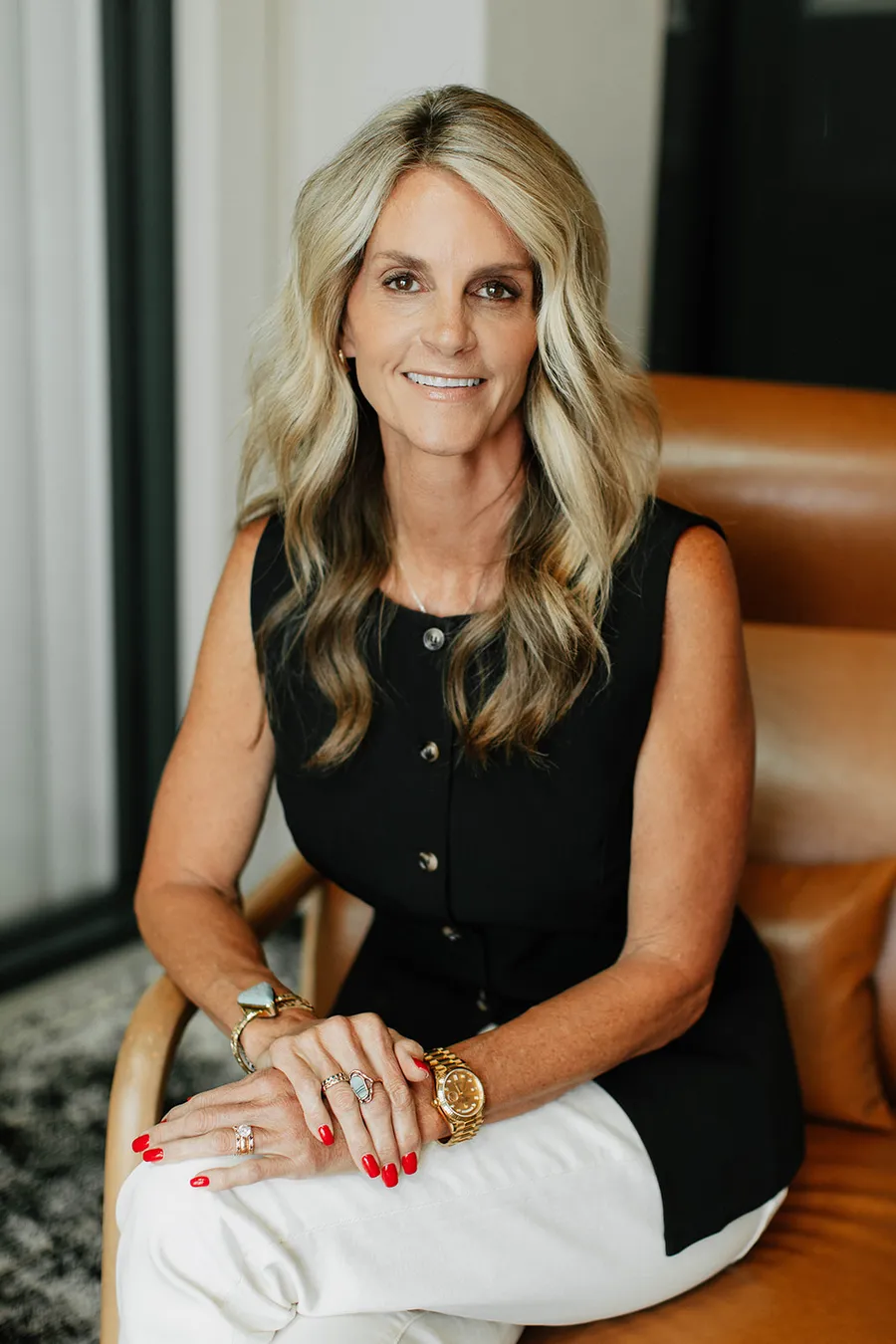
Nicea DeGering
An Emmy-award-winning television anchor, host, and media personality best known for her long-standing role on Good Things Utah, the lifestyle and morning show on ABC4 Utah. She began her broadcast career after graduating with a degree in Broadcast Journalism from Brigham Young University, quickly rising to become the Crime Reporter at ABC4 at age 23, a rare achievement for such a young journalist. Over more than 25 years on Utah television, Nicea has covered everything from breaking news like the 2002 Winter Olympics and the search for Elizabeth Smart to lifestyle interviews with high-profile figures and everyday community members alike.
Read the full transcript
This automated transcript has been lightly formatted for readability and may contain errors.
Welcome to Yes Women’s Network podcast. We are here with Nicea DeGering. Perfect. Perfectly done on a really hard I know. And as many of you know, she is the host and anchor of award-winning show, Good Things Utah.
You’ve been in television for over 30 years. It’s just hard to believe. I can’t even wrap my mind around that. Just meeting you now, seeing you in person, it’s amazing. I blinked and decades went by.
And when you’re in it, you can’t see it. And then you look back and you’re like, wait a second. How did time go? Where did time go? Did it flip?
It did. I was that girl walking into the TV station that everyone’s like, oh, there’s that blonde girl from BYU who thinks she can be on TV. And now I see young girls in their 20s walking the station. And I’m like, I’m the one that now says I’ve been doing this a long time. Let me show you how.
Wow. Yeah. And I don’t know where that flipped, but it did. Yeah. It did.
Yeah. So how long do you think you’ll be in television? Oh my God, you’re asking me the question that I’ve asked myself the last five years. Oh, like I’ve laid awake at night. I think that all of us have different chapters.
Sure. And different lives. And turning the page on something I really love is one of the hardest things I’ve ever had to consider. I bet. Television in 2026 is not television in 1996 when I started.
It is we used to be the entire pie of where you got your information yeah and now we’re a slice and that’s that’s the reality of so many careers that have changed so much in the last several decades but tv and broadcasting definitely and i will have another chapter and i will find something i love and um i’ll know when it’s the right time i think we all put a lot of pressure on ourselves to what are we doing next? Now what? And I’ve realized that my intuition and my peace tell me not yet. Not yet. This is something you love.
And when it’s time to turn the page, I will. I will. I will know. Yeah. That’s so exciting, though, that you have the confidence and your ability to recognize that.
So how do you feel? I mean, for a woman who may be struggling with that ability or to make those adjustments when everything else seems like, how do I do it all? So how do you get the confidence to make those adjustments and make sure that, because we have other people we’re thinking of too. Some women do. They still have young people.
So how do you make that adjustment to, okay, this is what I’m going to do. And these are the things that we do to make sure that happens. Did that make sense? Yes. Like everyone else, I think I often become a victim of constant comparison.
I think I look at people who, quote, have it all together. I look at people who’ve seamlessly moved on to the next thing in their life and the next thing. And you think, what am I doing wrong? What’s wrong with me? What part of me needs to be fixed?
Rather than, this is a challenge. How will I tackle it? And what’s best for me isn’t best for you. And so they’re definitely things I can share with you but everyone goes through this journey and it’s crazy that we’re like you know you do at the beginning of your life what am I gonna do with my life and you kind of do it midlife too yeah you get right back to that same spot yeah becoming an empty nester was such a like what just happened it just what just happened to me my purpose is gone yeah I mean my purpose was tv and then it was those girls and now they’re gone and finding your next purpose and finding what, getting older, am I still relevant?
Do I have something to say? Yeah. I think that I’ve struggled with that just like everyone else. You really have. I absolutely have.
I find that interesting because you do have a voice that, you know, people hear you, they see you. And for a lot of women, they kind of find themselves stuck because they’ve been, like you’re saying, they’ve been a mom or they’ve been, you know, providing in other ways. But it just seems like for some people to make that next step is a challenge because they don’t have that confidence in their ability to take the step. So for somebody like you to actually acknowledge, oh, no, this is a challenge even for me, that I think is reassuring to other women. And I think it’s a challenge, you know, like I said, constant comparison.
We’re on social media to decompress. Does that really decompress you? I mean, you look at it and you’re like, wait, someone’s in Europe. Someone has a new job. Someone has a new boyfriend.
Someone, what am I doing with my life? And I fall into that just as much as everyone else and think, am I doing the right thing? Am I? And then you’re going through menopause. So then you’re awake all night thinking, am I doing the right thing?
Because you’re not sleeping. Go there. Because you’re not sleeping. Kids are gone. You can sleep now.
And you can’t. You actually never will again. So true. Awesome. So true.
So I definitely sit and spin in my thoughts about I was raised with the mantra of we do the right thing in our house. And I think it’s been good for me and it’s been awful because then you want to find this one right thing. And I don’t think there is one right thing for anyone. And I think I’ve had to learn to rely on my intuition and my peace and how I feel rather than how everyone else feels about what I should do next. And I love advice and I ask for it frequently.
I have lots of friends that are my unpaid therapists. But at the end of the day, I’ve realized that only I know what’s best for me. And I think everybody, stop putting so much pressure on yourself and let it organically come to you. I feel more at peace at 53 than I did at 50 because I was so worried about what was next. And now I know.
Now you know. It’ll be okay. Whatever it is, it’ll be okay. So how do you think the media, social media, has impacted your life? Okay, so guess what didn’t exist when I started in TV?
Social media. Barely the internet. You had to call us at the station to tell us you didn’t like our story. And we were like, we didn’t care. We hung up on you.
I never had instant feedback other than maybe I’d run into a viewer who liked my story or I interviewed you and you’re like, thank you for doing. You did a great job. Yeah. I was on Good Things Utah when social media started and all of us in broadcasting thought it was a flash in the pan. Yeah.
It wouldn’t last. It would be fleeting. Suddenly, I, in real time, would hear about my hair, my outfit, my nose, my parenting that I just discussed. And I started spinning in what everyone thought of me. And I remember someone said I was dumb, that I look like a dumb blonde.
And so I started quoting the New York Times on the show. Oh, my word. Because then I looked smart. And then someone said I was out of touch. So I started being more bubbly and talking like I don’t look.
I just grasped at who was I. And I didn’t do that for a week. I did it for years. That social media instant feedback and you say people in TV have thick skins. I think we say that because it’s hard.
You can get used to that, but it never feels good. None of that feels good And so I circled with that for a long time And truly it was one of those moments where I learned to again back to me and rely on actually not good at anyone else I sure given it a try. I’ve tried to be everyone I’m not. The only person I actually can nail is Nisha Degary. That’s it.
And it’s okay if she’s not for everyone. It’s okay. I tell my girls all the time, You can be the juiciest peach on the tree and some people like apples. And that’s okay. And that’s what I had to internalize.
I’m Nisha, and that’s good enough for me, even if it’s not good enough for you. And I would tell you that took me to my 40s, so please figure it out sooner. Because I wish, I wish I felt that assurity in my life sooner than I did. Yeah, that’s so powerful. That’s something that you, as you say that, I’m like, I want everyone to feel that.
Feel it. Find it. You need to find that and somehow be able to reach in deep and know I have value. I know who I am. And I know what I stand for in this.
So that’s beautiful. And if you don’t like it and you don’t comment, it’s okay. It’s okay. And, again, that is not a quick and easy resolution in your mind. It takes some time.
It takes some time to say, I’ve tried to post a swimsuit pic like she did or an outfit pic like she did or how come I’m not getting it? I can’t fathom. My kids have not known any different. This world of constant comparison for them. And if I feel like that at 53, how do they feel like at 21 and 24?
So lots of conversations with them about you and how you feel. And it’s okay if no one agrees with you. Stay true to who you are. Don’t take it to your 40s like your mom did. Do that in your 20s, because I think they can.
I love that. And it’s that open communication that you have, you know, that is invaluable. You know, to be able to have the conversation is so meaningful. Okay, so this is one I, I’ve, I’m so excited about this interview, honestly. But one of the thing that I thought of was you have interviewed countless people and over the years.
So what are the common qualities that you see in women who create meaningful success and lasting? That’s such a great question. And I’m like going over the interviews in my mind. Like I am constantly inspired by women in our state. And it’s been fun to go to Sundance Film Festival.
It’s been fun to go interview people that are going to be on Shark Tank. And it’s fun to go to Disneyland and interview people there. And it’s fun, like anything I’ve done out of state. But I come back to what we do every day on Good Things Utah, which is interview not anyone like that you think is, you know, going to end up with a movie at Sundance, but everyday people doing incredible things. I have had so many days I did not want to be on that show.
I was having an awful day in my personal life. I woke up, no one wakes up chirpy every morning. I don’t. And I thought, how do I do it today? And I sit down with someone who is making a difference in their world, in their community, in their family, in their home, be it with a charitable organization, be it with their child.
I just think there’s so many ways to be inspired if you just look around you. And these women, some of them I interview over and over because they’re helping another charity and another charity and another charity. And the way that this state and the women in this state give back, and of course women in general, but I have this bird’s eye view of the women here. I’m constantly inspired. I’ve never left work a day and thought that was a waste of my time.
I’ve left work and thought I could be better. I could do better. I could do more. Those are the qualities that I think I’m most impressed by. Not giving up.
When you’re down, you get back up. And you’re always looking for ways to give back and make your world, and I’m not saying the world because that’s overwhelming, your sphere of influence better. That’s powerful. I love that. And I think when we take ourselves out of kind of our, We get out of our own way that we’re able to see there’s so much that we can do or there’s so much that we can be inspired by and inspire others.
Fastest way to feel better about yourself is do something for someone else. Fastest way when you’re in your head is to get out and help someone else. And I’ve seen it work in my own life. I’ve seen that too. When you get out of your own way and you look outside of yourself.
It’s like a miracle. It’s like, okay, how can it be that simple? But it really does move you to do things that change the kind of how your day-to-day life is when you can do that. You’re awful as you’re awful, but I think when you open up your mind, you realize you’re not alone and you’re awful. Everyone has their thing.
I think I have curated this, you know, perfect hair and I’ve got this all. I’ve got it all together on TV every day. Look at me sit up straight and look at my shoes that I just got that I love. Behind all of that, I have struggles just like everyone else. Sure.
And I really hope my TV career has evolved into being authentically that because no one’s perfectly perfect. It doesn’t exist. And if you search for it, you won’t find it. And actually, no one wants you to be perfect. They want you to be real.
I don’t think we’ve wanted realness in any year more than 2026. We want authenticity. We want to relate with you. And if you just look for that, you will find it. You will find it.
Your heart is your heart. I always say, let’s say it’s hard, but not live there. Let’s talk about it and pop back out. Given what your parents are doing and what their livelihood was, they have in their head, do something that makes a difference, but not seeing the power of your influence in the very thing that you chose to do. That’s actually pretty impressive.
And that’s why I’m like, I hope they could see that because you do have, you obviously have the power to influence in what you do every day. Thank you for putting it that way because you’re right. Teaching and medicine are both giving. They’re giving back. And you’re right.
They saw TV as not that. They saw it as being about me. I didn’t go into TV to make it about me. And it wasn’t about me in the 90s when I started. I went into it to tell everyone’s story and to shed light on things that needed more light and also to shed light on things that we really need to look at because they’re what’s wrong in our state or wrong in our community and let’s talk about it.
I don’t think I went into it to talk about me. Yeah. But it was something you learned to love. Yes. Which has naturally evolved into a great work that you’re doing.
That’s what’s so neat about it. I think it’s so great. I’ve been able to, these little groups or these people that have this one little thing they don’t think is a big deal happened to them. I’ve been able to say, no, you’re going to tell that story. You’re going to inspire someone.
Your charitable organization, we’re going to give it attention. You’re going to get donations. And whether this cancer you had and this health care that you want to warn people about, we’re going to talk about it. And I’ve been able to shine so much light on so many issues that maybe wouldn’t have happened had I not done this, and I feel proud of that. I feel proud of a 30-year career, of being able to see Utah from this totally cool vantage point.
Totally. Yeah? 30 years. That is hard to believe. I know.
And you don’t even. A lot of boot hocks. You’ve been doing that. It just so much to keep in I mean I would say okay 25 and now how many years Right No way I came right out of college I came right out of college at BYU and started in the newsroom Right out of college. So that put you at how old then?
I was 22. That’s incredible. And back then, like that’s all I wanted to do. And that’s what you got right into. There were no gap years.
Right? There were no like, let me see what I want to do after I get the call. No, like you graduated and you found your career and you started. And I did hit 30 and realize I shoulder padded my way through my 20s, right? I Ann Taylor suited my way and tried to look old and mature and credible.
So you’d listen to me. Yeah. And then I got to 30 and I was like, where’d my 20s go? Where’d that time that you make the mistakes and you grow your hair out? You don’t have this anchor bob the whole time.
But, but I loved it. I was so passionate about what I was doing that I kind of put my head down in my 20s to get to where I am now in my 30s, 40s, 50s. I love that. It’s so great. Okay.
So with, with that, what was the, like the turning point and as far as how the passion grew and you just kept going, is it because of your parents or because you just had such a deep rooted passion for it that, and that you went for it? That’s a good question. I was that kid that always said, but why? That annoying child that you’re like, I said because. I was the one that always said, but why do we do that?
But why is that happening? So I think questions and questioning things, if I look back on it now, I see even as a little girl and storytelling. My family are famous storytellers. We all love to make a good story even better. Um so once i started i remember interning in college at channel four where i’ve been for 30 years um and they sent me on the most boring stories they could think of to show me there are upsides there are really fun parts to this and they’re really hard parts to this and i loved every bit of it i remember walking in the newsroom for the first time and the energy the immediacy i mean and now in 2026 i tell you that and you’re like but i i have it on my phone You didn’t then.
You didn’t then. I was in this little room that had information before anybody else, that had it coming across on the scanners. And you’re going to send me out. I remember in, was it 98 or 99, the tornado in downtown Salt Lake City. I’m sitting in the newsroom and they’re like, get in the truck, Todd, Nisha, there’s a tornado downtown.
I remember we got in the truck and I was like, no, there’s not. There’s not a tornado in downtown Salt Lake City. There’s actually not. It’s like a, probably a little like, I don’t know, like dust bunny. And they sent us to go live.
I remember pulling up to the then Delta Center and now Delta Center, and it had no glass, and all the trees were on their side, and the hotel next to it, all the drapes were out of the windows. And people are walking by me with sticks in their necks and their arms. And I was like, oh, I’ve never seen anything like this. This is real. And they’re like, you have two minutes in your life.
So I’m assessing, I’m taking information and the immediacy of it, and then I’m hopefully giving you something that you can use and that now you’re more knowledgeable about. And the immediacy of that and the rush of that, I miss. I still miss. I look back on that as some of my best times in television. Yeah, I loved it.
I think I got into it to show my mother. And I stayed in it because I’ve loved it so much. That is so, I mean, it’s amazing how it kind of evolves over time if you do all these interviews and what it means to you to put out to people information that they can value, right? So as a woman in television, and you’re a mother of two beautiful girls, right? Thank you.
Yes, that is so great. But how has that, I don’t know, how has that impacted your work as a woman in a very, you know? I can tell you one of the biggest stories, I mean, the biggest story I’ve covered is Elizabeth Smart’s disappearance. And this is 24 years ago this month. And I was pregnant with my first daughter.
And when you’re pregnant, you start feeling motherly, but you still don’t really know what that is. I remember like, sorry, I’m gonna skip. I’m gonna scroll for a second. When I got pregnant with her, I started looking at daycares because I was still gonna work. This is my passion.
I was gonna throw her anywhere I could, whatever was close to the station. I like live off the, our station’s off the freeway. Like but I don’t know is there a daycare there here’s here’s gonna be my baby because I’d never looked at her before yeah after I had her I was like what was I thinking like I think she can’t just go to anyone but being pregnant even I was like oh this is this baby’s just gonna be a blip in the radar and I’m gonna keep working and I’ll see her now and then yeah that’s when I started covering Elizabeth Smart and when I went to Federal Heights on that morning in June and they said this little 14 year old girl is missing. And I know what that means when the hours tick by.
I know the statistics when you’ve been gone 24 hours, 48 hours. I never thought she was coming back. None of us did. And if I did that story a year later, I would have done it differently. Really?
When I became a mom, right? Life’s about us, right? You have this centric, my mom’s called it ego. This egocentric world that what you’re doing matters so much. Suddenly, suddenly my world did not matter as much as hers.
And it changed the way I looked at stories. It changed the way I looked at the parents of Elizabeth Smart, whose daughter was missing. I think it humanized me. I think I wasn’t trying anymore to get the who, why, what, where, when and get it on. But the story behind it.
But what’s happening? What’s the emotion? Those girls have made me a better journalist and a better person. For sure. I see the world differently because of them.
Wow. Yeah. That was such an impact. I remember you, you know, doing the show on her and how all of that. But it does, it impacts you and how you perceive life.
And especially as a mother. They just did a Netflix, like I just, it’s on Netflix now. And it’s funny, right? Because here we are in 2026 where my children don’t watch TV. Right, so I’m not as cool anymore.
But I was on Netflix talking about Elizabeth Smart and suddenly all their friends were calling, I’ve been cool again. I’m currently cool. You’re so cool. Yeah, currently. It’ll be gone by fall, but I’m currently cool.
Oh my gosh. Wow. So you girls probably have, I mean, especially now, and they’re older, they’re 20? 21 and almost 24. Okay.
And so what do you see as your role with them and as they navigate being in the very same way you were, you know, when you were in your 20s? How have you done it differently, you think? This is such a good question and I feel like it’s a long answer. So bear with me and jump in whenever because I’m now parenting adult children, which is not easy, right? Because your parent role isn’t the same.
Your parent role evolves at every age and stage of kids. Yeah. I was going to do things not like my parents. I was going to be, I mean, this whole here’s who you need to be and this is what we require. I was going to be totally different.
I was not going to be as strict. I was not going to spank them. I was not, right? I grew up in the 70s and 80s. Like a spanking was what you got when you said the wrong thing or you’re late coming home.
Or, I don’t know, I ate the neighbor’s snow and they had cats and I got spanked. That just, you know, comes to mind. I’m still hurt about that. But I was going to do it differently. And I remember my daughter, my 14-year-old daughter, in the hardest stage.
And I was her buddy and I was her friend. And I remember her looking at me and saying, I hate you and slamming the door. And it wasn’t as much what she said, but I went back to me saying the exact same thing to my mother at her age. Really? And I was different So how did that just happen Yeah I was your friend I didn discipline you that way Yeah I haven told you what to do I want you to be what you want to be Yeah And I’m in the same place.
It was such a great insight into my mother. Yeah. And I remember calling her and saying, I see it. You did your best. Really?
So you called her after that experience? You did your best with what you knew. You could acknowledge that. I did my best and they may have been radically different, but we’re both trying. And so I definitely changed the way I parent my kids, but I also now have such empathy for my mother and how she parented me with what she knew.
I want my kids to be independent. My mom wanted to protect me from the world. I want them to see it all and decide what they want to be and where they want to go. And I’ve fortunately and unfortunately made them big travelers. It’s not a cheap hobby but they love it like I love it yeah um once they get the bug it kind of it’s contagious yeah it’s so contagious um I have a daughter who lives in New York lives in Manhattan and um I miss her terribly and this is who I raised her to be and I’m so proud of her my how proud of her I am outweighs how much I miss her um and then my other daughter is going into broadcasting.
Stop. No. Yes. That’s so exciting though. Yes.
And she was the one that, hey, remember? I hate you. Slam. She was never going to be anything like me. And then the middle of her freshman year in college said, I’ve decided to change my major because I think you can help me with this one.
He said, I can. I’d love you to be whatever you want to be but I can help you yeah so I don’t think I’ve been perfect I think I’ve made a million mistakes and I love nothing more than those two girls like either they’re the best things I’ve ever done your greatest accomplishment absolutely yeah I love that well so now I want to ask you so when you consider your experience as a working mother and there’s so many different phases for different women, how they define success, what that looks like for them. But as you look at your success and your career ambition, and if you were to look at other women and see how they balance family and your personal well-being, you’re in a high stress job.
How do you create that balance and what is the wisdom you would share with others? Answer that a couple of different ways. First of all, I equate success in every decade of my life differently. Right. Don’t you think?
Yeah, absolutely. What was success in your 20s is not success to me in my 50s. Yeah. But then it was, I’m going to be Diane Sawyer. I’m going to be Katie Couric.
And then I’ll be happy. Yeah. Once I’ve reached that. Yes. Then that’s the pinnacle, right?
That’s that’s what I see it so much differently now. I remember interviewing Brooke Burke. She was one of the hosts of Dancing with the Stars with Tom Bergeron at the time. And she was at the Sundance Film Festival. And I remember asking her, I was so excited to meet her.
I thought she was so accomplished and beautiful and all the things. And I get to interview her. And I said, how do you balance? And I had two baby girls at the time. They were probably three and five.
How do you balance everything you do in Dancing with the Stars and motherhood? And she looked at me and said, I don’t. And anyone out there who says they’re balancing it isn’t. I just want to be real with you. And so since then, I feel like she gave me permission to be just as real.
I think when you’re at work, you’re often thinking of what did I not do for my kids today? And I should be there and I should have been at that class play and I should have, but I’m here. And when you’re with them, you’re thinking, this is all the things I missed at work. I think it’s like scales that sometimes it goes there and great job, but then it does this again. And I’ve had to learn to enjoy both wherever I’m at, but not put pressure on myself to be amazing and everywhere all at once.
Because I love the reality of hers. I don’t. It’s hard. And just like I said to my mom, you did your best. And I hope my girls can one day call me and say you did your best.
But peace is how I equate success in my 50s. And I in my 20s I would have been like well that’s a lame answer right like what what does that mean what’s that even about I had you know this driven 20s and 30s and this upending of life in my 40s and more of a finding myself in that decade than any other decade and in my 50s I just want peace that’s success to me I that nails it I think that yeah we’ve been I’ve been talking with some friends about that, about what is it, what’s this look like, you know, at this phase in life. And it is, it’s very different through each phase. Okay. So you talked about the power of influence and I am such a firm believer in that.
So as we close out, if you could leave one message to the women of Yes Women’s Network about confidence to purpose your wellbeing, what would you say? I go back to, and I remember finding this quote probably 15 years ago, but it resonates to me like it did to me then, it does today. So I want to share it. And it was something that Kelly Clarkson said. She had just won American Idol a couple of years later, and every headline was about her weight.
Then the next headline was she lost weight. Then it was she gained weight than it was who she dating. And she said, um, I have realized in this short time of fame that you can’t be everyone in the room. She goes, I am not the thinnest person in the room. I never will be, but I sure have the best voice in every room I walk into.
Who gave me chill, right who are you in the room who are you find that and there’s your confidence you have something that no one has i get imposter syndrome like everyone else i just got asked to speak at this tech conference and i’m like i’m not smart enough i can’t speak to tech i can’t speak to tech bros they don’t they haven’t interviewed people for 30 years yeah they don’t have a dog named Miles that’s a golden doodle that’s the cutest thing I’ve ever raised. There is something about you that no one has. Grab onto that, hold onto that, and use it to build your confidence as you walk in those rooms. You’re unique and that’s okay. I think that people have to recognize you’re unique and that’s okay and embrace it and find, like you say, reach in and dig to find out who you are and what you’re about.
I remember at one point, my nine-year-old, I did something and she’s like, you’re making us different than everyone else. And I said, what are you going to do with that? Different is your superpower. Own it. Oh, I love that.
Well, thank you so much for being with us. You’ve been fantastic. Thank you for having me. Oh, it’s been an absolute pleasure. I love your community of women.
I love being part of it. Well, thank you. We would love to have you be a part of it and share more because you are obviously a vault of a wealth of knowledge and experience. And so we thank you for being with us. So that is the closing of Yes Women’s Network podcast.
Thank you for being with us today. And we look forward to having you next time. Every honest conversation moves a woman forward. This is what Yes Women’s Network was built for. Faith, relationships, well-being, and finance.
In one community that holds you accountable and wants you to win in every aspect of life. Women rising together. This is Yes. You