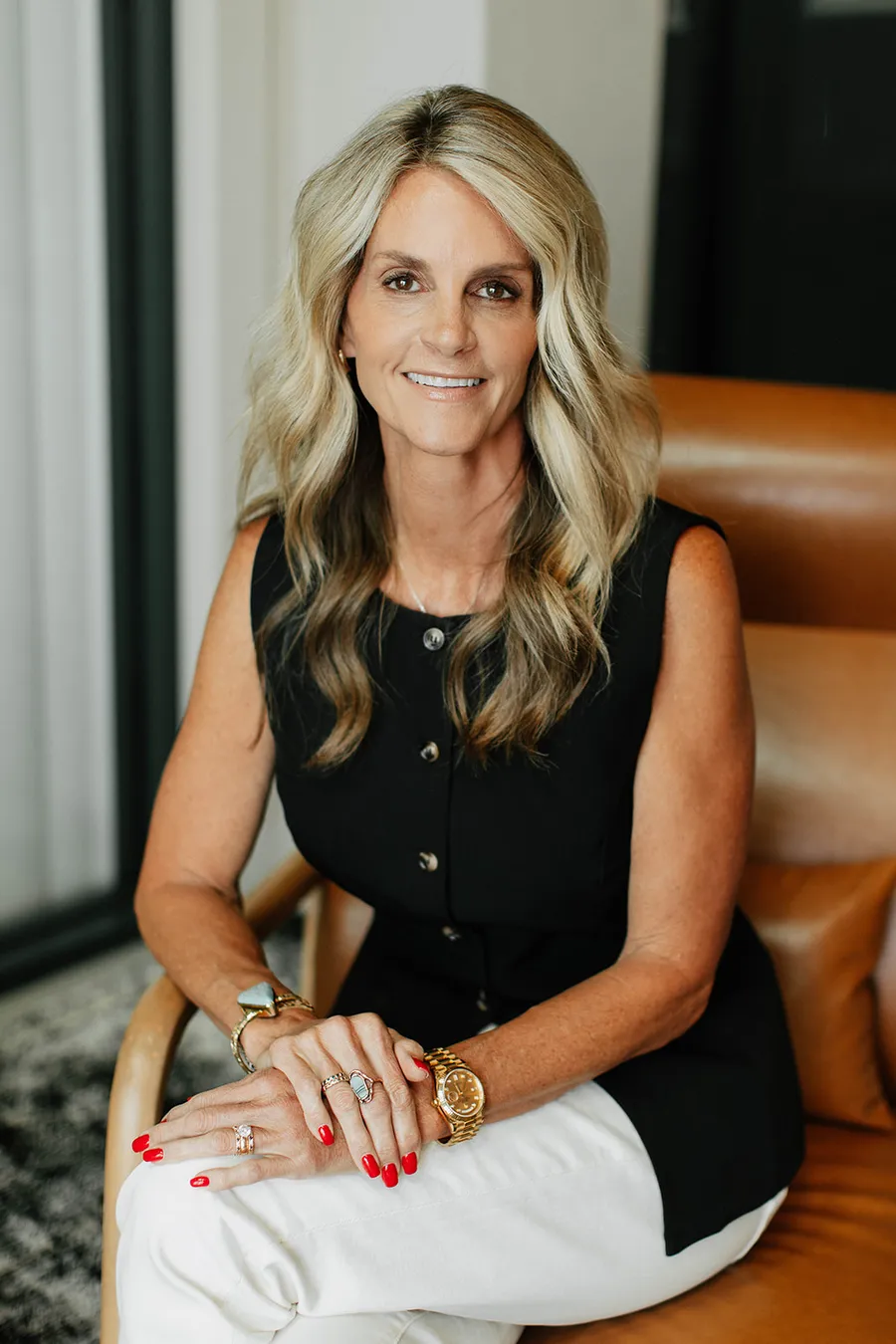
About this episode
Broadway looks like one glittering night. It is actually years of quiet work, a lot of revision, and a team of people who keep showing up after a hard review. In this episode of the YES! Women's Network Podcast, host Jodie Lemon talks with Broadway producer Sue Gilad about what it really takes to build a show, find its audience, and keep going when a production you love does not become a hit.
Sue has won five Tony Awards and has helped bring shows including The Outsiders, Buena Vista Social Club, Moulin Rouge, and The Who's Tommy to the stage. What makes this conversation useful far beyond theater is how plainly she describes the work: every show is its own entrepreneurial venture, success does not transfer from one project to the next, and the thing that carries you through is the people who have your back.
How Sue Gilad became a Broadway producer
She did not start with a plan. Her older sister danced, so Sue went to dance class, where she discovered she could not stop talking. She was sent down the hall to the theater people, who she describes as the chatterboxes, and that is where she found her tribe. High school theater, college theater, and then actor friends who started writing their own shows.
"Sue, you're the biggest theater fan I've ever met. How about you produce this?" To which I said, "A, I would love to, and B, what do I have to do?"
That is the honest version of how many women find their calling. Someone sees a strength you have been using casually for years and names it out loud. Sue is clear that she is not the world's greatest actor, singer, or dancer. She is the greatest fan, and she built a career out of that.
What a Broadway producer actually does
A producer is the champion for a show. Sue and her team get pitched constantly, read scripts, attend developmental workshops and readings, and look at productions downtown, in summer stock, and at out of town theaters. Once they green light a project, the work becomes building the team: director, choreographer, designers, general manager, stage management, and eventually the cast.
The timeline is longer than most people imagine. Sue says the average musical takes between eight and ten years to reach Broadway. And opening night is not the finish line.
"You open the show on Broadway and you begin, because now you share your baby with the whole world."
Early development often starts with talented actors sitting in a living room eating pizza and reading the script aloud. Sue points out something counterintuitive: in the beginning it can help not to have the most accomplished actors, because skilled performers can out act a script that still has bumps in it. At that stage, the bumps are exactly what you are looking for.
The bathroom test
During out of town tryouts, the director and designers watch the stage. Sue watches the audience. Are they leaning in? Tearing up? Laughing? Fidgeting and waiting for it to end? Those reactions tell her which moments still need attention.
Her favorite research method is the intermission line for the women's restroom, where people speak candidly about what they just saw. She often strikes up conversation with the youngest person in line, because young people are refreshingly free with their opinions. She calls it the greatest focus group you could ever imagine. Her one warning for theatergoers: wait three blocks before you say anything critical, because the person you are talking about almost always has a mother sitting right behind you.
Why she produces stories about outsiders
Sue gravitates toward stories of the underdog, the outsider, and the misunderstood person. The hope is that someone in the audience who feels lost or like she does not belong will see that story and realize she is not alone at all.
She describes what happens when a room shares a story in the dark: midway through, everyone's heart starts beating at the same cadence, and a sense of unity forms. She is quick to say this is not exclusive to Broadway. It happens in community theater and in a sixth grader's production of Clue.
The Outsiders, which won the Tony Award for Best Musical, carries that mission through an initiative called the Stay Gold Project, which brings in kids who have never seen a show. Sue likes to stand at the bottom of the mezzanine and watch them watch it, because she can usually spot the three who just became theater kids.
The partnership that makes the hard seasons survivable
Not every show becomes a hit. Some quietly go away, and Sue says it can break your heart because it is your baby. Her advice applies to any career that is solitary or volatile.
"Have a cheerleader or two who really have your back no matter what happens."
She met her producing partner Larry in 1996 and knew immediately she wanted to be around him. His strength is spotting the gem in an early, bumpy script. Hers is identifying the two or three things that need tweaking much later in development. What matters most, she says, is having a team that wakes up the day after a bad review and asks what we are doing today.
Action Steps
- If you want a life in the arts, remember that for every actor on stage there are ten to fifteen people backstage, in offices, and in management. There is room for you even if performing is not your gift.
- Start where you are. If your community has no theater, start one. Read a script around a table, invite twenty friends, record it, and build momentum from there.
- Volunteer as an usher. Many theaters accept volunteers who will hand out programs and help people to their seats, and it puts you inside the room.
- Do not sit on the aisle. Sit in the middle, turn to the person beside you, and ask what brought her there. That small moment of weirdness is how community starts.
- Find your Larry. Name the one or two people who will show up with you the day after something fails.
If this conversation stirred something, pick one small action this week. Look up whether your town has a community theater, a school production, or a touring show coming through, and go sit in the middle of the room.
About the guest
Sue Gilad
Sue Gilad is a Broadway producer whose shows have earned 84 Tony Award nominations, 30 Tony Awards, and a Grammy Award. Her producing credits include Tony Award-winning productions The Outsiders, Merrily We Roll Along, Moulin Rouge! The Musical, Buena Vista Social Club, Company, and Angels in America, as well as Funny Girl and Jagged Little Pill. The upcoming Broadway musical Purple Rain is set to open in spring 2027. Sue is an Angel and former Leadership Council Co-Chair for Broadway Cares/Equity Fights AIDS. She also leads theatre-based leadership and communication programs and speaks internationally about the power of Broadway in business, education, and community. Learn more at InFineCompany.com. Sue Gilad is a five-time Tony Award and Grammy Award-winning theatre producer. Her Broadway credits include The Outsiders, Moulin Rouge! The Musical, Purple Rain, and Buena Vista Social Club. Passionate about connecting audiences with the magic of live theatre, Sue creates exclusive Broadway experiences and arts programming for organizations and communities around the world.
Read the full transcript
This automated transcript has been lightly formatted for readability and may contain errors.
YES - Sue [00:00:00] Jodie Lemon: [00:00:05] [00:00:10] [00:00:15] [00:00:20] [00:00:25] Welcome to the Yes Women’s Network. I’m Jodi Lemmon. I am your podcast host [00:00:30] today, and today I have with me Sue Glad. I am so [00:00:35] excited to interview Sue. She is a Broadway producer from New [00:00:40] York, and I love New York.
Sue Gilad: Yep, that’s exactly right. I can do my [00:00:45] New York accent if that’s helpful. Jodie Lemon: Please do. I wanna hear that. Sue Gilad: So anytime [00:00:50] I’m with my sisters and we get really excited, we start talking like this.
Jodie Lemon: Oh, I would’ve [00:00:55] said New Jersey, but I love New York. I love going there. Sue Gilad: It’s [00:01:00] really magical. We’re- and we’re full up for the first time since COVID. This is really the first season [00:01:05] that our numbers are back up.
You know, my job always, Jodi, is to turn every kid into a [00:01:10] theater kid, to make theater seem as cool, maybe more cool, than [00:01:15] sports. And I think on Broadway we’re making it happen, that the theaters are all full with all kinds of [00:01:20] audiences. We see everything. We, we have a show, The Outsiders, on Broadway, and I [00:01:25] call that my boys’ show because it, there’s a big fight scene in the middle with [00:01:30] mud and blood and rain. 100 gallons of water falls on the [00:01:35] stage every performance.
Boys love it. And then next door we [00:01:40] have Buena Vista Social Club, which is a beautiful Cuban story. [00:01:45] And we actually have a Met, a New York Met, and a New [00:01:50] York Yankee that’s going to be coming in to perform on stage together. We’re gonna have, like, our very own [00:01:55] Broadway subway series. It’s gonna be pretty fantastic.
So if anybody likes [00:02:00] sports, they’ll come to theater and they’ll get their sports fix, too. Jodie Lemon: That sounds great. I [00:02:05] love sports, so I’m coming, too. Sue Gilad: Do you? Okay, yeah, come on over.
You’re invited all the time. [00:02:10] I, I really like to make… It, it really is my agenda to make every kid a theater kid [00:02:15] because this crazy thing happens when you sit in the dark and you hear a story [00:02:20] together. Midway through the story, everyone’s heart starts to beat at the same [00:02:25] cadence. You’re actually literally creating this incredible energy together in [00:02:30] which everyone is going through this journey as one.
And [00:02:35] it creates a sense of unity and a sense of community that I think the whole world could [00:02:40] benefit from right now. That’s, it’s not exclusive to Broadway. That’s literally community theater. That’s [00:02:45] your sixth-grade niece’s production of The Addams Family or Clue. That’s [00:02:50] everywhere where we all get to be on the same page and look at a story from the inside [00:02:55] out and develop empathy and care and all the things that I think women are [00:03:00] really naturally great at, and then men maybe have to work at a little bit more.
Jodie Lemon: How did you get [00:03:05] into theater? Was it something you grew up doing? Sue Gilad: Yeah, you know, my big sister [00:03:10] danced, so I went to dance class. And I don’t know if you know this, Jodi, but you’re not supposed to talk [00:03:15] in dance class. So I was obviously terrible in da- so they were like, “You, you, who [00:03:20] can’t stop talking, go down the hall to the theater people.
The theater people are chatterboxes.” [00:03:25] And so I really, I found my tribe that way, and I grew up, and in high school I got to do theater with [00:03:30] all the crazy, weird theater kids. Um, and then at college I got to do theater with the crazy, [00:03:35] weird theater kids, and I thought, “I wanna make this my life. I, I want to be around this [00:03:40] energy forever.” So I was really lucky that some of my friends, my actor friends, [00:03:45] who are super talented, started writing shows.
And they said, “Sue, you’re the, the [00:03:50] biggest theater fan I’ve ever met. How about you produce this?” To which I said, “A, [00:03:55] I would love to, and B What do I have to do? So a [00:04:00] producer, you know, first of all, we’re the champion for the show. We find the show, or if we’re really [00:04:05] lucky, the show comes to us, and then it’s our job to build the team.
[00:04:10] Uh, the director, the choreographer, all of the designers, the [00:04:15] general manager, the stage management, the everyone who’s gonna be part of the team, and then eventually the [00:04:20] actors. And then once the show opens, now you wanna find your tribe. You wanna [00:04:25] find your audience. So who are you marketing to? Who’s your core audience that really [00:04:30] cares?
Who are the people that will maybe start to care if it responds, if the [00:04:35] audience responds to it the way you hope? And it’s like by the time you open on Broadway, it takes the [00:04:40] average show between eight and 10 years to get to Broadway, the average musical, I would [00:04:45] say. And by then you’re like, “Okay, I’m done,” but it’s actually like you [00:04:50] open the show on Broadway and you begin because now you share your baby [00:04:55] with the whole world. Jodie Lemon: Wow. Sue Gilad: So it’s, uh, it’s a remarkable, it’s a [00:05:00] remarkable journey, and each show has its own personality, and each show tells [00:05:05] its own story, has its own audience, and the success of one show does not necessarily [00:05:10] imply the success of another show, so every time we start with something new, it’s, it’s really its own [00:05:15] entrepreneurial venture.
And, uh, we get to find whose heart [00:05:20] will it open, whose mind will it open, and I gravitate towards stories of [00:05:25] the underdog, of the outsider, of the misunderstood [00:05:30] person, with the hopes that that person in the audience who’s feeling lost or feeling confused or feeling like [00:05:35] they don’t belong or fit in or just feeling helpless for the day will [00:05:40] see that story and say, “Oh my gosh, I thought I was alone. I’m not alone at all.” [00:05:45] Yeah, so it can be really empowering, really. And you know, there’s a, there’s a whole [00:05:50] generation of kids like me. I, you know, I, I was a terrible soccer player.
I tried. I really did try. [00:05:55] And you know, that’s what you did in my high school. You played a sport. And I did [00:06:00] it.
I tr- I tried my best, Joey, but oh my gosh, [00:06:05] please put me backstage with a months of— bunch of artists. Like, that’s my happy place. So [00:06:10] even though we don’t have a tremendous amount of arts funding in the United [00:06:15] States, not nearly as much as I would like to have, we have these really fun initiatives. We [00:06:20] have an initiative at The Outsiders, which is a story of the haves and the have-nots, [00:06:25] right? The, the Socs, that stands for the socialites, the kids who have [00:06:30] graduation parties and barbecues, and then the s- the Greasers who have [00:06:35] Broken families and broken cars sitting out in the yard.
And the [00:06:40] Socs and the Greasers are natural enemies, and the, the world of the Greasers and [00:06:45] the Socs is only defined by teenagers. We have no adult figures in the show at all. [00:06:50] Really a reflection of what it is to be a young person. The book The [00:06:55] Outsiders was the book that sort of started off the young adult genre, [00:07:00] allowed kids’ voice to be heard, not just seen and be quiet while the adults do their [00:07:05] thing, but actually young people. And we have this initiative called the Stay Gold Project [00:07:10] where we bring in kids who have never seen a show.
This is their first show, and I love to stand at the [00:07:15] bottom of the mezzanine and watch them watch the show because I can usually find three kids that just [00:07:20] turned into theater— They didn’t know, and they’re like this, and I’m like, “Oh, [00:07:25] you’re a theater kid. Welcome to our community.” Jodie Lemon: I love that. That’s really great. [00:07:30] Sue Gilad: It’s, it’s really very special.
So, and I’m really proud of that initiative, [00:07:35] um, because it opens up not just our world, but, like, gives you [00:07:40] permission to feel, gives you permission to not have to put on a brave face all [00:07:45] the time because the, the whole idea of a theatrical story is to [00:07:50] get to the core mushy part that you shouldn’t really— that you’re told in our society to not really share with [00:07:55] anyone else, and it’s a really delicious place to get to. It’s a very safe, [00:08:00] vulnerable but safe space. Jodie Lemon: So is The Outsiders one of those shows that [00:08:05] you have going right now? Sue Gilad: Yeah. You know, we have The Outsiders on Broadway.
We’re entering [00:08:10] year three. We were fortunate with The Outsiders that it was, um- It was [00:08:15] really warmly welcomed when we opened on Broadway, so we earned the Tony Award for Best Musical. Our [00:08:20] director, Danya Taymor, earned the Tony Award for Best Direction as well as Best Sound and Lighting. And, [00:08:25] um, now we’re also on tour everywhere in North America, so of course we started our [00:08:30] tour in Tulsa, Oklahoma, which is where the story takes place. And, [00:08:35] um, we were just in Los Angeles, Costa Mesa.
We’re going to be in Salt Lake City in a few weeks. [00:08:40] We’ll pretty much be in, in every city that you can imagine where there’s theater, and if you go to [00:08:45] outsidersmusical. Com, you can find that. Um, and then Outsiders will [00:08:50] probably hit the rest of the world. That’s how it works in the theater is you start in one [00:08:55] place, whether it be New York or London, and if the world likes you, [00:09:00] then off you go on a tour, and then off you go to the rest of the world.
So our show Moulin [00:09:05] Rouge started on Broadway, went to Australia, North American tour. Now it’s [00:09:10] doing a world tour. It’s playing in London at the Piccadilly Theater. So if, if you wanna [00:09:15] find Moulin Rouge, we will chase you around the world until you get somewhere. But you [00:09:20] can see The Outsiders on tour, and then we also have a, a really…
Our beautiful show, Buena Vista [00:09:25] Social Club, where we have the Met and the Yankee on Broadway. We just launched that North American [00:09:30] tour, and it was so much fun to hear the audiences in Miami and Fort Lauderdale, [00:09:35] because so many of them have Cuban heritage, and they knew every song. They [00:09:40] were, you know, crying, singing along. It was so beautiful. Um, and then I’ll have more [00:09:45] shows for you if you’re a fan of Prince and the Revolution.
Come see Purple Rain [00:09:50] on Broadway. We’ll open in April of ‘27 on Broadway, and [00:09:55] chances are good that we might just also travel North America in a few years if the audiences [00:10:00] respond the way we hope they will. So we have a show for you no matter what you’re interested in. Jodie Lemon: [00:10:05] Do you get to travel with these shows too? Sue Gilad: I love to.
You know what’s so crazy, Jody? [00:10:10] I was in five cities over seven days last week because Buena Vista [00:10:15] Social Club was in Tampa in Florida, and then it was in Fort Lauderdale, so we wanted to see what those [00:10:20] audiences were like. We have another show called The Who’s Tommy [00:10:25] You might know Pete Townshend and The Who. It’s a band from the, really, really popular band from the [00:10:30] ’60s and ’70s, and Tommy was a concept album that was [00:10:35] turned into a musical. And, uh, we produced the revival of it a few years ago on [00:10:40] Broadway.
Now it’s on tour around the country. So we swung by Denver to see that show, which was [00:10:45] electric and, um, the audience was like a lot of rockers, like super cool [00:10:50] rockers. And then we were in, uh, LA for The Outsiders, so we were jumping [00:10:55] around a lot. We always wanna see the audiences on tour because it’s kind of [00:11:00] like an opening night every night. On Broadway we have people who, you know, we call them repeat [00:11:05] offenders.
They’ve seen the show once, twice, 14, 32 times, and we’re grateful to them, [00:11:10] but they know everything happening in the show. Whereas you see a show in a new city [00:11:15] Nobody has seen it. It’s a, it’s a, it’s an opening night audience. The [00:11:20] reactions are real, they’re visceral, they’re beautiful, and it sort of gives me life even [00:11:25] though I have been affiliated with these shows for years and years. It’s the first time [00:11:30] someone new has seen it, and that’s a thrilling moment.
Jodie Lemon: So what do you do as a Broadway [00:11:35] producer? Sue Gilad: We get pitched a lot of shows, which, which is always fun. [00:11:40] I always recommend to writers or aspiring writers, please make sure you have [00:11:45] two magic words before you send me a script, and those words are the end. [00:11:50] Because sometimes someone will send me an idea for a script, and I got that idea last week from someone else, but what have [00:11:55] you, the writer, done with it? So we’ll, we’ll try to read everything that comes in.
[00:12:00] I, I, I will always read something that comes from a friend or someone I’ve worked with before, and we have a team that [00:12:05] reads. And then we’ll go to developmental workshops and readings, and we’ll be looking at things that are [00:12:10] downtown or in summer stock or out-of-town theaters. Really anywhere. We’re just [00:12:15] constantly looking for what is our next project. And then once we green-light something and [00:12:20] say we wanna be part of this team, it’s then about gathering everyone together, [00:12:25] um, finding your core team, and then it, it can literally start, Jodi, with [00:12:30] a bunch of very talented actors sitting around a living room eating pizza [00:12:35] and reading the script.
Sometimes it’s good in the beginning to not have the greatest actors [00:12:40] because if you have wonderful, accomplished actors, sometimes they will be able to [00:12:45] out-act a script that might have some bumps in it. And in the beginning, what we’re really looking [00:12:50] for is where are the bumps? Where are the things that don’t work so that we can address them? [00:12:55] And then we’ll do an out-of-town tryout. For example, The Outsiders, we did our [00:13:00] out-of-town tryout in La Jolla in California.
Um, for the Who’s Tommy, we started at the Goodman [00:13:05] Theatre in Chicago. These are beautiful theaters and great communities, and they tell [00:13:10] you, you know, the director and the choreographer and the designers, they’re watching what’s happening on stage. [00:13:15] The producer’s watching the audience because the audience will tell us, is there a moment that you’re leaning in? [00:13:20] Are you starting to tear up? Are you laughing hysterically or are you kind of [00:13:25] fidgeting in your seat waiting for it to end?
So if you know how to listen to that, you know where are the [00:13:30] moments in the show that need attention and need love, so that for the entire show by [00:13:35] the time it gets to Broadway, everyone’s like this. That’s really what I’m looking for. [00:13:40] And then once the show opens on Broadway, it’s about keeping it [00:13:45] open, keeping it front of mind, getting your cheerleaders, your sentries, [00:13:50] the people who care so deeply about it. And then if you’re a musical, [00:13:55] making sure that people like the music. We, we just hit 100 million streams with the album [00:14:00] of The Outsiders, and that just tells me that people who can’t have access to [00:14:05] Broadway are still enjoying a part of what the art is there.
Jodie Lemon: I was told I’m supposed [00:14:10] to ask you about the bathroom test. What is that? Sue Gilad: Oh, the [00:14:15] ba- So this, I think this only works if you’re a girl. Um, so [00:14:20] during intermission, I love to stand on the women’s [00:14:25] bathroom line. There’s usually not a line for the men’s room.
There’s always a line for the women’s room. And I like to stand [00:14:30] on line, and I, I love to listen to what are people [00:14:35] saying about the show, because they’re being very candid. And I will usually, if I do talk to someone, it will [00:14:40] usually be the youngest person on line, because they are so free with their opinions. And I’ll say, [00:14:45] “Oh my gosh, welcome to the theater. You’re dressed beautifully.
That’s so nice. Well, who’s your favorite [00:14:50] character? What’s your favorite moment so far? What do you think is going to happen?” You know- [00:14:55] And boy do they tell you, especially in early development.
I’m really listening during [00:15:00] intermission and I try to stay around after the show to sort of walk out [00:15:05] quietly, walk back in and then walk out again behind people who have strong opinions and they’re [00:15:10] speaking about the show and it’s the best litmus test. It is the, the greatest focus group you could [00:15:15] ever imagine. And I’ll just tell you that whenever you’re at the theater, whenever any of your audience is at the theater, [00:15:20] make sure you don’t say anything terrible. We have a three-block rule. Like, make sure you’re [00:15:25] three blocks away from the theater because invariably if you say something terrible, the person who you’re [00:15:30] talking about, their mother is sitting behind you.
I promise, it happens every time. So you just wanna make sure, [00:15:35] be incredibly gracious with all of your comments until you’re far, far away. Jodie Lemon: That’s funny ‘cause we [00:15:40] say that in sports too because you never know who’s sitting beside you or behind you. [00:15:45] You never know if it’s somebody’s mom. Out of all of the productions you worked on, [00:15:50] do you have a favorite production?
Sue Gilad: Ooh, this is a little bit like asking me my favorite [00:15:55] child. Actually, I think my favorite child is an easier question. Um, I, I [00:16:00] have so many different favorite shows for lots of different reasons, but I’ll [00:16:05] say that it’s always about the people. It’s never about the actual [00:16:10] show. Although I’ve seen Moulin Rouge over 200 times and watching it is [00:16:15] thrilling every single time, um, it’s about the people who you make the theater with that [00:16:20] makes it sort of magical.
So my, my producing partner, his name is [00:16:25] Larry, I met him in 1996. I was in an off-Broadway show [00:16:30] and, uh, my dance partner was Larry’s boyfriend at the time, and he [00:16:35] kept talking about how his boyfriend was coming up. That was the year of Rent on Broadway. He was gonna come up and see [00:16:40] Rent on Broadway. And now those are the times where we would wait overnight to get [00:16:45] those rush tickets.
It was a crazy time. Anyway, I met Larry [00:16:50] and I said, “I just wanna be around this person.” You know, I know that if a show is a huge success [00:16:55] or if it’s a huge failure and we’re the only two people at the opening night party, Jodi, [00:17:00] we’re still gonna have the time of our lives. We’re just gonna have the best time. [00:17:05] And he has so many strengths that I don’t have.
He’s really great at [00:17:10] Identifying a show in early development, like where, where’s the gem in there even though the [00:17:15] story is still a little bumpy, and I’m better at saying much later in development, these are [00:17:20] the two or three things that maybe need a little bit of tweaking before it’s ready for the big show. [00:17:25] Um, and I feel really fortunate to have this partnership because it [00:17:30] really motivates me, because we’re so entrepreneurial. Every show we do is, is a [00:17:35] new lift. It’s a new labor of love, and I at the end of the day want to be able to report back and [00:17:40] say, “These are the 40 things I did today.
Yay, to make your life a little bit [00:17:45] easier.” And I will always say with any career, but especially something [00:17:50] that can be solitary and can also be volatile, like the arts, um, [00:17:55] have a cheerleader or two who really have your back no matter what [00:18:00] happens because we have so many shows that we love so much and then the [00:18:05] audience just doesn’t feel the same way. They don’t, it doesn’t turn into a huge hit. It doesn’t, [00:18:10] we’re not fortunate enough to win the Tony Award with that show. That show sort of goes quietly [00:18:15] away, and it can break your heart ‘cause it’s your baby.
It’s one of your children. You’ve spent so [00:18:20] much love and attention on it. So if you have a team that wakes up the next day [00:18:25] after a bad review and says, “What are we doing today? What’s the first day of [00:18:30] rehearsal? Where’s our meet and greet today?
Come on, we have another shot at this,” then you’ll be [00:18:35] okay. Jodie Lemon: You’ve won five Tony Awards. How did it feel when you [00:18:40] won the very first one? Tell me about that. Sue Gilad: [00:18:45] They’re very heavy, you know.
Um, they’re legitimately heavy. It- [00:18:50] it’s an, it’s an amazing feeling because it means something different to [00:18:55] 13-year-old me than it does to grown-up me. My 13-year-old [00:19:00] self, every time I get to meet an actor who was a hero of mine in [00:19:05] my childhood, my insides do a little back flip. And, [00:19:10] uh, you know, it takes a village to build a Broadway show, so there’s a whole team [00:19:15] that will create, um, one show. So our first Tony Award was for a play.
[00:19:20] I don’t usually do plays, Jodi, but this one operates like a musical. It’s called Angels in America. It’s actually right above my [00:19:25] head, and Angels in America I was a co-producer on, so that means I wasn’t one of the decision-makers, [00:19:30] but I got a chance to sit at the table and listen while the more experienced producers [00:19:35] made all the decisions, which was, wow, what a learning experience. But, um, when [00:19:40] they called Angels in America, we all get to go up on stage and stand there together, and [00:19:45] I think on one side of me I had John Leguizamo, who is an actor who [00:19:50] used to do one-man shows off Broadway, and these one-man shows are like a revelation.
[00:19:55] And I had Matt Bomer on the other side of me, who’s, if possible, even more gorgeous in [00:20:00] person, and I just thought, “This is… If I could go back in time and tell [00:20:05] my 13-year-old self, ‘I promise you you’ll be standing next to your heroes one [00:20:10] day,’ I would have never believed it.” Jodie Lemon: What an incredible feeling. What would you [00:20:15] tell a young girl if they were looking to go down that alley as a actress, a [00:20:20] producer? What would you tell that girl?
Sue Gilad: S- I, I really love that there’s a whole world [00:20:25] now of people who know more about producing theater than I do, because there’s this magical thing called [00:20:30] the internet. When I was a kid, you just saw the actors on stage, and they were so [00:20:35] shiny and beautiful, and you just thought, “Okay, I guess that’s my way in.” But now when we [00:20:40] speak to student groups- I tell them that for every actor you see on stage, [00:20:45] there are 10 to 15 people backstage, offstage, in offices, [00:20:50] our lawyers, our general managers, our stage management, our production managers. If you want [00:20:55] a life in the theater, there’s room for you here.
If you wanna be talking about [00:21:00] theater all day long like I do, but you aren’t necessarily the greatest actor or singer or [00:21:05] dancer, we have room for you. And if you’re interested, start with your community [00:21:10] theater. First of all, if you don’t have a community theater, which unfortunately in America a lot of communities [00:21:15] don’t, if you don’t have one, then congratulations, you’re the person who’s going to [00:21:20] start it. Find the other theater kids who are just like you, read your first script around [00:21:25] a table, ask if you have 20 friends who wanna come and watch and laugh while you [00:21:30] videotape it and you have it for posterity.
Congratulations, our theater club, we just did our first [00:21:35] production. Help us create our second production, and create momentum that way. If you’re [00:21:40] lucky enough that there is any kind of theater, community theater, regional theater, professional theater, [00:21:45] school theater, go show up. I tell everybody in New York City [00:21:50] and in many other cities across the country, you can go and be a volunteer usher at [00:21:55] hundreds of theaters. You literally show up and you say, “I am very, very good at passing out [00:22:00] programs.
I’m very good at smiling at people and helping them to their seat. I can hold a [00:22:05] flashlight and direct someone to their chair. What do you need me to do? I would love to be in the theater [00:22:10] and do it.” And in that way you find your tribe.
I can’t tell you how many times I’m sitting in a [00:22:15] theater and I tell my young students, “Don’t ever sit on an aisle,” because if you’re sitting on an aisle, you only have [00:22:20] one person to talk with, and statistically half the people in the theater are legitimately crazy, but in the good way. [00:22:25] I say sit in the middle, take a moment of weirdness, breathe in, turn to the [00:22:30] person next to you and say, “Hi, I’m Sue. Nice to meet you. [00:22:35] What brought you here today?” And then you might meet your best friend.
You might meet your next [00:22:40] playwright. You might meet someone who’s going to design your set for the story that you’re about to [00:22:45] tell. So it’s about creating that community and then developing that community over time. So we’re [00:22:50] lucky that we’ve worked with the same teams for five, 10, 15, 20 years because [00:22:55] if you did summer stock with another actor, then you know that working, you know, [00:23:00] basically 10 hours a day every day for an entire summer either makes you mortal [00:23:05] enemies or best friends. Jodie Lemon: That’s great advice for people that are coming [00:23:10] up.
Do you train people that wanna get involved? Sue Gilad: Yeah. You know, [00:23:15] we need, we need, we need more theater kids because we don’t have the funding so it’s [00:23:20] not something that you automatically have. Like I learned soccer because soccer was available to me, [00:23:25] but it wasn’t my path, but kids can’t automatically learn to sing and dance because it’s not [00:23:30] available in their schools. So one of the things that we are hoping to achieve [00:23:35] Whenever I talk about theater is where is there a place where you can put this energy?
Not so much money [00:23:40] as it is can you play the piano? Then, you know, maybe you can start a choir at your local [00:23:45] school if there isn’t one. So I, I’m not a teacher ‘cause, um, [00:23:50] I’m, I’m not actually the world’s greatest actor, singer, or dancer, but I am the [00:23:55] greatest fan. And, uh, I think a, a lot of people will think that the producer [00:24:00] actually chooses the actors for the production, but we on Broadway have an entire casting [00:24:05] team, our casting directors, that it’s their full-time job, if you can imagine, Jodi. They [00:24:10] scour the world for the best actors.
They bring them into the audition process, and [00:24:15] then the more people you have behind the table when you come in to audition if you’re an actor, [00:24:20] the closer you are to getting the job. So first it starts with our casting associate or casting [00:24:25] assistant, then it’s the casting director, then maybe it’s the associate director, the assistant director, or the [00:24:30] director from the show, along with the choreographer, the music director, the music supervisor, and then finally [00:24:35] for the very end, you bring in the producer or producers for the final callbacks of the shows. [00:24:40] If you can imagine, some people have gone in five, seven, 10, 15 [00:24:45] times to audition for a show before they get the role, and that’s just because our [00:24:50] casting team really wants to make sure that you can do it eight times a week.
[00:24:55] Can you… This is, you know, our Broadway actors, I equate them to being [00:25:00] Olympic athletes because they train their entire lives for it, and then they do [00:25:05] eight times a week, sometimes two times a day. So that means tons of water, no [00:25:10] talking, no partying, going to the gym, warming up your body, coming [00:25:15] early for the dance call, for the fight call if need be, and then working at night. So [00:25:20] it’s, um, it’s a crazy schedule, and it takes a tremendous amount of discipline. [00:25:25] I think it’s much easier to do what the rest of us do in the theater and support them and cheer them on, [00:25:30] and, like, admire what they do.
Jodie Lemon: That’s great. It has been wonderful listening to [00:25:35] you. It makes me want to come to New York and watch your Broadway shows. Sue Gilad: So I have [00:25:40] bunch of recommendations. I, you know, for, for women, um, [00:25:45] Buena Vista Social Club, which I had mentioned to you earlier, Jodi, is a, it’s a Cuban story [00:25:50] that takes place in two time periods, the 1950s and the 1990s, [00:25:55] and it, it, um, it sort of vaults back and forth between a very unique [00:26:00] moment in time and what happened when one intrepid [00:26:05] producer brought back the musicians from that iconic moment.
But it’s also a [00:26:10] story of sisterhood, of two sisters and, um, how [00:26:15] history uh, impedes their relationship. So I always recommend [00:26:20] sisters, mother-daughters, girl groups, sororities, that should be your first show [00:26:25] on Broadway because it’s, it’s really, really special. Jodie Lemon: That’s great. We have this [00:26:30] group that we work with, it’s Yes Women’s Network, and we would love to [00:26:35] come to one of your shows as a group. Would you be open to that?
That would be so much fun for [00:26:40] us. Sue Gilad: Whenever anybody’s coming to Broadway, if you have a group that’s coming to Broadway, let me [00:26:45] know and I’ll make recommendations, and I will help get you amazing seats to the show, [00:26:50] and maybe even tell some fun backstage stories too. Jodie Lemon: That would be great. We would [00:26:55] love it. Thank you so much for being here today.
Sue Gilad: You’re so lovely. Jodie Lemon: Thank you, Sue, for [00:27:00] coming today. Sure appreciate you being here. Sue Gilad: Thanks, Jude. Jodie Lemon: Join us [00:27:05] next week on the Yes Women’s Network [00:27:10] [00:27:15] [00:27:20] [00:27:25] [00:27:30]