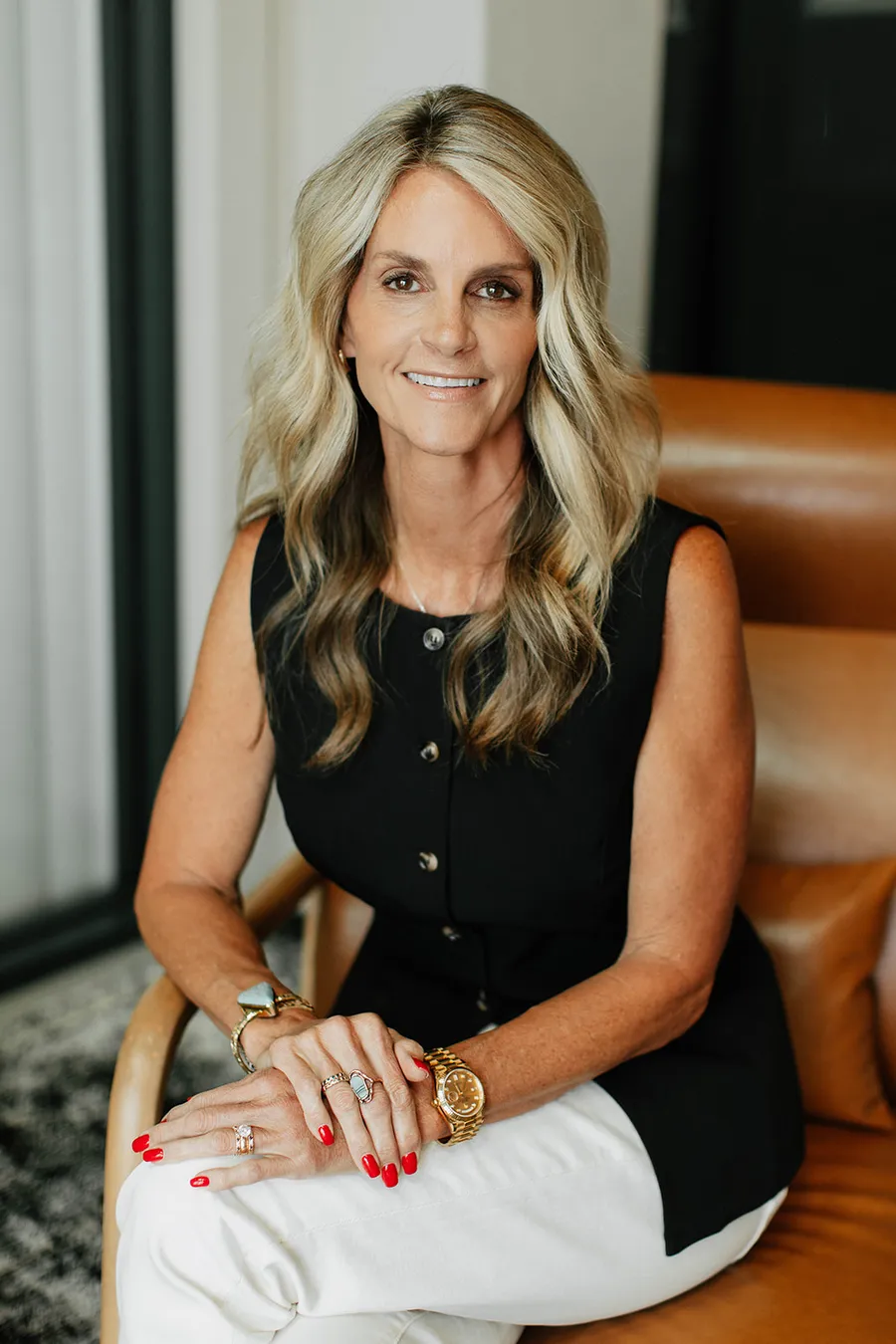
Transforming the Trades with Dana Staszkiewicz
with Dana Staszkiewicz
About this episode
Dana Staszkiewicz spent fifteen years in corporate retail and then moved into the ad agency world, working on high-level strategy with Fortune 50 companies. Her degree is in fashion and retail. None of that sounds like preparation for running a plumbing and HVAC company in Utah, and that is exactly why her story is worth hearing.
In this conversation with Michele Morley on the YES! Women's Network Podcast, Dana describes how she said yes to her brother's request for help, learned an industry she did not know, and helped lead the company from 12 million in revenue to roughly 20 million with double-digit profit before a successful sale in under two years. Along the way she navigated family in business, set expectations she refused to lower, and discovered that the inner work she had done for a decade was the real qualification.
How Dana Staszkiewicz moved from corporate strategy into the trades
Dana's brother had built his plumbing and HVAC business to 12 million in revenue and 75 employees. He wanted out of the day-to-day, and he wanted a family member in the seat. He asked her to fly out from Michigan and simply look at the business.
By the end of that weekend, they both knew. There was no job description. Her brother told her plainly that he did not understand what she had done in all those other positions, but that it felt like the right thing. Her fiance asked what she was doing. Her friends pointed at the Fortune 50 work she was walking away from.
I don't know, but I know I'm supposed to go help my brother and do this.
She arrived right before COVID. The first year was chaotic. Revenue climbed from 12 million to 15 million, and profit landed at negative 500,000 because there were almost no systems or processes in place. The business was spinning. Dana spent her early months watching and asking questions instead of issuing orders.
Earning credibility when you are the outsider
Her brother warned her she would have to earn the respect of the plumbers, the HVAC techs, and the whole team. Dana knew she came from a different world, and she was not going to pretend otherwise. She told her brother she would not be wearing a polo shirt. He told her to come in and do her thing.
So she started where she was strongest. She began with the marketing team and rebranded the company. Then she observed, listened, and followed her curiosity into the numbers, asking where money was going and why. She learned the business, learned the industry, and learned how to operate at a higher level all at once, leaning on mentors from a national industry group.
Credibility came from competence and consistency, not from dressing the part. By the time the company sold, she was general manager and COO of a team of 130 people, which surprised her most of all. When she left corporate, she had promised herself she would never have anyone report to her again.
Family in business: high expectations, honest conversations
Dana's brother's company included multiple relatives: her stepmom, his stepdad, a brother-in-law, and her own daughter. She did not treat family as a reason to lower the bar. She treated it as a reason to raise it.
Before hiring her daughter, Dana had a direct conversation. She told her she would be representing her uncle who owned the business and representing her mother, that expectations would be extremely high, and that they would have hard conversations if needed. Her daughter stayed with the company to the end, and those hard conversations never became necessary.
Another family member had to be let go. Dana held extended family conversations before it happened so no one was blindsided, making clear that the decision was not about love. Her reputation and the company's reputation were both on the line.
With her brother, the boundary was just as clear. He was the owner. She would give her recommendation, say so strongly if she felt strongly, and then back off and support his decision. That mix of respect and trust is why the partnership worked.
Leading with your head first and your heart second
Dana describes herself as a tough leader who loves her people hard. She says a lot of the leaders she works with now want to lead with the heart first, and she tells them they cannot. The heart comes second.
One field employee faced termination after an outside HR investigation. Dana told him to think about it overnight and come back in the morning. She already knew her answer. Because she saw genuine remorse, she kept him. Two years later, when she moved out of Utah, he came to say goodbye and told her that conversation changed his life, that he went to therapy afterward, and that he was a different person because she gave him another chance.
I led with my head, but also my heart.
She traces much of that steadiness to her own history. She lost her mother at age seven to a drunk driver and grew up with a father who turned to alcohol. She spent the last decade in therapy, in Adult Children of Alcoholics work, and in inner child work. She also completed a nine month mindset coaching certification with the Life Coach School while leading the company, paying for it herself.
That training gave her a simple frame she used with her team: thoughts create feelings, feelings create actions, actions create results. Feelings can be felt and moved through. Circumstances can be thought about differently.
Action Steps
- Say yes before you feel qualified. Dana's rule is to take the role, then be willing to be uncomfortable while you learn it.
- Spend your first months observing. Ask where the money goes and why before you change anything.
- Have the expectations conversation up front with family members or close friends you hire, including what a hard conversation would look like.
- When someone comes in upset, ask what might be triggering them rather than reacting to the behavior in front of you.
- Do the personal work now. Dana believes a decade of therapy and mindset training was the preparation she did not know she needed.
If one thing from this conversation sticks, let it be the yes. Think of one opportunity you have been circling because you do not feel ready, and take the next small step toward it this week.
About the guest
Dana Staszkiewicz
Dana Staszkiewicz had never worked in the trades when she stepped into a plumbing and HVAC company that was growing fast but drowning in its own chaos, with minimal systems or processes in place. The company was losing $500,000 a year. She built the structure it was missing, quarterly planning, clear roles, and accountability at every level, and helped grow it into a $20 million business with a profitable sale. She now works with business owners and operators across service businesses as a fractional CEO/COO and executive coach. Outside of work, she travels every chance she gets and spends the rest of her time with her fiancé, her kids, and her grandkids.
Read the full transcript
This automated transcript has been lightly formatted for readability and may contain errors.
Welcome to Yes Women’s Network podcast. We’re so happy to have you with us today, [00:00:30] and I am thrilled to have Dana. You can say it for me. Dana Stafvkiewicz: Stafvkiewicz. Michele Morley: There we [00:00:35] go.
Beautiful name. Thank you. Tricky. And she is an entrepreneur, [00:00:40] business leader, and mentor who has spent years building businesses and [00:00:45] the people behind them to help them grow. Dana helped lead a [00:00:50] struggling plumbing HVAC company through a remarkable transformation, growing it to [00:00:55] approximately 20 million in annual revenue, and ultimately helped prepare [00:01:00] for a successful sale So what I’m really interested in [00:01:05] is finding out the backstory and how, how all of that came about.
Dana Stafvkiewicz: Yes. [00:01:10] So not my background at all. I come from the corporate world, and so [00:01:15] my degree is actually in fashion and retail. So I was in corporate retail for years, [00:01:20] about 15 years. Wow.
And so I had some great experience with that. I was, uh, [00:01:25] visual merchandising, so that is everything in a client journey, right? And so [00:01:30] it’s how you walk in a store, what do you see, what do you [00:01:35] smell, how is the product merchandised. Mm-hmm. Um, all of that.
And so it’s [00:01:40] part of that journey in understanding how customers or clients experience a [00:01:45] business. Um, I was a corporate buyer as well, so bought all kinds of product. And [00:01:50] so it’s a lot of analyzing, product development, shipping of fixtures, like [00:01:55] just crazy things. You know, over the years, and everyone’s like, “How did you end up in the [00:02:00] trades?” From there, I went into the ad agency world, working with, uh, [00:02:05] Fortune 50 companies- Wow …
And doing a lot of very high-level [00:02:10] strategy, photo shoots, video shoots, you name it, I’ve done it. Lot of client [00:02:15] relationships. So when you think of all of that, when an opportunity [00:02:20] comes, um, I had a— my brother, who’s a plumber. Okay. And he was to, [00:02:25] he was to the point where he’s like, “I need to be out of the day-to-day, but I need a family member [00:02:30] in the business.”
And so at that point, he had grown his business to 12 million and [00:02:35] 75 employees. So I came in with all my experience, [00:02:40] heavy analyzing, client journey, developing a brand, high [00:02:45] strategy. It actually works, even though people are like, “I don’t know about [00:02:50] that.” And so I came in, um, right before COVID. Michele Morley: Okay.
Dana Stafvkiewicz: And when [00:02:55] COVID happened, we scrambled because it, they just… He, [00:03:00] he was able to get the business to 12 million, but there were not a lot of processes and [00:03:05] systems in place. And so we just started working through those, [00:03:10] and that’s kind of how that journey started. Michele Morley: Okay. So take us back [00:03:15] to, um, what gave you the courage to say yes [00:03:20] to the corporate world- Yes …
I mean, to do all of this. Dana Stafvkiewicz: Yes. I have [00:03:25] always been one that pushes me, pushes myself in doing things. I had a [00:03:30] great mentor when I was in corporate retail. She was my VP.
Um, [00:03:35] she was my soul sister. She has since passed- Um, and [00:03:40] yeah, she was actually younger than me. Oh. And she just saw something in [00:03:45] me and challenged me like no one’s business. Michele Morley: Wow.
Dana Stafvkiewicz: And [00:03:50] when I went to work for my brother, she saw a gift in me years ago, [00:03:55] and when I went to work for my brother, she’s like, “It’s finally happening.” Yeah. She had told me, [00:04:00] she’s like, “You have this amazing gift of operations and seeing [00:04:05] things very holistically that most people aren’t able to do.” [00:04:10] And so I went there and she’s like, “This is it.” And I’m sad to [00:04:15] say she did not survive cancer, um- Oh …
Enough to see me, but, [00:04:20] like, a lot, this whole journey this year is for her in addition to me, [00:04:25] so- Oh … I know she’s very proud of me. Michele Morley: Wow. The power of [00:04:30] influence- Dana Stafvkiewicz: Yes … Michele Morley: lives in your life.
I can see that. Dana Stafvkiewicz: Yes. And she just kept [00:04:35] pushing me, um, to… I didn’t realize the limits that, you know, that I could just [00:04:40] keep pushing myself. And we would just have amazing [00:04:45] conversations, like heart-to-heart conversations.
She had to eliminate my position. She was my [00:04:50] best friend. Mm-hmm. And it’s one of those, I’m like, “It’s okay.” Like, [00:04:55] we’re still going to be friends.
Yeah. And so it’s just understanding the business world [00:05:00] and when you need to be business and when you need to be a friend. Michele Morley: [00:05:05] Yeah. Dana Stafvkiewicz: And that’s kind of how, when I was running my brother’s company, that’s how I ran the company as well. [00:05:10] Ultimately, I was there to run his company.
Michele Morley: Okay. Dana Stafvkiewicz: And so we had multiple family members [00:05:15] that worked for us, and there were hard decisions that had to be made. And I, like, [00:05:20] everyone knew I loved them, but I was there to run a business, and I have no problem making those [00:05:25] decisions when they need to happen. Yeah. And my brother’s like, “Man, you can make them easier [00:05:30] than I can.”
And that’s just a side of me that I think I didn’t even [00:05:35] realize was part of what I could do. Michele Morley: Yeah. Dana Stafvkiewicz: And I can do it [00:05:40] in a loving way. I like to say I can use my head, but also my heart when I’m making [00:05:45] business decisions. Michele Morley: Okay.
So family and business- Dana Stafvkiewicz: [00:05:50] Mm-hmm … Michele Morley: is tricky. It’s an- Extremely Dana Stafvkiewicz: tricky … Michele Morley: so how do you, how do you, I [00:05:55] don’t know if it, draw the line, or how do you create that [00:06:00] relationship in business aside from family relationship? Dana Stafvkiewicz: Yeah.
[00:06:05] So we had multiple, um, so we had my brother’s mom, my [00:06:10] stepmom, that was in the business. His stepdad was in the business. [00:06:15] We had a brother-in-law that was in the business, and my daughter was in the business. [00:06:20] So we had a lot, and we had decisions over the years we had to make. Let’s take my daughter, for [00:06:25] instance.
She came to work, um, for me, directed, directly reported to me. [00:06:30] And so when she decided she was gonna come work for us, I had a conversation with her. I’m like, [00:06:35] “Okay, this is business mom mode right now. I need to have a conversation with you before we hire you [00:06:40] I’m like, “You are representing your uncle who owns the [00:06:45] business. You’re representing your mom.
You are an, an extension of [00:06:50] us, and I need you to know that the expectations are gonna be extremely high- Michele Morley: Yeah … Dana Stafvkiewicz: [00:06:55] for you.” And she’s like, “I know, Mother. You raised me,” you know? And she’s like, “I would [00:07:00] never disappoint either one of you.”
And I’m like, “We will have hard conversations if we have to.” [00:07:05] She’s like, “We won’t have to, I promise,” and we didn’t. She was with us right up to the end. [00:07:10] That being said, there was another family member that I did have to let go, and I had [00:07:15] to have many conversations with them about it. I had to have extended [00:07:20] family conversations when I knew what was coming just to let them know, “I [00:07:25] need you to be aware of what I need to do.
Doesn’t mean I love anyone less. It just is [00:07:30] what has to be done.” Because again, it was my reputation. I was the general [00:07:35] manager and COO, and if I let a family member do things or not [00:07:40] do things, that’s my reputation- Michele Morley: Yeah … Dana Stafvkiewicz: as well as the company’s.
Yeah. So those are the [00:07:45] decisions, like if you… It can be done, and it can be done successfully. Michele Morley: Mm-hmm. Dana Stafvkiewicz: Like, take my brother’s [00:07:50] and my relationship.
He was the owner. He’d built the company up to 12 million. He [00:07:55] asked me to come in and help him. He still was the business owner, [00:08:00] right? Michele Morley: Mm-hmm.
Dana Stafvkiewicz: He was still my younger brother, so I would give him advice and say, [00:08:05] “This is what I would recommend, but ultimately it’s your business. You can decide.” Mm-hmm. “And I [00:08:10] will support in whatever the decision is.” Mm-hmm.
And that’s why we work so well together, is [00:08:15] because I’m like, I would back off if needed, but if I felt strongly about something, I would let him [00:08:20] know, and then I would back off. Michele Morley: So, but that means there’s respect and there’s trust, [00:08:25] right? Yes. Dana Stafvkiewicz: Yep. And ultimately, like, I’m his older sister.
I was looking out for [00:08:30] him and looking out for his business. I ran the business as if it was mine as much as I [00:08:35] could. He’s like, “You could understand it 99% of the way, but you [00:08:40] didn’t have the half a million dollar payrolls that I had over me.” You know? I was like, “That’s [00:08:45] totally valid.”
So… Michele Morley: So when you took the step to… [00:08:50] Oops. When you took the step to work for your brother, um, did you have to [00:08:55] deal with any kind of- I don’t know, limiting beliefs in [00:09:00] yourself and what you were able to do? Or were you able to go forward with that [00:09:05] confidence of, “No, I’m gonna build this and we’re, we’re going big”?
Yeah. Dana Stafvkiewicz: So [00:09:10] we had… I’d only worked in corporate all that time. I helped, like, in the ad agency [00:09:15] world. Um, I was always in leadership positions, not like executive, but more like director [00:09:20] level.
So it was always in those. I always helped businesses, um, and helped [00:09:25] them overall, like, in an operational standpoint, but never [00:09:30] to run a company like that. Yeah. And so I lived in Michigan. My [00:09:35] brother’s business is here in Utah.
And so when we had this conversation, he’s [00:09:40] like, “Just come out and see the business,” ‘cause he was begging me to come work for him. And so I [00:09:45] did, and at the end of that weekend, we both felt it, like we were supposed to do it. I had no [00:09:50] job description when I came in. We didn’t know what it would mean. My brother’s like, “I don’t understand [00:09:55] what you did in all those other positions.”
He’s like, “But I feel like this is [00:10:00] the right, a right thing.” And I felt the same. So I came back to Michigan, [00:10:05] and I told my fiancé. He’s like, “What? What are you doing?”
[00:10:10] And I’m like, “I don’t know, but I’m just, like, I just- It feels right felt it, that [00:10:15] it was right. Yeah. And all my friends were like, “What are you doing? You have this amazing [00:10:20] job working with Fortune 50 companies.” Yeah.
I’m like, “I don’t know, but I know I’m supposed [00:10:25] to go help my brother and do this.” And I, like, when I got [00:10:30] there, ‘cause he’s like, “You have to earn the respect of the [00:10:35] plumbers, the HVAC, like, the whole team.” And I come from a very different world. [00:10:40] Like- I dress a certain way. ‘Cause I told my brother, I’m like, “I’m not wearing a polo [00:10:45] shirt.
I’m just telling you right now, that’s not my thing.” I’ve got news for you. And so they, uh- … They [00:10:50] didn’t know what… And my brother’s like, “I don’t care what you wear.
Just come in and do your thing.” [00:10:55] And so I just remember going there and I’m like, okay. I [00:11:00] just knew I had to earn the respect, and I’m a super curious person, so [00:11:05] the very, like several months, I just observed. What am I comfortable in? [00:11:10] Brand, right?
So I started with his marketing team. I rebranded us, did all of [00:11:15] that. And then I just was observing and listening and I’m like, “We’re spending how much [00:11:20] money on what and why?” So I would look for things like that and just start digging [00:11:25] into things and asking questions. I had to come in and learn the [00:11:30] business, learn the industry, and learn being at a higher role.
[00:11:35] And so just having conversations with my brother, um, we became part of a group where [00:11:40] we had like big mentors that I was working with and learning from others in the [00:11:45] industry across the United States. And we… That year was [00:11:50] crazy with COVID, just because we’re super open with numbers, so I’m just going to tell you [00:11:55] on that standpoint. When I came on, we were at 12 million. By the end of the year, we were 15 [00:12:00] million.
Wow. That doesn’t mean that you’re profitable. We were negative 500,000 in profit that [00:12:05] year. Because there were no systems and processes in place, the business was just [00:12:10] spinning. We became, um, we were part of a new group where we were learning things.
[00:12:15] My brother, his business partner, and I, we would come back from these meetings [00:12:20] implementing 100 things at once. So our already spinning team was spinning [00:12:25] even more And so it’s this whole journey of having [00:12:30] conversations with my brother, and he’s like, “I’m just like, this is crazy. [00:12:35] I don’t wanna do this anymore.” He’s like, “Are you interested in buying the business?” [00:12:40] And I was like, “No.”
Like, “I…” Like, “I’m older than you. I’m gonna retire before [00:12:45] you.” Little did I know. Anyway, um, so we just started this journey [00:12:50] of, you know, people were calling to buy us all the time, and so [00:12:55] we just started having conversations.
And sure, they would’ve bought the business, but my brother [00:13:00] would’ve received essentially nothing. And so through that process, I just [00:13:05] started implementing things and holding the team accountable, [00:13:10] just doing, like, I just slowly started rising up and, [00:13:15] um, gaining their trust and listening to their needs. [00:13:20] And I don’t know if it was big sister energy, trying to help my brother, um, [00:13:25] but we ended up selling in under two years. And, like, we… At that point, we were [00:13:30] at 20 million, and we had a double-digit profit.
And I’m simplifying it. It was [00:13:35] moving a ship. Michele Morley: Yeah. Dana Stafvkiewicz: But I just kind of rose to that, [00:13:40] and I can remember one time in the beginning where I’m like, “What do I [00:13:45] do? What am I doing?”
Michele Morley: Mm-hmm. Dana Stafvkiewicz: And I just, like, [00:13:50] removed it from my head, and I just went based on where I thought I was supposed to go [00:13:55] and what I was supposed to do. Um, the last 10 years, I have done a [00:14:00] lot of personal work, um, working through [00:14:05] things, and done a lot of therapy. Yeah. And I truly [00:14:10] believe that was all in preparation for this.
Yeah. When I [00:14:15] left the corporate world, I said I was never going to have anyone report to me. I was just kind of [00:14:20] done with that. Michele Morley: Oh, really? Dana Stafvkiewicz: And here I was at the end, we had 130 people.
Michele Morley: [00:14:25] Wow. Okay. Dana Stafvkiewicz: And I have done, like, women’s retreats. [00:14:30] Michele Morley: Oh. Dana Stafvkiewicz: Like, I went to one, um, in Costa Rica.
It was a week long. [00:14:35] Oh, wow. And it was life-changing. When I came back, that, my therapist was like, [00:14:40] “What you healed in that week was a year’s worth of therapy.” [00:14:45] And I have just continued to do that.
I’m a big podcast listener. Yeah. [00:14:50] I did some heavy training. I don’t know if you know who Brooke Castillo is, um, but she [00:14:55] is a huge mindset person with the Life Coach School. I became certified, nine months of [00:15:00] training for that, and I did that myself personally.
We didn’t have the money in the business for [00:15:05] that. And so I did that training as I was leading the company, as we were getting [00:15:10] ready to sell, and I didn’t even realize till after the fact the impact of all of [00:15:15] this would have. Michele Morley: Mm-hmm. Dana Stafvkiewicz: I can tell you that Y was a [00:15:20] very, I wouldn’t say demanding, but some of my leaders would probably say that. [00:15:25] Like, I’m a tough leader, but I love hard with my, my people that [00:15:30] report to me.
And I, my expectations of them are [00:15:35] extremely high level. Michele Morley: Right. Dana Stafvkiewicz: And there was this one instance that [00:15:40] where something happened and we had to have a PEO firm come in from an HR [00:15:45] perspective because I needed a neutral party to come in and do an investigation for me. [00:15:50] And the PEO firm was like, “You can let this person go or you can keep them.” [00:15:55] It’s like, okay.
So I brought that person in along with their direct report. I’m [00:16:00] like, “Listen, this is what the PEO firm told me, and I need [00:16:05] you to know that I need to think about this. Come see me in the morning.” And to be [00:16:10] clear, this is w- was one of our Field people Michele Morley: [00:16:15] Mm-hmm … Dana Stafvkiewicz: he left with his head down.
He came in the next morning. I was like, [00:16:20] “Okay, you, I knew my answer yesterday, but I wanted you to think about it. And because I [00:16:25] saw remorse and I know you aren’t gonna do this again, I’m going to keep you.” [00:16:30] He’s like, “Oh my gosh, Dana, thank you so much.” Fast-forward two years ago when I [00:16:35] moved out of Utah, he came and said goodbye to me.
He’s like, “Dana, that [00:16:40] conversation was life-changing. After that, I went to therapy. I’m a [00:16:45] different person now because you gave me another chance.” Michele Morley: Wow. Dana Stafvkiewicz: And so while I [00:16:50] was very demanding of my people and expected very high level, [00:16:55] I was also the big sister to them, and I [00:17:00] loved all my people.
Mm. And I was willing to give them another [00:17:05] chance if I could see them doing work and see the change in them as well. [00:17:10] And so it just shifted our culture, ‘cause again, I led with my head, but [00:17:15] also my heart. Michele Morley: So you, you lead with your heart, but also [00:17:20] with, with the business sense. Dana Stafvkiewicz: Absolutely.
Michele Morley: And so. Dana Stafvkiewicz: And, and it’s a hard [00:17:25] thing, ‘cause I work with clients now, and it’s a hard thing to teach, ‘cause a lot of people want to lead with [00:17:30] their heart first. Michele Morley: Mm-hmm. Dana Stafvkiewicz: And if you’re a business owner or a leader, you can’t. Michele Morley: You [00:17:35] can’t.
Dana Stafvkiewicz: You cannot. Right. It has to be second. Michele Morley: Mm-hmm. Dana Stafvkiewicz: And even my brother struggled [00:17:40] with it, because it was funny, by the end of the time, people were like, [00:17:45] “We ultimately know who is in the background,” because I don’t have to be- [00:17:50] Mm …
Up and be the center of attention or anything like that. I’m [00:17:55] quietly working on things in the background, and people are like, “We know ultimately who’s running the company.” [00:18:00] Mm-hmm. It was just amazing. More people were realizing [00:18:05] things than I, I even realized.
And they’re like Michele Morley: re- As a result of your [00:18:10] leadership- Dana Stafvkiewicz: Yes … Is Michele Morley: what you’re saying? Okay. Dana Stafvkiewicz: Yes. And it, it’s just been a really fascinating process.
[00:18:15] I keep in contact with so many. Uh, some of us got together last night for dinner. We have people [00:18:20] that have moved on, started their own companies. They will call me asking questions, and I love that. [00:18:25] I’m so proud of each and every one of them.
They’re drastically different people because they were on [00:18:30] that ride with us, and it’s, it’s just amazing. Michele Morley: So is it, is it, is the gift that you [00:18:35] have, not only a- as you lead, but is… It sounds like your [00:18:40] gift, though, is that you see the potential in, in each individual. Is that [00:18:45] why you hold them to a higher standard, or do you feel like that [00:18:50] kind of sets the precedence of, “I know you can do better,” or, “I know you can do more”? Dana Stafvkiewicz: Yeah.
[00:18:55] I th- I think it is. I mean, I’ve never… Honestly, I’ve never really thought about that, but I do. I— [00:19:00] And there are many times I believe in someone when they don’t believe in themselves. Mm-hmm.
And I [00:19:05] can see that. And I have a gift to see things at a high level within a [00:19:10] business as well, and so that gives me the opportunity to see what that [00:19:15] journey could be like for them, where they may be a CSR [00:19:20] right now, but, like, what that path could be long term for them by doing some things. [00:19:25] I talked about personal development with everyone. Both my brother and I are big mindset [00:19:30] people, and we were very open in our company with that. His company.
See? I still consider it mine, [00:19:35] even though it was not mine. Michele Morley: Mm-hmm. Okay. So let’s pull back a little bit on [00:19:40] your life experience in general.
Mm-hmm. What is it that you think [00:19:45] prepared you- To get to the point of I’m gonna work in this field [00:19:50] and thi- and do corporate, and then I’m… You know what I’m saying? What prepared you to [00:19:55] make those steps, even as a young girl- Yeah … Or through college or whatever?
[00:20:00] Dana Stafvkiewicz: So this is— You’re actually getting a sneak peek of my speech at an event that I’m doing [00:20:05] this week. Um, so it’s, I actually attribute it to my [00:20:10] trauma. I’ve had some pretty heavy-duty trauma when I was younger. Lost my mom at a [00:20:15] very young age by a drunk driver. Michele Morley: Oh, wow.
Dana Stafvkiewicz: I had a dad through that experience who [00:20:20] turned into an alcoholic, and s- so through all of that, [00:20:25] you learn some things. You learn to be resilient. Michele Morley: Yeah. Dana Stafvkiewicz: You have to because [00:20:30] you are basically little Dana was fending for herself at that time. [00:20:35] And when you look a lot of s- at a lot of successful people, there’s usually some type of [00:20:40] heavy-duty trauma because you have to be resilient, and you have to [00:20:45] be able to be super determined.
But that doesn’t define [00:20:50] me. It’s helped me. Mm-hmm. When I think of those experiences, [00:20:55] I know how to read a room based on my younger trauma, which is very beneficial as a leader. [00:21:00] I know how to be persuasive.
Um, [00:21:05] I know how to I know I can [00:21:10] understand people Mm-hmm It doesn’t matter what their background is. I ca- I lived on a [00:21:15] farm. I, like, we lived on government cheese Mm-hmm And so I [00:21:20] know that journey. I can relate with people, and people like that, um, that I’m very, [00:21:25] like, down to earth. They can tell me anything.
My people would come into my office [00:21:30] when I was with my brother’s company and tell me the craziest things, [00:21:35] and I would help them through that journey and what, what that [00:21:40] could be for them. Now, if they didn’t change, that’s a different story. Then we would have to part ways. [00:21:45] So I truly believe that. And it was interesting as I’m preparing for this big speech that I’m [00:21:50] doing this week, I was like, my dad never talked to me about going to [00:21:55] college.
I just decided to go to college on my own Michele Morley: Okay [00:22:00] Dana Stafvkiewicz: And so I’m very self-driven, but that’s because I had to become an adult [00:22:05] at a very young age. And- Michele Morley: You said kind of a matriarchal role- [00:22:10] Right … At, at a young age. Dana Stafvkiewicz: Yep. So there’s this whole thing that’s called, there is a [00:22:15] program called Adult Children of Alcoholics, and the, it’s, there’s a red [00:22:20] book, there are meetings.
And that, it’s been my journey the last 10 years. I discovered that. And [00:22:25] that’s what I worked on with my therapist. I had to do a ton of inner child work [00:22:30] because I grew up so fast. I had to.
I lost my mom. And I essentially, [00:22:35] like, my dad was crazy. I mean, to say it in very [00:22:40] simple terms, um, he didn’t know how to deal with his grief [00:22:45] Mm-hmm And I have dealt with my grief. It’s a lifelong journey, [00:22:50] and I continue to do that work, and that’s part of it. [00:22:55] And so when we would have employees that would come [00:23:00] in and come in hot, upset about something [00:23:05] I was very calm.
That’s another one of my things. I’ve, I can be very calm in any situation ‘cause I’ve been [00:23:10] through so many crazy situations in my childhood. Mm-hmm. And so if someone came in [00:23:15] and— or if someone would pull me into a meeting ‘cause they knew I was so good at this, [00:23:20] I would be like: “Listen, I’m here to listen to you. We don’t have to raise— [00:23:25] I’m not going to be disrespected, nor am I gonna allow anyone in this room be disrespected, but I would love to [00:23:30] hear what you have to say.
And so if you need a few minutes or a day, a [00:23:35] couple days, let’s reconvene. But I won’t be disrespected.” And nine times out of [00:23:40] 10, they will diffuse, and they will have a conversation. Because I’m gonna look at things in [00:23:45] multiple different ways. Yeah.
I’m not automatic- like, there’s somewhere in between, right? Mm-hmm. [00:23:50] And so that’s just, that’s how I am as a leader. And so my [00:23:55] leaders realize that, and so they started leaning into that as well. [00:24:00] And so it’s, it’s just a different way of thinking.
And in the trades [00:24:05] especially, people have been running their business for years. They’re a little old school. [00:24:10] Mm-hmm. And sometimes they like to, like, raise their voice and stuff. And so when I work with them, I’m like: [00:24:15] “You can be just as effective without raising your voice.”
Michele Morley: Yeah. For Dana Stafvkiewicz: sure. And [00:24:20] so- Michele Morley: Yeah … Dana Stafvkiewicz: yeah. Michele Morley: Why do you think people react that way?
Is it just from life [00:24:25] experience? Oh, Dana Stafvkiewicz: yeah. So that’s what I was getting to, is that’s their inner child work that they have to [00:24:30] do. That’s like their little wounded child. So if someone came to me all upset, I’m like, there’s [00:24:35] just— they’re triggered by something.
Mm-hmm. And that’s what I see when someone’s upset. I don’t see this [00:24:40] grown adult that’s throwing a fit. That’s their inner child. Okay.
And so I can look at things in a [00:24:45] different way because I’m looking at it like that. Michele Morley: So it’s a perspective. Dana Stafvkiewicz: Mm-hmm. Michele Morley: Well, that’s, that’s [00:24:50] a— that’s a gift that you would have to be able to notice and, and recognize [00:24:55] that in people, because a lot of times people become reactionary- Exactly in those [00:25:00] settings. And so, so many women feel— I’m gonna [00:25:05] move to how we p- move past self-doubt- Mm-hmm …
And limiting [00:25:10] beliefs. Um, and so when women feel— They’re, they’re incredibly [00:25:15] capable. Mm-hmm. They, they— If you think about, okay, in general, you are [00:25:20] incredibly capable, but there’s the self-doubt that a lot of women struggle with. [00:25:25] Um- What, what are your [00:25:30] experiences with helping people push past self-doubt?
Dana Stafvkiewicz: Mm-hmm. [00:25:35] So that program that I went through, the coaching program- Mm-hmm … It’s all about that. Michele Morley: Okay. Dana Stafvkiewicz: And so [00:25:40] it’s basically your thoughts create your feelings, which create an [00:25:45] action, which create a result.
So if you’re thinking, “I can’t do it,” [00:25:50] what’s gonna happen? You’re not gonna be able to do it. Okay. And it’s not all about thinking [00:25:55] positive all the time. Like, you want- Right …
To feel your feelings. Mm-hmm. But it’s like, [00:26:00] okay, what’s the worst that’s going to happen? Michele Morley: Mm-hmm. Dana Stafvkiewicz: Okay, so for me, [00:26:05] you can say, “Oh my gosh, woe is me.
I lost my mom when I was [00:26:10] younger.” Mm-hmm. And sure, I’m sure I had many of that through the [00:26:15] years, but also, I can feel through it, and I can help [00:26:20] others. So for me, my therapist… This is a little bit of a tangent.
So my [00:26:25] therapist told me, “You know, there’s a group where kids who have had significant loss [00:26:30] between the ages of 3 and 18 in my home state of Michigan.” She’s like, [00:26:35] “You would be this amazing leader.” So I went and did that training, [00:26:40] and they’re like, “What age group do you wanna be in?” I’m like, “Put me wherever you need me.” They put me in seven-year-olds.
[00:26:45] That’s how old I was when my mom died. Michele Morley: Oh, okay. Dana Stafvkiewicz: And so I was just sitting there. Those first few [00:26:50] times I was like, “Is this what I was like? Are these the questions I was asking?”
[00:26:55] Next year they put me in fourth graders. [00:27:00] And when kids go through that program, they can come in and not say a [00:27:05] word. But we encourage them to come in and say their name [00:27:10] and whatever they want to share. So in this particular instance, this little boy came in [00:27:15] and was like, “I’m so and so, and I found my dad who died by suicide.” [00:27:20] And this other little boy jumps up, “Oh my gosh, I [00:27:25] found my dad too.”
Yeah. And it’s like you can do good with your [00:27:30] trauma, and it’s all in perspective, right? That other little boy [00:27:35] could have, like, had a total different reaction. And from the outside, people [00:27:40] probably like, “This is bonkers.” But it’s, again, it’s all in perspective [00:27:45] on what you think.
And what you think and what you feel about [00:27:50] something, it’s just a feeling. Michele Morley: Mm-hmm. Dana Stafvkiewicz: Feelings can’t hurt you. It’s just [00:27:55] a feeling, and you can push through it and feel it, and then think something [00:28:00] different about that circumstance. Michele Morley: So you have to look inward [00:28:05] and be able to really assess what the emo- the emotion, the feeling is- [00:28:10] Yes …
And what’s driving it. Dana Stafvkiewicz: So again, kind of tying it back from the work [00:28:15] perspective. So if I had an employee or a leader come to me about something, I [00:28:20] would challenge them to think of it in a different way. They were coming [00:28:25] to complain about a coworker or something about that. I’m like, “That could be [00:28:30] true, or this could be true.”
Michele Morley: Mm-hmm. Dana Stafvkiewicz: So I would just challenge their thinking on [00:28:35] things and to help change the culture that can [00:28:40] That can go negative if you allow [00:28:45] negative talk- Michele Morley: Mm-hmm … Dana Stafvkiewicz: and gossip and everything else, so. And it’s [00:28:50] interesting because people would be like, “How did you get plumbers and HVAC and, [00:28:55] you know, all these different people to think in that way?” I’m like, “You’d be surprised.
People are really open [00:29:00] to that type of thinking.” And, um, it just, it, it is really [00:29:05] life-changing, personally as well as professionally- Mm-hmm when you can think in that way. And help [00:29:10] yourself think that not only can I think this, I can literally, [00:29:15] I can do it and I can be that person. Michele Morley: I love that. And, and [00:29:20] when you say you challenge them- Dana Stafvkiewicz: Mm-hmm …
Michele Morley: that’s a beautiful thing to be able to look at [00:29:25] them and be able to say that. But they trust you and your input, and for you to be able to [00:29:30] challenge them and have them kind of rise above it. Mm. It’s easy to get in a position where [00:29:35] you, you think you know all that’s going on, but [00:29:40] like my husband, for example, just recently had said to me, “You don’t know all the facts.” Dana Stafvkiewicz: Mm.
“[00:29:45] Michele Morley: So until you know all the facts, you don’t need to, you know, carry this [00:29:50] or be upset or,” I mean, you need to be able to find things out- Yes and look at [00:29:55] it from a perspective that you’re giving everyone the benefit of the doubt. Dana Stafvkiewicz: Mm-hmm. Michele Morley: And [00:30:00] so there was real room for growth- Dana Stafvkiewicz: Yes … Michele Morley: in that. Dana Stafvkiewicz: And that’s probably [00:30:05] why I have, I have an HR background as well, which helps me with some of that, because I can stay [00:30:10] neutral on things and, and look at things from all different perspective, but that is [00:30:15] definitely key.
Michele Morley: So what makes your life meaningful to you right now- Oh … At this [00:30:20] phase? Dana Stafvkiewicz: Yeah. So I’m a Gigi. I have two little grand babies, [00:30:25] and I love those boys so much, and I have another one on the way.
Um, and I [00:30:30] like, I love deep personal [00:30:35] relationships and friendships and family and talking things like [00:30:40] this. Like, that is really meaningful for me. Um, I’m very [00:30:45] selective on who I let in, into that world. Um, and [00:30:50] I like, since I now own a couple different businesses, I’m like, [00:30:55] “Why didn’t I do this years ago?” Like, I just feel like I am in [00:31:00] the perfect moment in my life.
I don’t know. [00:31:05] I— Life is just so good and rich and [00:31:10] rewarding. Mm. And I’m just so thankful for it. I’m thankful to be [00:31:15] with, like, my family and friends.
And, you know, we’re [00:31:20] heading into where we’re gonna be with, like, 100 to 200 high-level businesswomen, [00:31:25] and I love that. I love hearing stories and what people are [00:31:30] doing and just the amazing things that, and the impact they’re having. And I [00:31:35] think that, you know, again, I’m a Gigi, I’m getting older in life, and I think you just get [00:31:40] really introspective too. Michele Morley: Sure. Dana Stafvkiewicz: And the more you do your personal work, like, [00:31:45] things just aren’t important to me.
It’s those relationships that are really [00:31:50] important in life for me right now. Michele Morley: So given your experience [00:31:55] in all— I mean, I love all the different things that you’ve been able to [00:32:00] accomplish. Those are- Thank you … All such beautiful things. What would you tell yourself as a [00:32:05] young mom- Dana Stafvkiewicz: Hmm …
Michele Morley: now? Dana Stafvkiewicz: Yeah. I just did a [00:32:10] social post on this, um, in the last couple days. To say the yes. You [00:32:15] know, when I was in the corporate world, they would come to me and say, “Hey, we’re thinking about doing this [00:32:20] position, creating this position.
Would you be interested?” I always said yes. Michele Morley: Mm-hmm. Dana Stafvkiewicz: And [00:32:25] that really started it. And while you may not know something, [00:32:30] you just be okay with being uncomfortable.
And there’s always a [00:32:35] way to solve things. Always. Michele Morley: Always. Dana Stafvkiewicz: It may not be the original way you were [00:32:40] thinking, but there’s a way. And I think, I have an event background too.
Um, when I worked in the corporate world, [00:32:45] it was one of those things they asked me to do. I’m like, “Sure.” So I learned, um, the event side of [00:32:50] things. And when you do events, as you know, anything can go wrong. But [00:32:55] again, there’s always that solution.
There’s a way, and that’s just life in general. [00:33:00] And so I would really encourage everyone just to say yes. [00:33:05] Get uncomfortable. It’s worth it. Michele Morley: Good.
Good. Well, thank you [00:33:10] so much. Yeah. I, your experience has been, it’s inspiring to hear [00:33:15] of the experiences that you’ve had in building business and, and [00:33:20] obviously you’ve impacted so many lives in your work, and that’s a beautiful [00:33:25] thing. I know I can see your gift and how you perceive people [00:33:30] and how you, um, can help them see what their potential [00:33:35] is, and that’s a valuable asset to an individual.
So [00:33:40] thank you for being with us today. Thank Dana Stafvkiewicz: you so much for having me. Michele Morley: Yeah. So thank you for being on [00:33:45] with us today on Yes! Women’s Network Podcast, and we will hope to see you next [00:33:50] time.
[00:33:55] [00:34:00] [00:34:05] [00:34:10] [00:34:15]