About this episode
Michele Morley sits down with Liz Hartge of Luminary Leadership Company, nearly 15 years into building businesses that help entrepreneurs scale without losing themselves in the process. Hartge started in marketing, pitching bars and restaurants in Boston, before realizing the real bottleneck for most business owners is not strategy. It is leadership capacity and alignment with who they actually are. This conversation covers burnout, motherhood, redefining success, and the practical frameworks Hartge uses to help women find clarity in their work and their calling.
Why Burnout Is Really a Zone of Genius Problem
Hartge explains that burnout rarely comes from having too much on your plate. It comes from operating outside your zone of genius for too long.
When you’re doing something that you’re competent at, but you’re not coming alive in it, you can do it for a while or you can sustain it, but you’re going to hit some kind of wall, right? It’s going to show up like overwhelm or stress or burnout. It’s really not. It’s just that you’re not in your zone of genius for too long of a time.
She and her team use an online leadership style assessment with clients and team members worldwide to identify each person’s natural gifts, energy drains, and likely roadblocks. When people are energized by their actual work, she says, there is almost no limit to what they can accomplish. She has experienced full seasons where she wanted more responsibility because she was operating in her strengths, and lighter seasons that still felt exhausting because the work did not fit her wiring.
Redefining Motherhood and Priorities as a Business Owner
Hartge is candid about how her approach to motherhood shifted. Years ago she believed the idea that giving children 15 focused minutes a day mattered more than being physically present. Growing up around her own entrepreneurial family, where she sat alongside her mother at the conference table, gave her a different model. She eventually rejected the idea of hard boundaries between “all work” and “all mom,” calling that a modern lie that lets business owners feel better about misplaced priorities.
To realign, she elevated her team so she was no longer the single point of failure in her business, systemized operations to buy back time, and became selective about which clients and contracts she accepted, prioritizing those who honored family as a value. She now batches commitments, like stacking podcast recordings into one day, so the rest of her time stays open for her five children. Her kids are integrated into her work: her nine year old sits in on cover design meetings for Hartge’s upcoming book, and the family folds homeschooling and her husband’s contracting work into their daily rhythm.
Redefining Success Beyond the World’s Definition
One of the biggest misconceptions Hartge sees in women she coaches is the belief that success has one fixed definition. She argues that everyone’s calling, circumstances, and gifts are different, so chasing someone else’s checklist will never produce satisfaction. She describes this using the concept of your “big next”: releasing the grip on what you have already built in order to step into who you are called to become. That gauntlet is uncomfortable because it can mean looking inexperienced again, risking reputation, or slowing income growth temporarily. For some clients, the big next means significant business growth. For others, women who are already highly successful financially, it means stepping back to be home with their children, which can feel terrifying against the backdrop of external expectations.
The Clarity Matrix: Easy/Heavy vs Hard/Light
To help clients sort what is truly theirs to pursue, Hartge uses a framework called the Clarity Matrix. One quadrant is “easy and heavy”: work that comes naturally and generates income but carries a weight signaling it is not right. She admits she stayed with certain one-on-one clients for years for this exact reason. The opposite quadrant is “hard but light”: ideas that spark energy and magnetism even though the path forward is unclear. Writing her book fell into this category. She did not know whether to self-publish or go the traditional route, but the pull was strong enough to move forward anyway. She distinguishes “hard” from “heavy”: hard is the discomfort of growth, while heavy is a signal something is misaligned.
Trajectory Over Rigid Goals
Hartge also challenges the standard goal-setting model. Instead of chasing disconnected milestones, she recommends choosing a trajectory, a general direction you are meant to travel, which allows room for the natural ups and downs of business and life. She compares this to running an orchard: harvest season generates most of the income, while winter is dormant, and neither means failure. A mentor once told her to reconcile her ambition with her reality while she was pregnant with her fourth child and still pushing herself to hit goals timed to an impending due date. That reset helped her shift from rigid goal chasing to trajectory thinking, which she says restores peace of mind and room to be human.
Action Steps
- Identify where you consistently hit a wall of overwhelm or stress, and check whether that work is actually outside your zone of genius.
- Use a personality or leadership style assessment with your team to match roles to natural strengths.
- Apply the easy/heavy versus hard/light filter before saying yes to new clients, projects, or commitments.
- Replace a rigid goal list with a trajectory that allows for seasonal ups and downs.
- Build one protected block of intentional, distraction free time into your day before diving into work.
Liz Hartge’s approach is a reminder that scaling a business and being present for your family are not opposing goals when your definition of success is truly your own. Her upcoming book, Your Big Next, along with a companion podcast, expands on these frameworks for anyone ready to stop borrowing someone else’s version of success.
About the guest
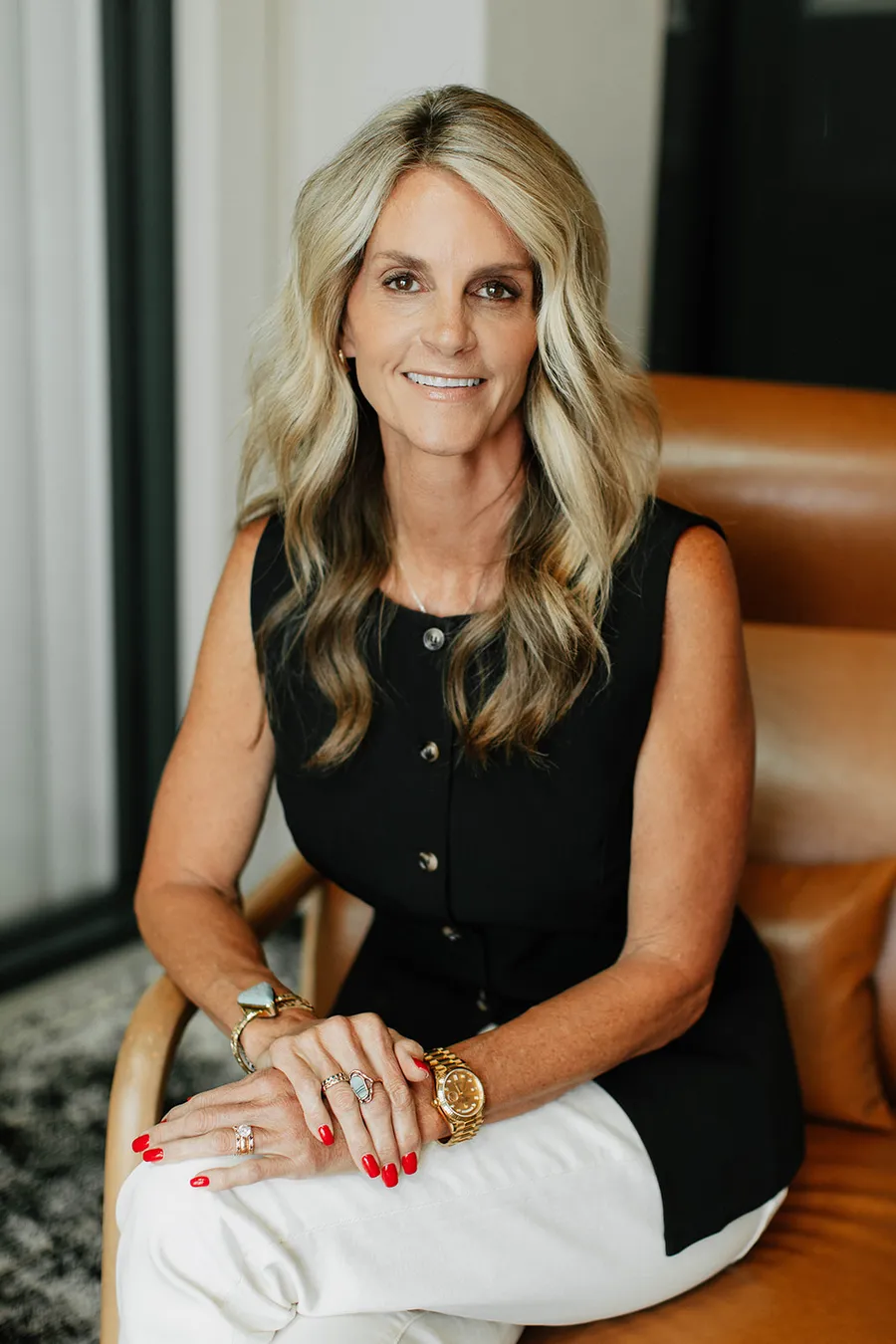
Liz Hartge
For over a dozen years, Liz has served as a Business and Leadership Advisor to thousands of ambitious entrepreneurs internationally - including greats like JOHN C. MAXWELL - helping them exponentially grow in business while unlocking their God-given potential. Liz is the award winning founder and CEO of the Luminary Leadership Co. and is proud to work alongside her incredible team and husband, while also homeschooling their 5 kids. After losing their 5th baby at 17 weeks pregnant, and experiencing a miraculous event after nearly losing her life herself, Liz is fiercely passionate about getting ambitious entrepreneurs out of the trap of busy, and into visionary leadership where they can step into their Big Next and access the intentional, meaningful, and freedom-filled lives they crave.
Read the full transcript
This automated transcript has been lightly formatted for readability and may contain errors.
Welcome to Yes Women’s Network podcast. It is a pleasure to have you with us today. I am honored that Liz Hartge is with us with Luminary Leadership Company. You got it. And you started that how many years ago?
We’re almost 15 years in business. Wow. That’s amazing. So what did you do before you did that? Well, I was pretty young when I started the business.
I grew up kind of steeped in entrepreneurship. My parents, my grandparents, aunts and uncles, and like many kids do, I was like, I’m going to buck the family system and I’m going to go climb the corporate ladder. There you go. And both myself and my employers quickly realized how unemployable I am. I don’t like to follow the rules and I don’t want to.
Yeah, I have to kind of beat my own drum. So I realized I’m bred like the rest of my family and my business actually started in the marketing space. So I was working in downtown Boston and I was going bar to bar, restaurant to restaurant, pitching my marketing services saying I can, you know, make you stand out against the other restaurants and bars in the area. And did that for about a year or so and knew I didn’t want to be in that industry. But I did love marketing because it’s studying people and how they tick and what makes them act or how they think.
So I took those skills and started applying it to small business because I’ve always had a heart for the small business owner. You know, the person who’s willing to go out on their own and create something from nothing for their family. So that’s where it got started in the marketing space. But it evolved over the years into, OK, if we’re helping you with your marketing, how can we also help you scale your business and grow your business? And I did that for years and found the same trend with each entrepreneur I was working with, which is that ultimately at some point they’re capped by their own potential and their own leadership.
So I kind of flipped it on its head and said, what if we scale the entrepreneur? What if we help them tap into their potential and become who they’re called to be? And the byproduct of that will be a business that scales in congruence with their values instead of a business that scales and maybe eats away at their marriage or quality of life or time with their family. So that’s the work we’ve been doing for a while now. And I get to work with some really incredible people.
That’s amazing. And to have that vision and the perspective. I mean, you had earlier talked about, oh, climbing the corporate ladder and running a business, you know, those kind of things. So what helped you have the foresight to be able to see what you were capable of doing and what you were able to provide? I think everything’s hindsight for me.
Like I have that clarity now. I think when I was in it, it was like just trying everything. I was just there was no job that I was above or that was beneath me that I wouldn’t do. I love that. And I had to just get my hands dirty and learn what I liked, what I didn’t like.
I had so many plans. I’m a very, I like to ideate and think of things and get myself into some trouble because I’ll come up with this idea that I think is brilliant and get a little bit into it and be like, well, this wasn’t it. But you get, you create a feedback loop by being in action like that. So then I’d get, okay, this isn’t the industry I want to be in, but I like these parts of it. Or I’m really good at these things.
Or I’m really not that good at these things. Um so it allowed it to just very organically evolve hit plenty of roadblocks made sure a million mistakes and i think those were often where i learned the most about myself um about my deficits like where i could grow but also about you know what made me come alive that’s what i always kind of served as a bit of a north star for me was like if it doesn’t breathe life into me I’m not going to sustain very long with it. Like it has to, I can do the hard work. There’s plenty in business that like I don’t like. You just have to do.
But not so much so that it’s sucking the life out of you. Right. That you’re able to. Yeah. That is amazing.
Yeah. So really trying to gravitate towards what’s in my sweet spot because that’s where the momentum builds and I’m having fun as I go. Yeah. So this, obviously, you’re recognizing, too, that this isn’t a one-man band, right? You have other people that you are counting on that help you.
But you’re also able to recognize what your strengths are, where other people have strengths that you can call from. Is that right? Yeah, we actually use personality assessments to really get that right. Because for many years, I was not in my sweet spot. My team was not in theirs.
And it just robs you of joy, but also energy. Like when you’re doing something that you’re competent at, but you’re not coming alive in it, you can do it for a while or you can sustain it, but you’re going to hit some kind of wall, right? It’s going to show up like overwhelm or stress or burnout. It’s really not. It’s just that you’re not in your zone of genius for too long of a time.
So we use personality. We actually have an assessment that we use with our clients and we use with our team. And it’s a leadership style assessment that analyzes each person that we’re working with or each person that is potentially coming into our company and identifying where their gifts are, what drains them of energy, what roadblocks they might encounter because of their natural wiring. You know, like if you’re this style, you might struggle with these things. So that’s been really helpful, too, because when you have people who are energized by the work they’re doing, yourself included, there’s kind of no limit to what you can accomplish.
And I think a lot of people think burnout is a result of a really full calendar, too much on your plate. But I’ve been in seasons where I’ve had more on my plate than you could ever imagine. And I’m like, give me more. I’m good. My capacity is expanding because I’m doing what I’m meant to do.
And on the flip side, I’ve had seasons where there’s not that much on my plate, but you would think I’m carrying it all because I’m just in these zones of drudgery and like just not where my gifts are. So how is it then when you use that kind of program and how are you meeting face to face with people and giving them direction? Is that how you’re able to? Depends. Okay.
The style assessment, the leadership style assessment is online. So that and I do have team members all over the world and clients all over the world. So it’s not always, you know, we’re sitting in an office together connected. Yeah, I do like with my clients that I work very closely with. We do build in points, even if we don’t live locally to come together.
I have some clients out in this area. It’s just there’s so much power in that proximity and connection. So we start with the online assessment. Happy to share it with you and your listeners if it’s helpful and then we also do further work I actually have a team member who specializes in personality and she can really like hyper analyze it beyond what my expertise is wow and really support people in their roles and and helping them you know zone in on on what’s really their natural gifting okay so you’re a mother of five children. How have you taken the vision to be an entrepreneur, to create a business that helps other business owners and entrepreneurs?
How have you been able to feel like you’re giving the attention to your children and being a mother, you know, and those relationships that are obviously very important to you? How do you make those still a focus while also building business? If you asked me five plus years ago, I’d give you a very different answer than today. Okay. Back then, I believed the hype that a lot of entrepreneurial people would throw around of like, your children don’t need all of you all the time.
If you give them 15 focused minutes a day, Like that’s a greater gift for your child than just being around all day but not being present. There are elements of truth to that. And I lived by that. Not that I gave them 15 minutes. But I really was like, no, no.
Like I’m building this business for our family and for our life and for freedom and so that we can have more of each other. And I’ll put them in the pockets of my day and make them feel special. And then I realized that I think that was the lie that we were sold to make us feel better about having our priorities out of order. Okay. So I grew up, my mom still runs her own business to this day.
My dad had his own business, my grandparents, my aunts and uncles. So very familiar and very comfortable in the world of entrepreneurship. And I never felt slighted by my mom’s work. She was always present and available and I was right there alongside her, you know, sitting at the conference table coloring while she’s working with a client. But something in like the modern business model, especially in the online space, we started to have these boundaries built.
It’s like, oh no, you have your work hours and you you give all of yourself to your work and then you go give all of yourself to motherhood. And those stark lines and feeling so compartmentalized always felt incongruent to me. I had like my mom’s business and my dad’s business and grandparents, their businesses were like my classroom, my life classroom. Like I learned so much from witnessing how they treated people and how they handled problems and how they problem solve things. So I had this shift a couple of years ago where I realized I think my children’s proximity to me matters a lot.
I think that the whole 15 focused minutes is BS and I need to give more of myself to my children, even if it’s not hyper quality time. They need to know that they have a moment where they want mom, I’m just, I’m there. So I really started to change how I worked and get way more focused. I shifted my business model so that I was elevating my team more where it wasn’t just me doing everything or me having to be the focal point of the business. We got more systemized so I could buy back some of my time.
I reprioritized the type of contracts I took or the clients I work with that like freed me up more and who honored family as a core value And I just started putting myself in closer proximity to my children There are obviously things like this where like I don have my five kids running around this room because we’d never get a word in. Right. So there are times that are protected, but I’m very strategic about it. Like today I have, you know, four podcasts all chunked together. They’re not sprinkled throughout my life where I’m traveling a lot.
I really hyper-focus that time so that the bulk of my time is available for my kids. It’s not a balance thing for me. It’s a prioritization. So if something’s going on in my family or in my life, I will change my timelines on my work. I will cancel things if my kids need me.
I will shift how I even view my ambition and what I pursue to ensure that I’m protecting my top priority. And that’s a big shift for me because I am ambitious to a fault. So that’s like a bit of an identity shift for me. But I think it’s serving my my children very well and it’s really helped me grow into who I think God’s calling me to be versus who you know like the success I was just kind of chasing over here in this compartment and then go home and be mom so I think women in general because of your experience and how you’re you’re talking about that can relate to that whole okay it’s in this box. This is what it looks like.
But when you’re able to assess it and go, that’s not what it has to be in order for my time with my children to be, what, prioritized or structured or whatever. But you have been able to structure your business in such a way, but also make your children feel seen and heard and valued. And I bring them into the elements of the business that I can. So my husband also runs his own business and he does high end building and contracting. And so when he’s on jobs that they can go learn with him, they go or we homeschool.
So we kind of integrate all of this into our very chaotic, crazy life. It’s amazing. Or my nine-year-old daughter loves to write and she started writing her first book. So she’s dying to know all the pieces of I’m writing my first book. And so as I learn something, she’s right alongside me so she can learn too.
And I had a meeting the other day with our designer who’s working on the front cover. Well, Marie sat in on the meeting so that she could learn how the designer was asking questions and how I was telling the designer what I wanted. So they’re just absorbing so much. Oh, yeah. I’ve stopped being like, OK, mommy has a meeting.
Close the door. Yeah. You know, I can bring them into the fray and let them absorb so much of what I’m learning as I go. So did your mom put you through that kind of experience as well? Yeah.
Why did that kind of naturally happen for you to be able to have your children involved that way? Yeah, the funny thing is when I talked to my mom about it, it wasn’t like intentional for her. It was just how life had to be done. You know, she’s like, I work and you’re my kid. You’re coming with me like the kids come with me.
It was never like, oh, you know, I’m going to bring you so you can learn this, this and this. It was just a, we’re going here, we’re going there. And it was just how you do life. I think the way parenting has, you know, shifted is the, we are now like shifting to accommodate the kids and their schedules instead of bringing them along with us to learn alongside us. And I think there’s a detriment to that.
Okay. So I’ve really, my husband and I have really tried to say, um, there’s going to be a lot of benefit from you guys just being in tow and they don’t always like it. I didn’t always like going to the office. Okay. You know what I mean?
Like I wanted to go do this. It’s like, no, this is what we’re doing because this is, this is a team. We’re a team. Okay. This is my role today.
This is your role today. Okay. So we’re coming together doing it. Now we’re doing it because, and when you give them the because, because we’re working towards this or because this is who we serve and what the impact we’re having. And by you doing this with me and giving me time to do this and coming alongside and learning, this is the benefit.
Kids are very smart. Even from young ages, they can grasp why something is happening. I think sometimes we leave the why out because we’re so busy. We’re like, just be quiet and do what I tell you. It’s like, Hey, you’re actually a key player in this mission that we have as a family through this business.
So that reminds me of that. It’s because I said so. And so, but being able to have that open communication with your children so that it’s clear. There’s clarity. They can understand where mom’s coming from or dad.
So I think that’s important. I think that’s a beautiful way to involve them. But, yeah, I love that. That is so great. Okay, so you work with so many business owners and leaders.
What’s the biggest misconception women have about success? That there’s, like, a specific definition for it. That what? Like, there’s a specific definition for success. Yeah.
Yes. Like, that’s such a trap. Mm-hmm. Because how can that be? Yeah.
Our realities and our experiences and our desires and our passions and our calling that we’re gifted with, all so different. There’s no universal, like, path to success or boxes to be checked. So the more you can kind of tune out what the world says and tap into what is true for you. So, for example, I talk about in my book and in a lot of my work this idea of your big next. Okay so you there’s where you are what you’ve built what you’ve created and and what you’ve chased and then there’s where you’re called to go and there’s kind of this gauntlet you have to walk to get from one to the other you have to release your grip on the good of over here that you’ve already built to step into the greatness and of possibility and becoming who you’re called to be to get to that thing over here and that’s a very uncomfortable thing for people because oftentimes to go from here to there, you might fail, right?
You might have to look a little green for a while because you’re stepping into new territories. People might not understand why you’re doing it. You might have to forego the level of wealth that you’ve generated here because you’re stepping into something new and it’s going to take time. So whatever the thing is, we like our reputation and our ego is just holding on to what we know because it’s so uncomfortable the idea of stepping into this new possibility and knowing like that we don’t have all the answers to get there and this feels a lot safer so we we we live by this definition of success because over here I’m making money I know what I’m doing I’m known for this but when you can release that and you can tap into what you know to be true for you in this particular season of your life, the calling placed on your heart in this particular season, then you can live in congruence with your values and who you’re meant to be.
And only then do you ever experience the satiation and the peace that we’re really craving when we’re pursuing and chasing success over here. So I’ve had clients where once they’ve released their death grip on good and stepped into that gauntlet where they’re being cultivated into who they need to be in order to achieve or step into this next level for themselves, maybe that looked like their business growing exponentially and them being able to receive a level of wealth or possibility they could have never manufactured over here staying so safe. But at the same time, I’ve had clients who were crushing it and making millions of dollars who were like, oh my gosh, my big next, my calling in this season is to be home with my babies.
And that’s terrifying to them because they’re like, that’s not what the world tells me success is. I built all this success over here. What is everyone going to think? What is my reputation going to look like? How can I, you know, are they going to think, what are they going to think of me?
But only in pursuing what is placed on their heart will they ever even feel like they’re successful in any measure anyway. Yeah. So we define success by like the world’s measures or external measures or what so-and-so is doing or what’s happening in the industry. And then we’re robbing ourselves of the opportunity to actually feel, you know, satisfied, joyful. So do you feel that women are guarded in following their intuition?
Like they’re hesitating to follow? Yeah, I think so. I think the world’s very loud. Intuition is a very quick and quiet thing, meaning we get a little nudge, But almost instantly as the nudge of the fear creeps in, the doubt, the louder, more prominent, consistent voice comes right after. So it very quickly drowns out the intuition and we almost forget that it ever popped up in the first place.
And learning to not ignore that initial nudge is really critical. Because that’s probably going to be whatever the little action step that leads you into the next action, the next nudge, the next piece of intuition that will take you where you want to go. But here we are like working so hard and making our checklists and pushing and wondering why we’re like, why doesn’t this feel right? Or why is it not working out? It’s like, because you’re not even on your own path.
You’re on some like predetermined someone else’s idea of what success is, you’re not going to find your contentment there. Okay. I love that. So how do you help direct them to recognize that? So I turn everything into a framework or a process because I’m a giant nerd and I am a business strategist.
So this is how my brain works. I always have my own struggle, create something for myself. If it works, I bring it to my clients. And then if, you know, as it proves true for everybody, I put it out into the world. So you’re your own little guinea pig.
Yes. Okay. Exactly. Okay. So one of the things I utilize that I go deeper on in the book, but I’ll give you the two pieces that are most important.
So it’s called the clarity matrix. And I utilize it anytime I feel stuck or overwhelmed or doubt or unsure or need to redefine to success or whatever it might be. I there are four quadrants the first quadrant that we tend to get stuck in where everyone else’s definitions of success might live are easy and heavy this is like they go together easy and heavy in this one quadrant and those are the things that come easy to you might be like a way you can make money you know without thinking much about it but when you sit with whatever it is it has a weight to it that you’re just like, I know this isn’t right for me. So for example, for many years, I had one-on-one clients.
And if your money was green, I’ll work with you. But it wasn’t like the people I wanted to work with. It wasn’t like the missions that I felt drawn towards. Because you felt like you wanted to be, to reach more people? No.
Is that what that was for? It was more like I was taking these clients because I knew it was easy. I could get the money and I could just keep going. But there was just a weight to it. Like they weren’t the right people.
And I was kind of afraid to take the leap into doing what I really wanted to do because the money’s coming in. I can’t walk away from that. That’s too easy. And I’m making great money and this is what success is. But then over here in this other quadrant is hard but light.
Those are the things that when you think about them, they spark something in you. They have like this magnetism. But when you look at and analyze what going to be required to get there it hard It going to challenge you It going to stretch you You might not have all the answers yet Like an example for me is the book It’s like when I thought about writing that book, I like came alive in my mind. But I didn’t know, traditional publisher, self-publish, hybrid. Do I just open a Google Doc and start writing?
I knew none of the how, but it didn’t matter because I was so drawn to it. So that’s kind of a filter that I use for myself and for my clients to help them start to decipher what are they being called to? What are they doing just because it’s what they’ve always done or what the world tells them they have to do or just because it comes easily? And what is it that they’re meant to do? And usually the thing that falls in that other quadrant where it’s light but it’s going to be hard, that’s where you’re going to take your next big leap.
But there’s risk that comes with it because you’ve got to kind of let go of the things that may be more automatic or what you’re known for or where you’re comfortable. Just because it’s hard doesn’t mean it’s wrong. Do you find that often with people and trying to break them through okay it is hard but it doesn’t mean you know it’s wrong or that you’re not going to get there. Right there’s a difference between hard and heavy right like hard is a good thing that’s where we’re challenged and where we grow. If we don’t have things that stretch us, we don’t evolve into who we’re meant to be to handle whatever this next season is going to bring into our lives.
So if you keep putting yourself in convenience and comfort, you just, that’s okay, but you’ll just kind of coast. And that’s a great recipe for like maintenance. You want to stay where you are, stay comfortable, seek out things that are convenient or easy. But there’s really no version of the story where you You get to get into what you’re really meant to do, what you feel called to do, the next level of opportunity and possibility by coasting your way there. Yeah.
So I think our tendency is to set goals because it’s like, OK, I hit this mile marker and now here’s the next goal. I want to make this much money next quarter and I want my I have a goal of launching this thing or writing this like check, check, check, check. The problem with that is you can have goals just kind of splattered all over and they’re not necessarily leading you somewhere versus saying this is where i’m meant to go and generally speaking this would be the trajectory to get me there so you’re actually choosing the mile markers that are on that trajectory so i’ve had so many clients over the years who have like continually made more money and set the next financial goal, but they’re not really advancing towards what’s for them.
That’s kind of going back to your question of success and defining success, right? They’re not necessarily progressing towards where they’re meant to go when you’re just kind of setting the goals that sound good and you don’t know why you’re setting them versus saying like, this is the trajectory I want to be on. And then you leave room for the ups and downs of life. Because when you are setting goals, you either hit it or you don’t. When you’re on a trajectory, you picture this hopefully upward line, but there’s a lot of like you hit blips above the line and then you hit the dips, and that’s normal.
We live on an orchard and a farm out in New Hampshire. And there are seasons when you’re a farmer, right? There is the season of harvest, right? When it’s apple season in New England, people come in and pick their own apples. They’re making almost all their money in this window of time.
Then winter comes and the plants go dormant and no one’s coming to pick apples. Doesn’t mean that farmer is a failure. It means that this is the design. It’s ebbing and flowing. It gives you seasons of slowing down and shifting into a different area of focus.
But as business owners, we don’t give ourselves permission for those dormant seasons or those slower seasons or those seasons of contemplation. It’s like if we’re not always just hitting the next goal, we’re failing. It’s just not true. So I like a trajectory because it just leaves space for, like, truth, how life actually works. Yeah.
Real-life incidences happen and how you approach that in real life and as you’re building a business. I’m sure I would imagine that that kind of frame of mind would give people peace of mind. Totally. Doesn’t it? Yeah, it gives you peace of mind.
It gives you space to be a human being. Like there are times where I’m just going through it, right? Like something’s going on in my personal life or one of my kids needs me in a bigger capacity. And if I’m constantly just hungry for the next goal I feel this division or this like being split in two versus saying okay like this I know this is my trajectory my timeline might change a little to accommodate reality I had a I had a mentor once who like hit me square between the eyes I I was just that type that was just like always chasing and um I felt like my worth was tied up in my product production like if I wasn’t doing where was my value and not so relatable other people yeah I was pregnant with our fourth baby at the time and I was setting all these goals and like an impending due date is always my like get your button here do all the things optimize the business grow hit these goals so I’m this crazy pregnant lady like sprinting in my business And my mentor is like, Liz, you need to reconcile your ambition with your reality.
It’s like you’re having your fourth baby. You’ve chosen to homeschool. You say you really value family. Stop setting these goals that are actively working against the things you say matter. You’re going to get there.
But stop comparing it to the 22-year-old guy who doesn’t have any kids and you think your timelines need to match up with that type of entrepreneur. Like, knock it off. And that was a really humbling, the healthful thing. Yeah, it was like that’s kind of where I shifted from the goals to the trajectory. And it gave me, like you said, peace of mind, space to, like, breathe and do life and not constantly be hyper fixated on just the next goal for what.
You know, you talk about the way you live and work to do it with intention. So what are some of the daily habits and practices that you incorporate into your life that you will share with with others? This might sound silly and counterintuitive, but I feel like every day I’m just kind of fighting nature. Fighting what? Fighting nature.
Because I don’t want to do a lot of the things. Like I’m not in the mood to do a lot of the things that I do in my daily practice but I know they’re the things that are going to best serve me my family my mission and all that um so for example my temptation when I wake up in the morning is just to like sprint right into work because I’m like I gotta maximize time I only have this much time before I’m gonna start homeschooling so I would want to just like wake up and just go but I build in um I call it the um steward schedule where I know there are seven specific blocks of time that are going to show up in every week for me to ensure that I remain not just a busy entrepreneur, but a steward of all the gifts that I’ve been entrusted with, including my business and my family.
And one of those blocks of time is the intentional block. And that block of time sits before I touch anything else. And it’s different in length, depending on the season I’m in. I have a nine And the older likes to wake up at, you know, 4. 30 in the morning.
So my timing might look different. But it’s a block of time where I’m giving my focus to tapping into God first and saying, where do you want me today? Like, I’ve got all my ideas, but what are your ideas for me? Where do you want me? What do you want this day to look like?
And just asking, like, hey, will you just guide me? Will you show? You got to protect me from myself here. You wired me to be pretty ambitious, but sometimes it gets me into trouble. So it’s really being in that partnership with God and just really scaffolding myself as I go into a crazy day.
So it’s not just setting an intention, but it’s being intentional. It’s like choosing who I’m going to be that day and and can and and like writing and kind of creating that reality before I step into the battle of the day. Because it is a battle. It’s crazy. Town.
So that’s a big piece for me. And I almost have never, maybe with the exception of a couple random times, like when we’re on vacation at the beach and it’s like beautiful and inspiring, have I wanted to start my day doing that. And, but every time I do, it’s like a workout. It’s like, I never want to work out, but every time I work out, I’m like, oh, that was great. Yeah.
I’m so glad I did that. And every time I skip it, I’m like. Something, mid thing. Yep. This did not set me up well.
So doing things like that are really kind of mission critical for me. I also work really hard on being very aware of my thoughts because my mind is actually like, my husband’s a natural optimist, drives me crazy. Everything’s great. That’s my honey. I get it.
I am a natural, I’m like a Northeasterner to the umpteenth degree. I’m like cynical, sarcastic, and a pessimist by nature. I would have never guessed. Well, yeah. So I can spiral, you know, into that negative place.
And for years, I kind of just like let that be my wiring. But now I refuse that. I’ll still have the thought, but then I become aware of the thought and I’m like, no, I’m not going to. We’re not doing that. So, again, don’t feel like it.
I want to have the thought. I want to be ticked off about something or whatever. But I have to fight nature a little bit. I have to choose the path that I’m going to walk that day, despite my circumstances or environment or whatever comes naturally to me. Yeah.
You mentioned a hobby farm. We did, yes. Okay. So how do you make that a hobby and not work well i’ll be totally honest with you we moved from we lived in boston for years and then once we had two kids we’re like we’re not city people my husband at the time was working for in corporate he hasn’t for about a decade now but we were like we can live anywhere the you know our job can take us anywhere um and we found our dream property in Wisconsin on this beautiful 11 acre property, rolling hills, just stunning, big barn and, um, pastures. And we’re like, we totally can do this farm life.
And then we started having kid after kid after kid. Like I got to keep the kids going. I can’t worry about like my vegetable garden and, you know, a bunch of animals. So we had chickens, we had a horse on the property, But we quickly realized, like, again, going to like different seasons, this is not the season for that. So about two years ago, we sold that property and that’s when we moved back out east.
Now we live on an orchard, but we don’t run that orchard. So it’s the best of both worlds. Yeah. We enjoy the beauty of the farm. Okay.
There were a lot of lessons and our kids were young when we were in Wisconsin. So it was really cool to, like, there are a lot of lessons you learn through. We had a very we had probably we grew probably like 30 different fruits and vegetables it was really neat but I also learned I have a black thumb I kill every plant and everything I try and grow and it started to feel more like a stress than like a peaceful thing to me so we went in a new direction but we do like having land we have land we want space for our kids to grow up We will get chickens again as we, you know, we’ve been in our house about two years now, so we’re kind of like getting settled.
And when we have more capacity and when our kids are a little older to be able to participate. To be able to do the responsibility. Do the work. I get that Yes And I was a big fan of providing those opportunities for my children that they could care for pets or animals Great learning experience. And also teaching them compassion.
Have you found that by having animals that you’re able to teach your children compassion? Compassion, responsibility. Yeah. You know, circle of life when you have chickens and a hawk has taken out one of one of your birds and your kids are freaking out. You’re like, this is just kind of the nature of life.
There’s like a lot of great lessons in farming and growing things and just like spending your time doing hard work. But it bears fruit, right? Like you you’re taking care of the chickens, but you’re getting, you know, all these eggs every day and those eggs nourish you. And you know where the food’s coming from and you know how it’s cared for. So there’s so much opportunity for them to understand that kind of stuff.
Their mother’s just not very good at it. I love that. Yes, Women’s Network. The mission is to help women gain clarity, have connection, gain confidence. So in your line of work, how have you felt you’ve been able to meet those needs of women starting businesses and helping them gain that.
I think we all struggle with it and it’s every level the beginning the middle advanced I mean I work with people of all stages of business I have over the years and I mean even people making eight nine figures having moments of like I don’t know what I’m doing how do I do this yeah what’s next for me I feel stuck so it’s It’s universal. Again, I create the processes to help me through it. So I’d love to gift something to your Yes Women’s Network. I have essentially a playbook that I created that I utilize all the time, especially when I’m really feeling jammed up. Stock can’t quite identify why I’m where I’m at or why I’m thinking the way I am.
It’s our clarity playbook, and it has in order the right prompts and questions to kind of draw out of you the answers that will lend to that clarity and guide you back towards your true north, back towards your calling, not into someone else’s definition of success or what the world says is right for you. They can I can give you that information or they can just DM me on Instagram the word clarity and I’ll send it to them but that has been a really helpful tool and I think the reason I revert back to these tools is because the space that I’ve worked in for a long time of leadership can feel very esoteric so I speak a lot and when I speak at an event or something when you’re just left with inspiration and then you go home and you don’t know how to apply it in the moments of your day, it kind of fades into the background and it was never all that useful.
So I like to take ideas that can feel very pie in the sky and inspirational and turn them into concrete things that I can do in the moment that I’m struggling so that I feel like I’m progressing through it, not just stuck in it. So for me, tools like that have been very helpful. Another big thing is I think being in proximity to people who are going to see what you can’t see when you’re in a moment of stuckness is critical. It’s why I’ve run masterminds for years. It’s why I participated in masterminds.
It’s why I always have, you know, a mentor alongside me so that they can reflect back to me what is true because man, does it get skewed when you’re in that overwhelm and that confusion, you can’t really see, you know, the path forward, but someone else might be able to, They might be able to help you guys guide you through it. So never being in isolation. So you talk about God given attributes. How do you help women aside from what you offer in that way? Are you able to tap in to and on a personal level to help women or anyone see what their God given attributes are that can serve them well?
Yes. That is like, you know how sometimes you just kind of discover the little things that maybe you take for granted that God does instill in you that you can use to serve other people? That to me is just one of those things like I have a hard time speaking about my strengths but that’s one that I feel confident in is that I can sit across from someone and draw see in them something they can’t yet see in themselves and help them cultivate it and yes I use tools and and sure things like and and our assessment and stuff like that to help support it but even just I like to do it most through connection. You know, just the conversations and the questions and the stories and the infusing that level of belief into them.
Someone can go from like their darkest moment to the most inspired possibility in moments time when someone else can believe in them and help them draw that out? That’s a beautiful thing. That’s a gift. I mean, to be able to help and anybody recognize what their gifts are, what their strengths are, what they have to offer. Everybody has strengths.
Everybody has something to offer. Absolutely. And to be able to recognize that, that’s a beautiful thing to be able to recognize that in somebody and to help them see so that they can venture out and do, you know, the things that they’re dreaming up in a quiet moment that they don’t believe they can do. Right. Yeah.
So you’ve written a book, though. Yes. And what is it titled? It’s called Your Big Next. Okay.
Yes. That’s also the name of my podcast. And I can’t give you the exact date it’s coming out. I can just tell you if people go to yourbignextbook. Com, they can get on the wait list.
But that has been a great example of reconciling my ambition with my reality where I set this crate actually the funny thing is I set out to write this book started writing set the date the launch date started you know going through the process find out I’m pregnant about a month later oh yeah okay due date same day as the launch date so I say to my husband that’s fine we’ll just do And he looks at me cross-eyed like, you’re a psychopath. No, you cannot. My whole team’s like, absolutely not. It was meant to be if it lands that way. So that was a good example of people in my corner reflecting back to me reality and saying, don’t you think it’s a better idea to just continue on that trajectory but perhaps push the timeline?
I’m like, well, I can’t push the baby timeline, so we’ll have to push the book timeline. So we’re in the design stages right now. But yes, it’s exciting. Yeah, it’s a book that kind of encompasses a lot of the frameworks and things we talked about, but also that transformation from that stuckness and lack of clarity into that clarity of calling and then what’s required and who you can become to to step fully into that, into where you’re called to go. Love it.
That’s exciting. And that was how many years in the making? We’re coming up. It’s been over two years. Yeah, just over two years.
Wow. I can’t wait. I can’t wait to see how that comes out. Thank you. Yeah, I’m excited.
It’s kind of, I would say writing it itself was not a labor of love. I love writing. I really enjoyed it. Give me a blank slate and I will write 100,000 words without stopping. I’d love it.
The editing that’s not my strength I have a team but I still you know you’re still involved in the process it’s like go make these changes or what do you think of this and I’m just like ah I wrote it just take it and do something with it okay so how important do you think women friendships are in line of work or personal um I think they’re incredibly important and it’s also a major weak spot for me I’m very insular not by choice just kind of I’m very I’m introverted naturally um but I get so much joy from depth of relationships like real I don’t I can’t do small talk I can’t do the surface level stuff so it kind of makes me lean away from like like a million little friendships um but and I’ve had like the same core friends since I was a little kid.
Oh, good. And I also grew up in a very tight knit family. So my family has always been my network of depth and connection. But in the last handful of years, I feel like God’s brought some women into my life that have just kind of opened my eyes to the necessity of that and the blessing in that and the fruitfulness and the joy it brings and like just the how it enhances your life. So I’ve become a lot more open to making friends, like true friendships as an adult.
Yeah. Good, good. So do you, what are your hobbies outside of work? What’s a hobby? Yes.
What is that exactly? Well, I’ll be totally frank. I have said for years, I need a hobby. I do not have one right now. And in part, this might be a bit of an excuse, but in choosing to homeschool, my kids are home 100% of the time.
There is no moment where I’m not with them. And when, you know, my husband and I divide and conquer a lot, and we have a good village around us. My family is very integrated into my children’s life, which is a huge gift. But when I have a moment, it’s usually in my work, which for many years, I said, oh, well, I love my work so much. It’s like a hobby.
I understand that that’s not what we mean when we say hobby. Like there are things that should have no like productivity or advancement or accomplishment tied to them that you just really enjoy. So I’m still discovering that. I tried the whole gardening thing. Not my hobby.
But I did enjoy. I was talking to my husband about this a little bit ago. In college, I took like a winter semester when I was home just to fill time. And I took a painting class and I loved it. Like I just loved it.
I like writing poetry too. But I wouldn’t say I’ve like built either of those into any kind of rhythm that has qualified it as a hobby. I like hiking and being outside. It’s just like sitting on a beach doing nothing a hobby because if that’s a hobby, I’m asking that. You got it.
I’ll take that. Oh, I love that. It has been so great to have you here on the show. It was a joy to be with you. You’ve been amazing.
Thank you. And there’s so much that I think everyone who’s watching can draw from your expertise. But it’s not what makes it so valuable is you’ve lived it. This is from experience that you’ve created this. And I think that is just so such a beautiful gift that you’re offering other people that you lead in such a way that people can go.
This is what it is. We’re seeing a walking example, living example of it. That’s exciting. That’s a beautiful gift that you have. So thank you for being with us.
Thank you for having me. Yeah. So that is the end of this segment on Yes Women’s Network. Thank you for being with us. Every honest conversation moves a woman forward.
This is what Yes Women’s Network was built for. Faith, relationships, well-being, and finance. And one community that holds you accountable and wants you to win in every aspect of life. Women rising together. This is yes.