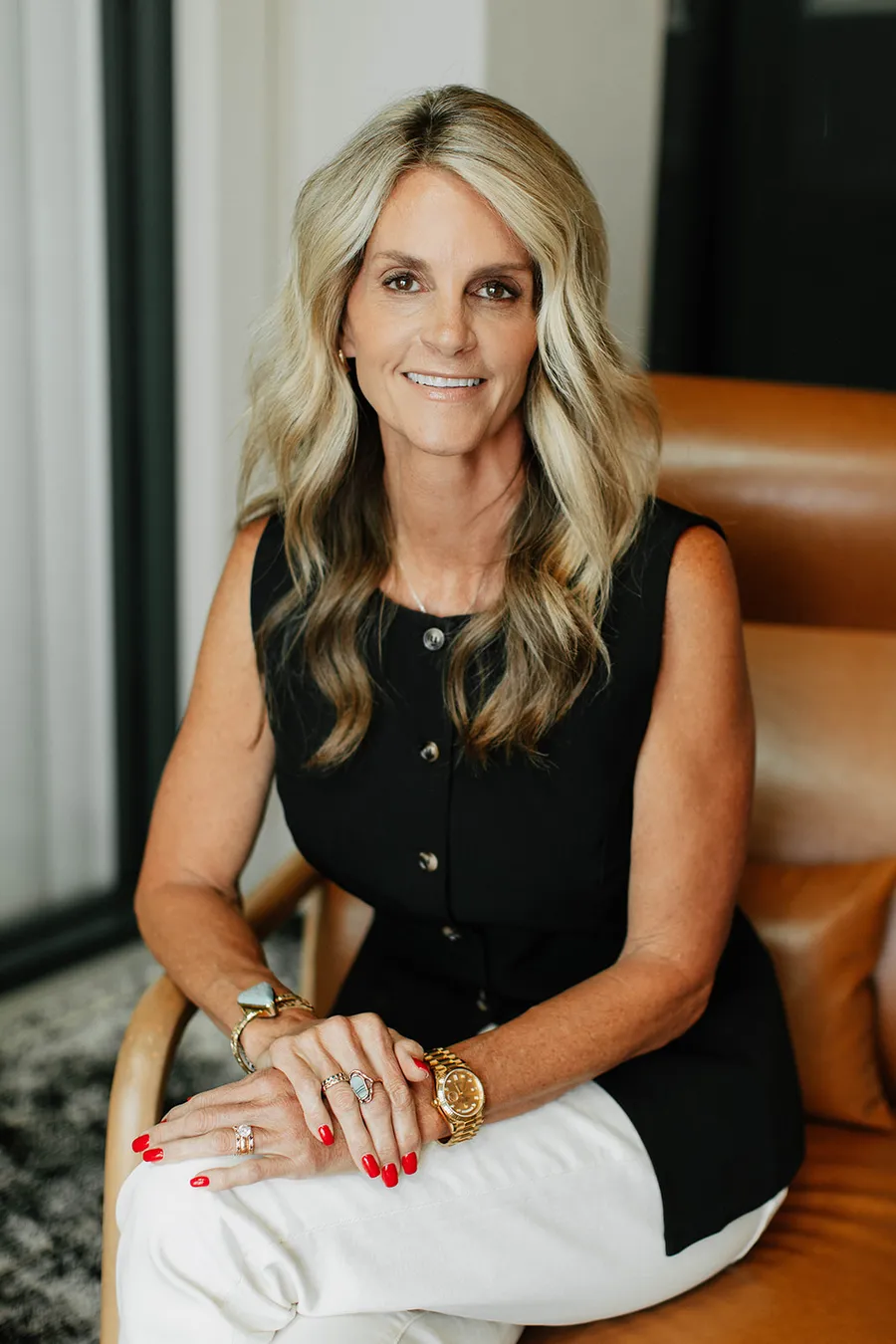
Turning Pain into Purpose with Brandy Vega
with Brandy Vega
About this episode
Some conversations stay with you because they refuse to make pain look tidy. This one does. Michele Morley sits down with Brandy Vega, a wife, mother, Christian US Army veteran, award-winning media executive, speaker, and philanthropist with more than three decades in media, storytelling, and community leadership. Brandy is the founder of Promise2Live, a global suicide prevention and mental health movement built around connection, conversation, and trusted resources.
What makes Brandy's story useful is not that she has arrived somewhere the rest of us have not. It is that she keeps choosing to move forward while still in the middle of hard things, and she has practical tools to share for the moments when you or someone you love is not okay.
Brandy Vega on trusting God before the picture makes sense
Brandy traces her clarity back to a season thirteen years ago. Six months into a remarriage, she learned her husband was having an affair. Sitting in her car, asking why this was happening to her, she felt an impression: Do you trust me?
She spent the next three days sitting with that question and eventually found a 1995 talk by Richard G. Scott called Trusting in the Lord. What she realized surprised her. She had never actually trusted, because trust requires submission, and submission had always felt like losing.
To trust means you submit. And submission is bad in my book. It always had been.
What followed did not look like retreat. Brandy started a nonprofit, built a video production studio, earned her foster care license, adopted a son born addicted, and served as a surrogate the following year, all while parenting as a single mom. People told her she was insane. Her answer was simple: she submitted, and this is what it turned out to look like.
ASKEM: ask, seek, knock, expect miracles
Brandy loves acronyms, a habit she credits to her Army years. Her favorite is ASKEM: ask, seek, knock, expect miracles. As she puts it, you cannot ask God to guide your footsteps if you are not willing to move your feet.
The promise behind Promise2Live
Five and a half years ago, Brandy sat at Primary Children's Hospital after her daughter attempted to take her life. For two days, no one knew whether she would survive. Brandy had volunteered at a hospital for seven years doing spiritual care and Nobody Dies Alone, but she says sitting with your own child is entirely different.
She recorded the most vulnerable video of her life from her car, simply saying she needed help. It reached twelve thousand views overnight and brought hundreds of messages. On the second day, still begging for a miracle, she heard a voice.
Brandy, I'll give you a second chance. There will not be a third. What will you do?
Within an hour, her daughter woke up. When Brandy asked whether she was glad to be alive, her daughter said yes. She had not wanted to die. She wanted the pain to stop. That distinction now sits at the center of Brandy's work. She says most people are looking for a way to kill the pain, not to end their life.
Brandy asked her daughter for a promise to reach out if she found herself in that dark place again, to a parent, a friend, a teacher, anyone. Her daughter agreed. Promise2Live launched in 2021 around that idea. Brandy says people are up to sixty percent more likely to keep a promise they made to someone they care about. The organization gets people to make that promise, connects them to trusted tools and resources, and builds community before crisis.
What to say when you think someone is struggling
Most of us stay quiet because we are afraid of saying the wrong thing. Brandy's second acronym removes that excuse. ASK stands for acknowledge, support, keep in touch.
Acknowledge means naming what you see: I know you got divorced, or you have not seemed like yourself lately, is everything okay? Support means saying that sounds really hard and I am sorry you are going through that. You do not have to be a clinician. Keep in touch means giving them something to look forward to, like lunch tomorrow or a walk next week.
She also points to one word that changes a conversation: really. How are you, really? That single addition gives someone permission to answer honestly, because most people assume nobody actually wants to know.
Brandy is direct about the fear that asking about suicide plants an idea. It does not. Either the person is struggling with those thoughts or they are not, and asking may buy time. If they say no, she suggests asking them to promise to reach out, whether to you, to family, or to 988.
Small practices that hold you steady
Brandy is honest that the last several weeks before this conversation were among her hardest in years. Promise2Live lost a volunteer to suicide. One of her children was in crisis. She did not want to see anyone or do anything, and she said so out loud, which is part of the point. She has learned that it is okay to not be okay and to let people lighten the load.
Gratitude helped too. When she stopped listing what was wrong and started listing what she had, she woke up in a better mood. Where focus goes, energy flows.
Her closing lesson, drawn from mentoring high school and college girls, is one many women carry backward. Brandy spent two years convinced a colleague disliked her, until that woman posted publicly about how much she admired her. Months later, another woman confessed she thought Brandy did not like her.
Just start acting like everybody you meet loves you, that they like you. Why wouldn't they like you?
Action Steps
- Ask one person this week how they are really doing, then stay quiet long enough to hear the answer.
- Use ASK with someone you are worried about: acknowledge the issue, support without fixing, keep in touch with a specific plan.
- Set up a 1 to 10 daily text check-in with a loved one who is struggling, and agree on what a three or lower means.
- Ask for prayer and support out loud when you are the one having a hard time.
- Write down what you are grateful for on the mornings that feel heaviest.
If one conversation in your life feels overdue, start there. Send the text, add the word really, and ask for the promise.
About the guest
Brandy Vega
Brandy Vega is a wife, mother, Christian, U.S. Army veteran, award winning media executive, speaker and philanthropist. With over three decades in media, storytelling and community leadership, she is the founder of Promise2Live, a global suicide prevention and mental health movement dedicated to saving lives through connection, conversation and trusted resources. Brandy believes her greatest gift is bringing people together, turning pain into purpose and using her voice, faith and experience to create change that saves lives.
Read the full transcript
This automated transcript has been lightly formatted for readability and may contain errors.
YES EP 7 - Brandy Vega Brandy Vega: [00:00:00] When I’m down in the greatest depths of despair, he’s always there. And so as I [00:00:05] begged for a miracle, again, I heard a voice say, “Brandy, I’ll give you a second chance. [00:00:10] There will not be a third. What will you do?” And I was [00:00:15] like, “God, if you save my baby, I’ll do anything.”
“Anything?” I said, “Anything.” [00:00:20] Wow. And literally within an hour, she woke up. Narrator: Most [00:00:25] women aren’t struggling because they lack drive.
They’re struggling because they’re stuck or [00:00:30] building alone. The Yes Women’s Network Podcast changes that. Hosted by [00:00:35] entrepreneur, coach, and community builder, Michele Morley, this is the space where women [00:00:40] find clarity, connection, and the courage to grow across faith, [00:00:45] relationships, wellbeing, and finance. Welcome to the show. Michele Morley: Welcome to [00:00:50] Yes Women’s Network podcast.
I am Michele Morley as, uh, your host, and I’ve got [00:00:55] Brandy Vega here with me today. Thank you so much for being with me. Brandy Vega: Any time [00:01:00] I, I get to spend with you is time well spent. Michele Morley: Oh, that’s the sweetest. It’s true.
Thanks. You’re so Brandy Vega: [00:01:05] good. It’s true. She’s amazing. Michele Morley: Oh, you too.
Thank you. I’m gonna do a little [00:01:10] introduction. So Brandy Vega is a wife, mother, Christian US Army veteran, [00:01:15] award-winning media executive, speaker and philanth- [00:01:20] philanthropist, with o- over three decades in media, storytelling, and [00:01:25] community leadership. She is the founder of Promise to Live, a global suicide [00:01:30] prevention and mental health movement dedicated to saving lives [00:01:35] through connection, conversation, and trusted resources. Brandy believes [00:01:40] her greatest gift is bringing people together, turning pain into purpose, [00:01:45] and using her voice, faith, and experience to [00:01:50] create change that saves lives.
Brandy Vega: Wow. I mean, when you hear it [00:01:55] read like that, you’re just like, “Is that really me?” Thank you. I guess it is me. Michele Morley: [00:02:00] That’s so amazing.
You have- Thanks I mean, all the things that you’re working on, and you [00:02:05] have … It seems you have so much clarity and purpose. How did you get to [00:02:10] that point? Brandy Vega: It’s interesting you say that. I actually had this conversation with one of my friends [00:02:15] this morning.
Her name’s Michele as well. And I think I just got to a point, it was about[00:02:20] I’ve had a lot of points. He has to work hard on me. I Narrator: believe that. Brandy Vega: But it was about three years [00:02:25] ago, and it was in the beginning stages of Promise to Live, and we had to make a hard pivot, and it [00:02:30] was really challenging, ‘cause I could hear people going behind my back and saying different things, and I felt [00:02:35] all this pressure.
And I remember having a breakdown, and I was walking around my [00:02:40] studio, and I just sat down in the grass and I started to cry, and I started to pray. [00:02:45] And it came to me that, “Brandy, don’t worry about what [00:02:50] people think about you. Worry about what I know. And I know you, I know who [00:02:55] you are, I know what you’re doing, I know why you’re doing it. Don’t worry about others.”
[00:03:00] And that was just something that hit me so hard, because we spend our life [00:03:05] just worried about what other people think. Michele Morley: Sure. Brandy Vega: And at the end of the day, it doesn’t matter. [00:03:10] It really doesn’t, and not everybody likes chocolate, and you can be the brightest ray of [00:03:15] sunshine and some people prefer the clouds. So you’re never gonna have everybody love you.
Michele Morley: Mm-hmm. Brandy Vega: But if you know where [00:03:20] your source of love comes from, it changes everything. Michele Morley: So I love [00:03:25] that, the source of love. So but how did you reach a point in understanding that and [00:03:30] knowing who you are so that you could act on that? Brandy Vega: [00:03:35] Another one of those moments.
I went through one of the hardest times of my life 13 years [00:03:40] ago. Michele Morley: Wow. Brandy Vega: I had gotten into a relationship. Six months in, I had [00:03:45] gotten remarried, found out he was having an affair, and I was devastated because I saw my [00:03:50] future slipping away. Michele Morley: Sure.
Brandy Vega: I saw the idea of children and business, and I just felt [00:03:55] like such a failure, and I was having another breakdown. These, these messages seem to come to me when [00:04:00] I’m bawling in my car or out in the grass in the fetal position like, “Oh.” But I, [00:04:05] but I was sitting in my car and just, you know, the, “Why me? Why me, God? Why me, Heavenly Father?
[00:04:10] This isn’t fair. I’ve done everything. I’ve, you know, done this and this and this.” And again, [00:04:15] as I sat there, I heard a voice, and it was just this overall [00:04:20] impression saying, “Do you trust me?” And at that moment, Michele, I was like, [00:04:25] “Yeah, of course I trust you.
Yes. I think so. Maybe. Why? [00:04:30] Why did, why did you ask me that?
Maybe…” You know. And so I went back, and I spent the next three [00:04:35] days just studying that and thinking, “Why was that in my time of need, [00:04:40] in my time of pain? Why did I hear that, ‘Do you trust me?’” [00:04:45] And I started digging, and finally I came across the talk by, um- [00:04:50] a, a general authority named Richard G.
Scott, and it was from 1995, and it was [00:04:55] called Trusting in the Lord. And I listened to that talk, and I felt like it was- Yeah … [00:05:00] written just for me. Michele Morley: Mm-hmm. Brandy Vega: And I realized one thing at that time, [00:05:05] that I had never trusted in the Lord, ever.
I thought I did, [00:05:10] but I didn’t. Because to trust means you submit. Michele Morley: Mm-hmm. Brandy Vega: [00:05:15] And submission is bad in my book. It always had been.
You know, I relate it to the word, [00:05:20] like, if you get submitted in sports, you get pinned, and you lose. If you submit, [00:05:25] you give up. And so in my mind, I had never submitted my will. Until that [00:05:30] moment, I just said, “Okay, fine. What I think I want, what I think I know, the things I’m [00:05:35] working for, they’re not working for me.
So what can I do?” [00:05:40] Trust in the Lord. Turn it over. And I made a decision at that moment 13 years [00:05:45] ago that no matter what, I don’t have to understand it. I just have to move forward in faith.
And I [00:05:50] have a great acronym that I ac- uh, ‘cause I’m military. Yeah. Served in the Army. I love acronyms. [00:05:55] Sorry.
I do. Um, ASKEM, A-S-K-E-M. [00:06:00] Ask, seek, knock, expect miracles. [00:06:05] And so at that point in my life, I was like, “Okay, when it doesn’t make sense, I’m gonna just [00:06:10] submit, and I’ll just ask.” You can’t ask God to guide your footsteps if you’re not willing to move your feet.
[00:06:15] So I kept moving forward in faith, but I ended up doing things I would have never done. [00:06:20] I mean, this was the time I started my nonprofit. I built my video production [00:06:25] studio. I got my foster care license, and I adopted a son. I was a single mom [00:06:30] with, you know, two, a 10-year-old and a 15-year-old, and I adopted a little [00:06:35] boy who was born addicted through foster care.
I was a surrogate the next year. You know, [00:06:40] I’m single at this time. I’m there, I’m pregnant. I have a baby. I have a business.
I have a [00:06:45] nonprofit. Everybody goes, “You’re insane. Why are you doing this?” I’m like, “I [00:06:50] submitted, and turns out this is what it looks like.” It doesn’t make any sense.
But [00:06:55] that entire process from the time I chose to give it over to God, to really, really [00:07:00] try to let go, which I’m not always perfect at, ‘cause we still I’m a controller. I’m a [00:07:05] Type A. But I’ve, I’ve learned to really submit and say, “You know me. [00:07:10] You see all 10,000 pieces of my puzzle.” I only see what’s in front of me, and I try to force [00:07:15] the pieces to fit sometimes, and sometimes they don’t look anything like we think they should.
[00:07:20] And my life has never been better. I’ve, i-i-it’s been ridiculous and [00:07:25] insane. But it’s perfect for me. And it doesn’t mean there hasn’t been hard things, as you know. [00:07:30] You know, I almost lost my daughter.
I’ve had hard stuff, but it’s, it’s [00:07:35] worked out, and I just have that foundation that I know whose I am. [00:07:40] Michele Morley: So in that, you have to be proactive. You can’t just [00:07:45] wait for things to happen. You had to be proactive. Even though you’re [00:07:50] submitting, you’re in action.
Yep. And so that, but that takes a lot even [00:07:55] to do that without seeing the full picture, ‘cause a lot of us wanna see the full picture. [00:08:00] Right. Right? Mm-hmm.
We wanna understand what that next step is gonna take us to [00:08:05] before we take the step. So- Sure … I mean, as you have worked [00:08:10] through all of that and have that trust and that faith in the process, you’ve been [00:08:15] able to accomplish a lot of amazing things. Brandy Vega: Well, one of my favorite [00:08:20] spiritual leaders, um, David A. Bednar, he says, he prays…
When, when I listen to his [00:08:25] prayers and his talks, he talks about eyes to see, a heart to feel, feet to [00:08:30] move, hands to do, all of this stuff. I think we can’t sit there and say, “Oh, please guide me, [00:08:35] lead me,” and not do anything. Michele Morley: Mm-hmm. Brandy Vega: We do have to move forward. We do [00:08:40] have to give it our best effort, and sometimes we move in the right direction and sometimes we don’t, but [00:08:45] whichever way we’re going, it’s okay, you know?
Michele Morley: So how do you accept that, though, [00:08:50] when y- when we… ‘Cause we do make mistakes, right? And sometimes we- Brandy Vega: Well, I don’t know. Speak for [00:08:55] yourself. No, I’m just kidding.
Yeah. I make plenty of ‘em. I do. Michele Morley: Well, then I gotta learn [00:09:00] from you, then. Brandy Vega: Yeah, yeah.
Michele Morley: No, but that’s, that’s an interesting thing because a lot of [00:09:05] people might hit that moment- Yeah … Where they’re like, “Okay, this is holding me back [00:09:10] because I can’t see it.” Mm-hmm. So, but you continue to move forward in it. [00:09:15] Brandy Vega: Yeah, and it’s a lot easier said than done.
I mean, we’ve had some [00:09:20] really, really hard times. I… The last several weeks [00:09:25] have been some of the hardest I’ve had in years. We lost one of our volunteers at Promise to [00:09:30] Live to suicide, um, and that’s hard because that’s what we’re fighting for. Michele Morley: [00:09:35] Sure.
Brandy Vega: My child, who’s done so well with her mental health journey, she said, “Mom, [00:09:40] I’ve spent the last five years working on my mental health, and I’ve destroyed it the last six months [00:09:45] trying to be an entrepreneur and run a business,” and we’ve just had a lot of [00:09:50] hardships. Knowing the things that we talk about, it’s easy in [00:09:55] principle. It’s harder in practical. But when you sit there and look at it, it’s [00:10:00] like, yeah, two weeks ago, three weeks ago, I [00:10:05] was feeling very defeated, very defeated. I didn’t really wanna see [00:10:10] anyone.
I didn’t really wanna talk to anyone. I didn’t really wanna do stuff, but I can’t [00:10:15] up and run away, you know? And you kinda look at that, and my [00:10:20] child who’s in crisis just said, “I’m either leaving, I’m up and I’m leaving, [00:10:25] or I’m leaving for good.” And I’m like, “Okay. One, we don’t want you [00:10:30] to leave for good, so leave.
We’ll pick up any pieces that are left behind, ‘cause we’d rather [00:10:35] have pieces than bury you.” But that doesn’t mean that in my part it’s [00:10:40] easy, ‘cause I felt the same. I felt like I wanna crawl up and not wake up for [00:10:45] a couple of weeks. I don’t wanna deal with this drama That’s not a luxury [00:10:50] we have, is it? Michele Morley: Mm-hmm.
No. Brandy Vega: You know? So I just had to get up and, and [00:10:55] fight through it, and let people know. This, this is one of the things I’ve [00:11:00] learned in my old age. Pushing half a century.
Yeah. You’re like, “Oh, gosh, I’m [00:11:05] almost 50. Holy smokes.” But what I’ve learned is it’s okay [00:11:10] to not be okay- Yeah … And to share that, and to let people lighten your [00:11:15] burden and, and lift your spirits.
And so I’ve been pretty vocal the [00:11:20] past few weeks that I’m having a really hard time. Michele Morley: Yeah. Brandy Vega: And it’s been so [00:11:25] nice… I actually read this article. I love studies.
I love all these things. [00:11:30] But I read this article that talked about the power of prayer. Mm-hmm. And they said they did it, it [00:11:35] was a collegiate study, and they had all these people in one space, and then they had all these [00:11:40] people in another space, and they were praying for each other at different [00:11:45] times, at different things, and they were monitoring them. And it showed, the study showed that when [00:11:50] people prayed for the other person, something in them lit up.
[00:11:55] It was measurable. Mm. It was physically and scientifically measurable. Yeah. [00:12:00] Saying that prayer isn’t just something, “Oh, I’m giving you thoughts and prayers.”
No. Like, you’re [00:12:05] actually giving somebody love and hope and peace and some kind of [00:12:10] response. And so as I’m going through the hard things, I ask for prayers. Mm-hmm. I’m like, “I [00:12:15] really need your prayers.”
And I get calls from people who I think are just [00:12:20] coworkers or, you know, people I kind of know, and I’m like, “Ugh, [00:12:25] what do they want?” And I pick it up, and it’s like, “Hey, Brandi. I know you’re going through some hard things. How [00:12:30] are you doing? I just want you to know I’m here,” and that for me means everything.
Michele Morley: Yeah. Brandy Vega: [00:12:35] So that’s kinda how we’ve gotten through it. It, it’s, it’s not easy, but then you start feeling better [00:12:40] and better and better, and it’s like, “Hey.” My friend Brenda Engle wrote a [00:12:45] book called Why Not Me instead of Why Me. Michele Morley: Yeah.
Brandy Vega: [00:12:50] And I think that when you look at that, it’s the analogy of the Chinese farmer. Have you [00:12:55] heard that? Mm-mm. So quick story. Um, Chinese farmer and his [00:13:00] son, they have horses.
They do farming. Their only horse runs away, and the [00:13:05] townspeople are like, “Oh my gosh. That’s terrible. Your horse ran away.” And the, the wise father goes, [00:13:10] “Well, maybe, maybe not.”
A week later, the horse comes back. He brings a whole herd of horses. So [00:13:15] they’re like, “Wow, this is amazing. You’re so blessed.” Maybe, maybe not.
The son starts breaking the horses, trying [00:13:20] to train them. One bucks him off, breaks his leg. “Oh, my gosh, this is the worst ever.” [00:13:25] Right? And this is how we are.
Yeah. We look at something, and we automatically label it good or bad. Narrator: Right. Brandy Vega: [00:13:30] Best day, worst day. Mm.
Something in between. So they’re like, “Oh, my gosh. This is terrible.” And then in [00:13:35] the story, the following week, the military comes by, and they’re drafting everybody. Well, they can’t [00:13:40] take the son ‘cause he’s got a broken leg.
Oh, my gosh, what a blessing. That’s life Narrator: [00:13:45] Yeah Brandy Vega: The biggest blessings for me currently came through the hardest times when I [00:13:50] got knocked down and stomped on, that I thought was the worst day of my life, [00:13:55] brought me to some of the best days of my life. Mm-hmm. So it’s hard to label, and I just look at it now and say, [00:14:00] “Okay, Heavenly Father, Narrator: what do I need to learn? How can this [00:14:05] make me a better person?”
Michele Morley: It’s that attitude of gratitude- Mm-hmm … That helps in [00:14:10] the process of that. Yep Right? Brandy Vega: Yeah. Michele Morley: Yeah.
Brandy Vega: And thinking about, I was [00:14:15] sitting there going, “Well, this is happening, and I’m in the middle of that and that,” and I was sitting there, and then I read a thing about [00:14:20] gratitude. And I thought- Mm … I haven’t been very grateful. And I started just thinking about [00:14:25] and listing everything I have to be grateful for, and I woke up in a way better mood. [00:14:30] It’s funny how where our focus goes, our energy flows or vice [00:14:35] versa.
Michele Morley: Right. Brandy Vega: And when you sit there and think, “This stinks, and that’s dumb, and these people are terrible, and my [00:14:40] life, oh,” that’s what you see. It’s what you focus on. But when you sit there and go, “You know [00:14:45] what? How blessed am I?
I live in a free country. I’ve got a great family who loves [00:14:50] me. I’ve got my health. I’ve got a cool necklace.” I mean, whatever it is.
Mm-hmm. You’re just [00:14:55] like, “Life is pretty good.” Michele Morley: Yes. Brandy Vega: Food on the table. We’re blessed.
Michele Morley: We’re blessed, [00:15:00] for sure. So you clearly have a message- … [00:15:05] that you focus on turning pain into purpose. Brandy Vega: Yeah. Michele Morley: So tell us the power of [00:15:10] connection and faith and choosing to stay after those difficult [00:15:15] challenges.
Brandy Vega: It’s so funny how our life has, um… [00:15:20] takes a path we would’ve never expected, right? I would never have [00:15:25] expected in a million years I’d be sitting here talking about the things I talk about. But for me, [00:15:30] it was about five years ago, five and a half years ago, when I was at the hospital begging God [00:15:35] for a miracle after my daughter had attempted to take her life. We didn’t know for two days [00:15:40] if she was gonna live or not, and I remember just feeling so [00:15:45] sad and scared and defeated and begging for a miracle.
And I [00:15:50] had volunteered at the hospital for seven years doing spiritual care and Nobody Dies Alone. I [00:15:55] had sat with a lot of people going through hard things. I’d been with people when they passed, and [00:16:00] it’s a lot different when you look at your child. And at that moment, um, [00:16:05] I was just begging for a miracle. And I went and I did the most vulnerable video of my life.
I [00:16:10] used to be a broadcaster. Mm-hmm. I worked in TV and all of that. But I did a video in [00:16:15] my car at Primary Children’s Hospital, and I just said, “I need help. I don’t know what to do.”
[00:16:20] And my video got 12,000 views overnight, thou- [00:16:25] hundreds of messages from all kinds of people. And, and the media asked me to share, and [00:16:30] I didn’t wanna share. Um, and I was sitting at the hospital. It’s the second [00:16:35] day. And again, throughout my life you can see a theme.
When I’m down in the greatest depths of [00:16:40] despair, He’s always there. And so as I begged for a miracle, again, [00:16:45] I heard a voice say, “Brandie, I’ll give you a second chance. There will not be a [00:16:50] third. What will you do?” And I was like, “God, if you save my baby, I’ll do [00:16:55] anything.”
Anything? I said, “Anything.” Hmm. And literally [00:17:00] within an hour she woke up, and she hadn’t been functional for two days. [00:17:05] And I knew that that was a miracle and that He had given me that, um, [00:17:10] because I had made Him a promise.
And when she finally woke up and I asked her if she was [00:17:15] glad to be alive, she said yes. She didn’t really wanna die. This is one thing we [00:17:20] know. Mm-hmm. Most people, they don’t wanna die.
We’re just looking for ways- At this point … To kill the pain. Michele Morley: Right. Brandy Vega: And we don’t know how to kill the [00:17:25] pain without shutting off our life source. And so [00:17:30] I, at that moment, I said, “Well, will you make me a promise that if you find yourself in that dark [00:17:35] place again, you’ll reach out?
Me and your dad, friend, your teacher, anyone.” [00:17:40] And she goes, “Yeah, I promise.” I said, “I know you don’t love yourself, but I know you love me, [00:17:45] and I know you love your little brother, and will you promise for us?” And she did. [00:17:50] And that was the beginning of Promise to Live five years ago in [00:17:55] 2021, and I ended up, um, learning about the power of a [00:18:00] promise.
Mm-hmm. And this is kind of the message where we talk about pain into purpose, and what is [00:18:05] it? When people make a promise, they’re up to 60% more likely to keep [00:18:10] it, ‘cause often we don’t care about ourselves or love ourselves enough, but I care about you. [00:18:15] Mm-hmm. I care about my loved ones.
I respect the person that I made it to. [00:18:20] And so our mission has been we get people to make a promise to reach out for [00:18:25] help, connect them to trusted tools and resources, and we build a community before crisis. [00:18:30] So with my daughter, she made that promise, and then we [00:18:35] started doing it with others, getting them to make the promise, and then knowing where to [00:18:40] go, ‘cause when I was in the hospital, I couldn’t find any of the resources. I looked and looked, and it was all scattered, and [00:18:45] it was just very discouraging. So we created it.
Mm-hmm. And we’ve, we’ve been on [00:18:50] this mission, and I think the one thing, going back to acronyms that I love, [00:18:55] is one called ASK, A-S-K. And [00:19:00] when we ask people to make a promise, you know, we also invite them to [00:19:05] understand this terminology of ASK: acknowledge, support, keep in touch. [00:19:10] Michele Morley: I love that. Brandy Vega: So when we have a conversation, you acknowledge whatever it [00:19:15] is, ‘cause people are afraid to ask questions.
They’re afraid to get nosy. “Well, I don’t wanna push anything. I don’t know if they’re [00:19:20] struggling.” Mm-hmm. “What do I do?
What do I say?” But a lot of us have opportunities every day [00:19:25] within our family, friends, coworkers. So acknowledge would be [00:19:30] address the issue. “Hey, I know you’re struggling with your health. [00:19:35] I know you got divorced.
I know your child moved out.” Whatever it is, [00:19:40] you acknowledge the issue Whatever it is they’re going [00:19:45] through. Just, “I know you’re going through this,” or maybe, “I don’t know. Hey, you seem like you’re not [00:19:50] yourself lately. Is everything okay?”
Mm-hmm. The S is support. [00:19:55] You don’t have to be an expert. You don’t need to know what to do or say. You just simply have to be there.
[00:20:00] It’s the analogy if we’re supposed to talk more than we hear, we’d have two mouths and one ear. [00:20:05] I think right now I have two mouths, but- Um, on this [00:20:10] one, then you support and you say, “Michele, that’s really hard. I’m sorry that you’re going through that.” [00:20:15] That’s it. You don’t have to be a clinician or a psychologist or a psychiatrist.
[00:20:20] You just support what they’re going through. And the K is keep in touch. [00:20:25] “Would you text me later? Can we go to lunch tomorrow? Can we get together next week and go [00:20:30] for a walk?”
Like, whatever it is, you keep in touch. You [00:20:35] touch base with them, and you have something to look forward to. So we encourage people to ask for help [00:20:40] if you’re struggling, or ask others. Have the conversation. And one word that [00:20:45] we teach that changes everything is really.
Really, you say? How [00:20:50] simple. But when you ask somebody, “Hey, how are you?” What are you gonna say? [00:20:55] Michele Morley: I’m good.
Brandy Vega: I’m good. Mm. I’m fine. Michele Morley: Yep. Brandy Vega: Great.
Living the dream. But if [00:21:00] I say to you, “Hey Michele, how are you really doing?” Michele Morley: Yeah. [00:21:05] Brandy Vega: Or, “How are you really?” That gives the [00:21:10] person permission Michele Morley: Permission …
Brandy Vega: to really share what they’re going through, ‘cause typically we don’t think anyone [00:21:15] cares. Michele Morley: Yeah. Brandy Vega: You don’t wanna know what I’m going through. You’re just being polite. You’re just being courteous.
But if [00:21:20] you wanna know what’s going on with people, I challenge you, on the next person [00:21:25] you talk to, instead of saying, “Hey, how’s it going? How are you?” Say, “How are you really [00:21:30] doing?” Even the clerk at the gas station. I’ve done that a few times.
I’m like, “How’s your day?” [00:21:35] “Oh, it’s fine.” I was like, “No, really.” Mm-hmm. They’re like, “Ah, it’s hard.
My mom’s sick.” Or, you know, [00:21:40] whatever it is, and it’s, it, it just, knowing that somebody cares can get you through a [00:21:45] moment. Michele Morley: When you open it up that way, it automatically make somebody feel safe. Brandy Vega: [00:21:50] Yeah. Michele Morley: I really feel like that when you add the really- Narrator: Mm-hmm Michele Morley: you’re gi- like you say, you’re [00:21:55] giving them permission.
And, um, I love to ask. Yeah. [00:22:00] That is such a beautiful thought. I was talking to my daughter, who’s expecting her third, [00:22:05] and she was telling me today that she’s afraid she’s falling into [00:22:10] a depression. And, you know, we usually think of postpartum or whatever, but [00:22:15] she’s in, you know, in, she’s pregnant and expecting in, in March.
But [00:22:20] she had postpartum really bad with her second. Narrator: Yeah. Michele Morley: So I told her, I said, [00:22:25] “Sarah, you have to promise me that if you are not doing well, you let me [00:22:30] know. Can you promise me?” And so when you talk about the promise [00:22:35] and the significance of that, but also our responsibility as [00:22:40] someone who loves the other- Brandy Vega: Right Michele Morley: to ask.
Brandy Vega: Yeah. And, and don’t be [00:22:45] afraid to ask somebody if they’re struggling or even if they’re suicidal. People are afraid, “Well, if I ask, [00:22:50] if I address it, I’m gonna bring it up. They’re gonna, you know, they might be mad at me, or they [00:22:55] might not have ever thought about it.” Studies say that asking somebody if they’re [00:23:00] suicidal doesn’t plant an idea.
Either they are or they aren’t. So it’s okay to say to somebody, “Hey, are you [00:23:05] doing okay?” “No, I’m not okay.” “Have you thought about hurting yourself? Have you thought about suicide?”
[00:23:10] You’re not gonna plant it. You might save their life, and if they say no, you say, “Okay, then I need you to [00:23:15] promise me, though, if you get to that point, will you reach out to me, someone [00:23:20] else, family, 988, the crisis line?” Get them to look you in the eye and make that promise. [00:23:25] It, it makes a huge difference, because it might buy us time. It doesn’t work all the time.
We [00:23:30] know that. Michele Morley: Mm-hmm. Brandy Vega: We still lose people. Michele Morley: Sure. Brandy Vega: But it does shift the conversation away from [00:23:35] awareness to action and accountability.
And when people have [00:23:40] that, it sits different. So talking to your daughter, the other thing that you can [00:23:45] do is you can have that conversation and then say, “Okay, I’m gonna check in on you.” [00:23:50] I’ll just send you a text between 1 and 10, 1 being [00:23:55] terrible, 10 being great. Check in and let me know how you are every day. “Hey, Sarah, how [00:24:00] are you doing today?
Where you at?” Then you know if she comes back, “Mom, I’m a six, I’m a [00:24:05] seven, I’m an eight,” great. “I’m a five,” okay. “I’m a four,” start to [00:24:10] get worried. Three and under, go over there.
Mm-hmm. You know? And, and this is good [00:24:15] for us, too. Like, this should be a check-in that we start with our friends and family. [00:24:20] “1 to 10, where you at today?”
Then we know it’s better than, “I’m fine. How you doing?” “I’m okay. [00:24:25] Let me know if you need something.” “Okay.
We don’t. We don’t, but if you text [00:24:30] me and say, ‘I’m a three,’ I’m gonna be like, ‘Okay, where you at? Let’s go. Don’t be alone.’” Mm.
[00:24:35] “I’m a two.” “Okay, I’m coming over.” “One, I’m calling for help.” [00:24:40] You know? We, we have to be proactive in that, and I think that you’ll never [00:24:45] regret having that conversation.
You regret not having it. Michele Morley: It’s, [00:24:50] it’s pretty powerful to think that… I mean, it may be even a little scary when you think [00:24:55] of the responsibility that you have in that, right? Mm-hmm. Do you feel an immense [00:25:00] responsibility to others because you have started this?
Brandy Vega: [00:25:05] Me personally, yeah, because I get I [00:25:10] get calls, messages, comments all the time, [00:25:15] and most are usually good and some are bad. But it’s like I wake up [00:25:20] every single day with a sense of urgency. I wake up and work [00:25:25] like lives depend on it because I know they do. Mm-hmm. And sometimes it’s a very heavy burden when you’re [00:25:30] doing all you can do and it’s still not enough.
Michele Morley: Mm-hmm. Brandy Vega: You just think, “Well, what [00:25:35] more can I do?” And this is kind of where you have to just, again, submit and say, “I’m doing [00:25:40] everything I can. What more can I do? Oh, I can go on Michele’s podcast and I can share this, [00:25:45] and maybe somebody sees it and they respond.”
Like, we don’t know the ripple of our words or our [00:25:50] actions or what we’re doing, but I just would encourage anyone who sees or hears [00:25:55] to take it seriously. And if you’re struggling too, especially women our age with, [00:26:00] like, perimenopause and menopause and- Yeah isolation and loneliness, and your [00:26:05] kids are leaving and you’re questioning your worth and maybe your relationship stinks, like, [00:26:10] don’t hold that in, ‘cause so many people feel it. Let it out. Get [00:26:15] help. And sometimes the things that we think are in here, they’re not.
They’re really chemical. [00:26:20] Mm-hmm. And some kind of supplement or routine or new treatment can make that [00:26:25] go away, so there’s always hope. Michele Morley: You are full of wisdom, honestly, [00:26:30] and y- your experiences have led you to this point as well, right? And, [00:26:35] um, your marriage, your faith, your experience in military- Brandy Vega: Yeah …
Michele Morley: uh, your [00:26:40] businesses, it brought you full circle to be able to, to be a mentor and [00:26:45] someone that people can look to. Brandy Vega: Yeah. You look at your life and, again, you just [00:26:50] think, “Well, I would’ve not seen this coming,” [00:26:55] but also I can’t imagine anything else. And I think that we go through things. I would’ve never [00:27:00] started Promise to Live or been able to have the success we have if I hadn’t [00:27:05] had all my previous experiences.
Mm. Because one of the things that we do [00:27:10] is we help people make a promise to live, connect them to their tools and resources, and build the [00:27:15] community, but we also use media and social media, and that’s my whole background is I, I [00:27:20] was thinking about it and going through it. I didn’t know where to go when I was in the middle of all this, and I’m [00:27:25] like, “Why don’t I know where to go?” Well, because I can’t remember AFSP, JED, [00:27:30] Trevor, NAMI, you know, all these different acronyms, even though I love acronyms. [00:27:35] Um, but I didn’t know.
And I, through my [00:27:40] education and my professional experience, I know that if we’re gonna reach people, we have to [00:27:45] reach them where they are on the devices and the platforms that they choose and use through the people and [00:27:50] companies that they already know, trust, and follow. So we’ve done something very unique where we partner with [00:27:55] influencers and celebrities and doctors and survivors, and we put together [00:28:00] hope and resources and tools, but we live stream it out through media on all of their [00:28:05] channels to reach their audience that already knows and loves them. We haven’t been trying to build [00:28:10] our own, and that’s how we reached, we reached over seven million people last year.
Wow. In, [00:28:15] on September 10th. And this year we think, uh, we’ll reach around 10 to 15 [00:28:20] million because I understand using media [00:28:25] production producing to get results in mental health that other people haven’t explored. [00:28:30] Michele Morley: That is remarkable. Wow.
I’m, I’m literally [00:28:35] in awe. I truly… And I— You are such an inspiration and [00:28:40] your, um, your input, your insight is so [00:28:45] valuable, so I thank you so much for joining me today. Thank you. And giving us the, [00:28:50] the tools.
I believe that you have given us, us tools that we Brandy Vega: can use. Can I leave with one [00:28:55] more tool since you said that? Michele Morley: Please do. Brandy Vega: I’ve been mentoring, um, high school and college girls for the [00:29:00] last five years with the Women Who Succeed and Cathy Garff, she’s amazing, and [00:29:05] I’ve learned a couple more lessons along the last few years that I think I needed to know, [00:29:10] but also that I think a lot of women, especially men maybe too, but especially women need to know, [00:29:15] is you need to assume everyone loves you. [00:29:20] Assume the best of everyone, that they like you.
Mm-hmm. That it’s worth it. There’s a [00:29:25] lady that I know, I really respect her. She worked at a big company. She ran their nonprofit [00:29:30] advocacy, and I thought she didn’t like me.
You know, [00:29:35] just what we tell ourselves. “Oh yeah, she doesn’t like me. She didn’t return my call. She didn’t respond to my email. [00:29:40] She didn’t smile me- smile at me when I saw her at this place.”
And so I’d been telling [00:29:45] myself for probably two years that, yeah, she doesn’t like me. And I don’t [00:29:50] know why. What you Narrator: believe. Brandy Vega: Right? But, but I was just like, “I don’t know why she doesn’t like me, but she doesn’t,” and [00:29:55] that’s what I believed.
Right. It’s what I told myself. Well then one day out of the [00:30:00] blue she does this really nice post on LinkedIn about me. [00:30:05] “Hey, if you don’t know Brandi Vega, you really need to know her. I admire her so much.
She’s one of…” And I read it [00:30:10] and I just, my jaw was probably on, on my desk. And I thought, “Why [00:30:15] did I tell myself that lie for these years? Why did I think that?” [00:30:20] And so I reached out to her and I said, “You know, I just have to tell you, I thought you didn’t like me.”
[00:30:25] She goes, “Why on earth would you think that?” Michele Morley: Mm-hmm. Brandy Vega: I said, “I don’t know. [00:30:30] I think that’s the adversary. I think it’s our insecurity.
I think it’s whatever.” Well, then I go [00:30:35] to an event, this is probably four or six months later, and this other lady who’s [00:30:40] amazing, she’s over there and, and she comes up over to me and we start talking. [00:30:45] She goes, “Well…” I said, “Well, why didn’t you reach out to me?” She goes, “I didn’t think you liked me.”
[00:30:50] Narrator: Boo. Brandy Vega: I said, “You what?” She goes, “I, I just didn’t think you liked me. I saw, I saw you at that [00:30:55] event and you didn’t even acknowledge me.” I was like, “I didn’t even see you.”
Yeah. And it, it reversed this [00:31:00] whole, you know, way of looking at things that I thought she didn’t like me, and [00:31:05] I carried that. And every time I thought of her, I felt bad. And then this girl thought I didn’t like her. [00:31:10] And so when I was talking to these youth, I said, “Just start acting like everybody you meet loves [00:31:15] you, that they like you.
Why wouldn’t they like you? Assume the best of [00:31:20] everyone and don’t, don’t give in to those negative thoughts. That’s not… Why wouldn’t they?” [00:31:25] So if you’re watching, if you’re thinking, don’t read into things.
Love, [00:31:30] love people. Assume the best. Choose kindness. Give grace. Lead with love.
Don’t think [00:31:35] anyone dislikes you. If you think anything, think that they like you. And if you have to try a [00:31:40] little harder, try a little harder. Michele Morley: That is so perfect and such [00:31:45] good input and infor- I mean, just to feel that from you, that’s [00:31:50] real, and that’s something that any, any one of us can relate to. So [00:31:55] thank you so much.
Thank you for joining us. Thank you for being with us today on YES [00:32:00] Women’s Network podcast, and we hope to see you again soon. Subscribe below. Thank [00:32:05] you. Narrator: Every honest conversation moves a woman forward.
This [00:32:10] is what YES Women’s Network was built for. Faith, relationships, wellbeing, [00:32:15] and finance, and one community that holds you accountable and wants you to win in [00:32:20] every aspect of life. Women rising together. This is [00:32:25] [00:32:30] YES.