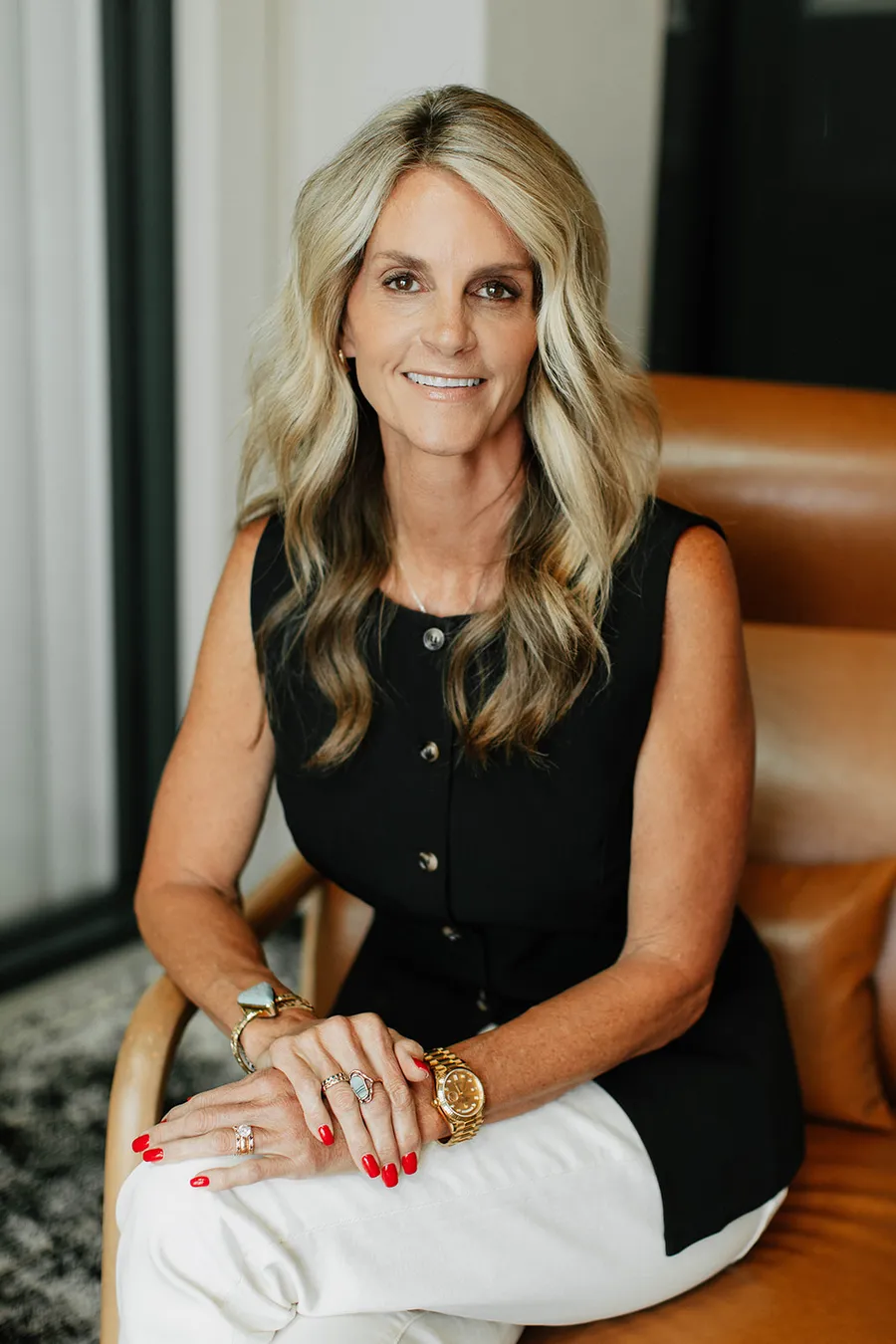
Women’s Role in Wealth Planning with Ginger Harris
with Ginger Harris
About this episode
When Ginger Harris was on her way to her father's cabin for Memorial Day weekend, she learned he had suffered a stroke. He died that weekend at 70, and her mother was left holding a set of decisions she had never been part of. The house was in his name. She had to go through probate to claim her own home. She had not even been checking the bank account.
In this episode of the YES! Women's Network Podcast, Michele Morley talks with Ginger Harris, a wealth advisor at Andina Family Offices, about what that experience taught her and what she now wants every woman to know about wealth planning. Ginger helps business owners and families navigate complex financial transitions through estate planning, tax strategies, and portfolio management. She is also a mother of six mostly grown children, and she speaks about money the way a friend would, not the way a brochure would.
How Ginger Harris Moved From Loss Into Finance
Ginger's path into finance started with a problem she could see clearly. Her mother needed help figuring out where the money was, and the family home five hours away was not selling. Ginger became a real estate agent so she could list it herself and walk her mother through the sale. At the same time, she was pursuing her MBA.
She was not chasing a career pivot. She was watching what happens when the financial side of a marriage lives entirely in one person's head. That gap became the work she does now.
What Every Woman Should Know Even If Her Spouse Handles the Money
Ginger says only about 40 percent of the women in her practice show up for the financial calls. Not because they are unwelcome, but because they have quietly opted out.
"You're gonna have, if your husband passes or if there's a divorce, suddenly you are the one responsible for all this too."
Her starting point is not complicated. Know where your accounts are. Attend the check-in meetings, even quarterly. Understand what your assets are and are not.
She is honest about why women disengage, because she did it herself. In many households the couple divides and conquers: one manages the kids and the home, the other manages the earning and the finances. Even when her husband was the main earner, Ginger says it did not feel like her money. It felt like his retirement, and she did not feel ownership of it. The terminology was unfamiliar, so the meetings felt boring. It changed when she started earning her own money and learning the language.
She also shared a friend's story that makes the stakes plain. This woman had raised the children, run the household, and served on nonprofit boards while her husband earned. When the marriage ended, his attorneys skills-tested her earning potential at roughly eleven dollars an hour and used that number in court. She had given her early earning years to building the family foundation, and she was glad she did. The shock was being told what that was worth.
How a Financial Advisor Helps Couples Who Want Different Things
Ginger described a client couple with real disagreement. The husband worked his whole life to build the pile and wants the family protected at all costs. The wife believes they should be stewards, giving to charity and lifting the community. Both positions are sincere.
"I'm a financial therapist. We help them dial down: how much do you need to live on per year? How much do you want to leave each child? So using facts instead of emotion helps them come to an agreement."
The method is simple and repeatable. Replace a values argument with specific numbers. What does a year of living actually cost? What percentage goes to children, what percentage goes to giving? Once the conversation has facts in it, the emotion has somewhere to land.
Why Family Culture Protects Wealth Better Than Money Does
Ginger pointed to a pattern found across cultures, known in the United States as shirt sleeves to shirt sleeves: wealth is often lost within three generations. The reason is rarely the investments. It is whether the next generation carries the knowledge, skills, and social and intellectual capital to manage what they inherit.
This, she says, is where women often have enormous influence. Money comes and goes, but the stories, sayings, traditions, and anchoring experiences shape who the children become. Her own mother used to tell her, "You don't smile because you're happy. You smile, then you're happy." Ginger remembers canning ten bushels of peaches with all her kids in the room, little ones helping with small jobs, and feeling time stand still.
Talk About Inheritance Before Someone Dies
Families with means often say the same thing: we do not want to entitle our children. Ginger's answer is structure and dialogue. Decide what you will contribute to and when. Some families use what they call a family bank, offering low-interest loans for a business or a first home with the expectation that the trust gets paid back. Others set a flat amount for a down payment.
She also raised the idea behind the book Die With Zero, giving children help when they actually need it rather than saving it all for the end. One woman in the story inherited in her fifties after years as a single mom working three jobs. She needed it at 25.
"Divide your assets, not your family."
When expectations are clear, there is less to fight over. Open dialogue beats letting children build assumptions.
What a Wealthy Life Actually Means
Ginger defines wealth as wellbeing. Enough to live comfortably and pay the bills, plus enough for health choices insurance does not cover, learning, and travel. The number is different for everyone, and anyone can be happy with a little. But constant worry about the next bill carries real stress.
Her greatest investment was the 17 to 20 years she spent at home with her children. And the thing her 16-year-old told her to say yes to more often was taking care of herself, because the kids are watching.
Action Steps
- Locate your accounts. Know where the money is, whose name the house is in, and what your assets are.
- Put four financial check-ins a year on the calendar and attend them with your spouse or advisor.
- Learn the terminology that loses you. Interest grows once the words make sense.
- Turn a values disagreement into a numbers conversation: annual living costs, amount per child, percentage for giving.
- Name one family tradition worth protecting this year and schedule it.
If one line from this conversation is worth acting on today, make it the simplest one: find out where your money is. That single step turns a future emergency into a manageable decision.
About the guest
Ginger Harris
As a Wealth Advisor at Andina Family Offices, Ginger Harris helps business owners and families navigate complex financial transitions by building clarity and confidence through personalized estate planning, tax strategies, and portfolio management. As a super connector, she's always looking for ways to add value, opening doors, cheering others on, or matching aligned interests. She lives in Highland, UT where she enjoys frequent mountain trail hikes, and spending time with her husband and six (mostly grown) children.
Read the full transcript
This automated transcript has been lightly formatted for readability and may contain errors.
Welcome to Yes Women’s Network podcast. We’re happy [00:01:00] to have you here with us today, and today we have a special guest, Ginger Harris. [00:01:05] She is a wealth advisor at Andina Family Offices, and she helps [00:01:10] business owners, families, and families navigate complex financial [00:01:15] transitions by building clarity and confidence through personalized estate planning, [00:01:20] tax strategies, and portfolio management. Michele Morely: As a super [00:01:25] connector, she’s always looking for ways to add value, opening doors, cheering others [00:01:30] on, and matching aligned interest. She lives in Highland, where she [00:01:35] enjoys frequent mountain trail hikes and spending time with her family and [00:01:40] her six mostly grown children.
Ginger Harris: Yep. Michele Morely: Great. Thank you for being with [00:01:45] us today. Thank you for having me. I appreciate that.
Yeah. Good. So how about you tell us a [00:01:50] little bit about how you got started in finance? Ginger Harris: Okay. [00:01:55] So about 13 years ago, my dad died suddenly.
We— He had [00:02:00] a cabin he would gather us all for Memorial Day weekend, and on the drive [00:02:05] down to the cabin, it’s about a five-hour drive, um, we heard that [00:02:10] he’d had a stroke. So when we got there, um, we’re- he was kind of passed [00:02:15] out most of the weekend in his chair and- Wow … Um, coming in and out of [00:02:20] consciousness. And, um, he had been, uh, sick for at least a [00:02:25] couple of weeks. He’d been on oxygen and things, but it was really sudden.
We weren’t [00:02:30] planning on his death. He had just barely turned 70, which is getting younger and [00:02:35] younger every year as we get older and older. Um, and he died that [00:02:40] weekend and kinda left my mom in a state of like, she hadn’t made [00:02:45] any decisions about finances and, and they lived in a very remote [00:02:50] canyon. And, um, she, she hadn’t [00:02:55] even checked her bank account kind of thing. He, he managed all of it.
And so the [00:03:00] house was in his name, and so she had to go through the probate [00:03:05] process to lay claim to her house and, um, just that process of, [00:03:10] um, figuring out where the money was. It— And I became a real estate [00:03:15] agent to help her sell the house ‘cause it wasn’t selling, um, through the [00:03:20] local sales lady. So I, living five hours away, you know, posted it up here and [00:03:25] helped her through that sales process. But in that time, I was also [00:03:30] pursuing my Master’s in Business Administration, MBA, and, [00:03:35] um, my children were growing up and, um- [00:03:40] I just had a interest in finance and getting this right, ‘cause it, I saw the [00:03:45] problem of not getting it right, you know, and how to help my mom through that process.
So [00:03:50] that’s my start. Michele Morely: That’s amazing. And that brings me to [00:03:55] the very question that I had for you, is what do you think [00:04:00] every woman should know about finances, even if someone else is handling the money? [00:04:05] Ginger Harris: Well, one thing is your bank account. You know, in our [00:04:10] financial wealth practice, I’m always surprised how little the [00:04:15] women, probably only 40% of the women even show up for the calls.
And like, “Don’t you [00:04:20] wanna hear about your millions of dollars?” Right. “Where they are or what’s going on?” “No, no, no.” You know, like.
[00:04:25] Michele Morely: Mm-hmm. Ginger Harris: And okay, well, um, you’re gonna have, if your husband passes [00:04:30] or if there’s a divorce, you know, suddenly you are the one responsible for all this too. [00:04:35] So I guess knowing where things are, just having a check-in call of four [00:04:40] times a year, showing up for those meetings with your spouse to know what [00:04:45] Um, your assets are or aren’t, right? Michele Morely: So why do you think women [00:04:50] pull back? Why do you think there is that lack of, um, [00:04:55] assertiveness to be a part of the financial decisions like that?
Ginger Harris: I think in [00:05:00] our community, um, oftentimes the mo- the mom has stayed [00:05:05] home with the kids and kind of divide and conquer. Like, I’ve got the kids, I’ve got the house. [00:05:10] Uh, you’ve got the earning. Uh, you do the finances. And so [00:05:15] even in me personally, when my husband was, um, the [00:05:20] main earner, it didn’t feel like it was my money anyway.
Even though it was our money, it [00:05:25] was like his retirement, even though I was part of it, but I didn’t really feel [00:05:30] like ownership of it. Okay. And it’s boring. It— these term- the [00:05:35] terminology is, um, different so you don’t understand [00:05:40] the words, and so it’s just like, oh, another boring meeting. So I remember being [00:05:45] in that same, like I, I’ll make it or I might not make it to our [00:05:50] financial advisor’s meeting.
But when I, I guess when I started earning my own money [00:05:55] and, um, learning the terminology, then it became more interesting. Michele Morely: [00:06:00] Okay. Okay, do you think too, though, that women look [00:06:05] at that when you consider their role, you know, that you’re t- traditionally [00:06:10] anyway, um, do you think that by [00:06:15] not being as involved is part of the, part of the reason is that there can be [00:06:20] contention? Ginger Harris: Hmm. Michele Morely: Do you think there’s, that that’s part of it, is that they don’t [00:06:25] want there to be contention about what the finances are and who says where the money [00:06:30] goes or not?
Does that make sense? Ginger Harris: Yeah. I don’t, I don’t see that- Oh, okay … [00:06:35] in my, uh, practice as much as, um, just kind of being [00:06:40] detached and dividing and conquer in their family- Okay … Management roles.
[00:06:45] But I see A friend of mine, um, th- [00:06:50] they were a wealthy family, and she was with the kids 24/7 [00:06:55] managing their lives, managing the household. He was out earning lots of money, [00:07:00] and she knew of investments that he would be making. Um, he [00:07:05] became addicted to substances and other things, and they ended up [00:07:10] divorcing. Michele Morely: Mm-hmm. Ginger Harris: And she…
He skills tested her, like [00:07:15] what her monetary value could bring in compared to his, and I think it, this was, uh, [00:07:20] about five years ago, $11 an hour. And so- Okay … He was trying to [00:07:25] tell the judge, “She’s worth $11 an hour, so why am I paying her [00:07:30] 20,000 a month?” Or, you know, whatever, whatever it is. And, um, [00:07:35] she knew about the investments, and she was on some nonprofit boards and, [00:07:40] um, managing the household.
But it, it was detached from [00:07:45] the earning portion, and, um, that obviously wasn’t right or fair. And [00:07:50] she, she got enough to live off in alimony and things. [00:07:55] Um, but she had given up her whole earning, early earning years to build a foundation [00:08:00] to, to help the family, and she’s happy she did. But it was just a [00:08:05] shock that, um, say 45 or 50 years old, now you have to go out [00:08:10] and make money again at $11 an hour, you know? Michele Morely: Right.
And they [00:08:15] don’t realize, I mean, like you’re saying, we’re building a family, we’re building a foundation, we’re [00:08:20] supporting, right- Mm-hmm … The, our spouse or partner- Mm-hmm … As they provide. Mm-hmm. [00:08:25] And so that’s an important role, but it’s often dismissed as far as [00:08:30] value, and that’s what we wanna avoid.
So let me, how about [00:08:35] this. When you talk to people about their relationship with money [00:08:40] as well as their relationships- Ginger Harris: Mm-hmm … Michele Morely: what, what do [00:08:45] you see being, um- instrumental [00:08:50] in their relationship together as they build finance. [00:08:55] Wealth, I’m Ginger Harris: thinking of one client couple in [00:09:00] particular. Um, they have enough means, right?
They have generational wealth, but she [00:09:05] wants to do charity and f- you know, fulfilling things with the money. [00:09:10] He wants to make sure the family is protected at all costs. And he’s worked so hard [00:09:15] his whole life, you know, worked his guts out to earn this money, given up his [00:09:20] life to earn this money. Um, so he is very protective of [00:09:25] the pile of Michele Morely: money. And what he has.
Ginger Harris: But she feels we should be sharing and stewards [00:09:30] and lifting the community and blessing others. So, you know, they have to come [00:09:35] to terms as a couple, um, to decide what, what percentage [00:09:40] could go to charity and lifting others, and what percentage would go to the children. And [00:09:45] it’s just a discussion and, and You have [00:09:50] to have some counseling in there too, right? Michele Morely: Yeah. So do you find yourself having to kind of [00:09:55] mediate in those kind of situations, and how do you advise those couples [00:10:00] in that?
Ginger Harris: Sometimes I have sister-in-laws, three sister-in-laws, who are [00:10:05] mental health therapists. Mm-hmm. I said, “I’m a financial therapist.” Oh, okay. So, [00:10:10] so ‘cause, yes, you have to— You can say, “Well, here’s what other people have done,” or, “This is [00:10:15] how this could play out.”
Um, and we help them dial down, “Well, how much do you [00:10:20] need to live on per year? How much do you want to leave each child? You know, what is [00:10:25] your, your goal?” So using facts instead of, I guess, emotion, [00:10:30] and, um, helps them come to an agreement. Michele Morely: What is your role as an [00:10:35] advisor then when you’re in family situation, in building wealth [00:10:40] and relationship there?
Ginger Harris: We try not to get involved as, uh- [00:10:45] Okay too much in the relationship side, you know, and just be the, the [00:10:50] money side, the financial advisor. But I can tell you from, um, there’s [00:10:55] lots of books written about generational wealth or family wealth, and there’s a saying [00:11:00] that’s throughout all, um, societies, and it’s called, in the US, shirt [00:11:05] sleeves to shirt sleeves, and it basically means that in three generations you [00:11:10] lose your wealth. So the first, um, person in England, it’s a merchant fa- [00:11:15] father, and, and then the son is a lord or a nobleman. But then the third [00:11:20] generation, they’re back to being beggars because, um, more than money [00:11:25] is the, um, the human side of do they have the [00:11:30] knowledge?
Do they have the skills, the social capital, human capital, [00:11:35] intellectual capital to manage the estate or manage, [00:11:40] continue with the business? So I talk a lot about, um, the [00:11:45] family culture. Michele Morely: Mm-hmm. Ginger Harris: Um, the stories. We all have stories from [00:11:50] our Or families that kind of define the culture- Sure …
Traditions- [00:11:55] That influence … In the family. Michele Morely: Yeah. Ginger Harris: And this is where women, um, could be really intentional [00:12:00] because money comes and goes, right? But if you can, you have the power to [00:12:05] influence your children, having these anchoring events, the, those sayings.
You, you [00:12:10] can think of words or your mom would say to you. My mom would always say, “You [00:12:15] don’t smile because you’re happy. You smile, then you’re happy.” You know, and I can think of- [00:12:20] Yeah … Little sayings in the back of my head.
But those sayings and the traditions and the [00:12:25] family stories and the experience that mothers and wives are really [00:12:30] great at creating a experience, like the family dinner or the Christmas traditions. Mm-hmm. [00:12:35] Um, those are the anchoring moments that, that build the [00:12:40] family maybe even more than wealth. Michele Morely: I love that. And I …
That, and it [00:12:45] creates a security though, doesn’t it? Mm-hmm. On what a family dynamic can be, [00:12:50] and it, it has an impact on the lives of the children- Yeah … And how [00:12:55] they go forward. Ginger Harris: Mm-hmm.
Michele Morely: Um, I love that. That’s great. And I don’t even, [00:13:00] I guess I didn’t even think of what that would be like as far as a financial advisor [00:13:05] in that role. Ginger Harris: Mm-hmm. Michele Morely: Um, but I love that.
Ginger Harris: Yeah. Like, [00:13:10] you can earn all the money in the world, but if you don’t have these anchoring, [00:13:15] um, educational or, um, your family culture right, [00:13:20] the children will lose the money, right? Or become reliant on the [00:13:25] money or become entitled. Mm-hmm. So, you know, it’s, that’s [00:13:30] a worse cancer than real cancer, right?
If- Yeah … If they don’t have a good [00:13:35] foundation as people. Michele Morely: So did that also play into, um, the [00:13:40] work ethic that kid can have or that family as, [00:13:45] you know, traditionally, if there is a work ethic or if there is, um, [00:13:50] what, consistent effort- Mm-hmm to develop and to- [00:13:55] Well. Ginger Harris: Right. So it’s interesting that probably in the [00:14:00] majority of all family wealth conversations, people with [00:14:05] means like, “We don’t wanna screw up our children.
We don’t want to entitle our children. We don’t [00:14:10] want to have them reliant. We want them to, to feel the, the [00:14:15] happiness that comes from hard work.” Michele Morely: Mm-hmm. Ginger Harris: And so how can, how can we structure this right?
[00:14:20] And even your will or trust, or what age should we, um, allow them to [00:14:25] have some inheritance or for what items? For education, for cars, for [00:14:30] starting a business, for, um, buying a- their first home, you know. So these are [00:14:35] discussions that people worry about is- Mm-hmm infecting their children [00:14:40] with affluenza, they call it. So it is a topic. Michele Morely: Is so [00:14:45] different when you’re raising your kids in the home, and then when they [00:14:50] leave, and how much to say, how much to assist in.
Mm-hmm. Um, [00:14:55] I, I see that now more than ever- Mm-hmm … As a m- as a mother [00:15:00] of grown children, and they’re at that phase of, okay, so what, you know, home [00:15:05] buying or, uh, and how much do you So when you [00:15:10] advise, do you say how much? I mean, you hear it all different ways. [00:15:15] Ginger Harris: Mm-hmm.
Michele Morely: You shouldn’t give this much, or you should give this much, or you can, or too much [00:15:20] is … Uh, what, what kind of advice do you give there? Ginger Harris: Well, it’s so, [00:15:25] um, relative and unique to each person’s, uh, experience, right? [00:15:30] Like- Okay … Um, someone asked me the other day, “What is the [00:15:35] dollar amount that means,” um He s- he was using some [00:15:40] swear words, but the dollar amount where you can just say, “Okay, world, I’m done working, [00:15:45] and I’m gonna do whatever I want.”
Mm-hmm. You know? What’s that dollar amount? But it’s different [00:15:50] for everybody, right? For, for me, I can be happy with my house.
I know [00:15:55] what I can live off. I don’t need, um, expensive things. But each person is totally [00:16:00] different. So that conversation is we can only say, “Well, this is what other [00:16:05] people have done,” or, “What do you s- envision for your own family? But do you want them to be [00:16:10] waiting around till you die?”
You know, like- Right … Like- Is, do you want the [00:16:15] relationship to always be you pay for every, every event that they show up [00:16:20] to? You know, you have to set the, the standard early, you know, what things [00:16:25] that you’ll contribute to and when. Um, but a open dialogue is better than [00:16:30] make, having the children make a bunch of assumptions. And, um, even [00:16:35] I’ve, I’ve heard the children, “How, how rich are, you know, what’s our net worth?”
Or, you know, but it’s [00:16:40] the parents correct them and say, “This, this is my money and, and, and [00:16:45] you have your money.” You know? But another theory is there’s a, a book [00:16:50] out there called Die With Zero, and his idea is to live your [00:16:55] whole life like you and give your children money when they [00:17:00] need it instead of wait to the end. And it, the story, one [00:17:05] story is a woman in her 50s inherited a lot of money from her parents, and [00:17:10] she had been a single mom working three jobs. And she’s like, “I don’t need the money [00:17:15] now.
Like, I needed it when I was 25 by working three jobs and my [00:17:20] kids didn’t have shoes.” You know? So you have to time it too. You don’t need to [00:17:25] save it all to the end. Um, there’s this interesting story of this lady [00:17:30] named Hattie Green, and she was the richest woman in Wall Street in the [00:17:35] early 1900s.
And she had worked in her family for her dad, um, [00:17:40] doing the bookkeeping from a early age, 13 years old, so he was teaching this skill to [00:17:45] her. Well, she had, uh, two children and, um, [00:17:50] this story goes that she took her son, he had a [00:17:55] broken leg or something, to the free hospitals ‘cause she was such a [00:18:00] tightwad, you know. Mm-hmm. Um, and he had a limp the rest of his life, you know, whether that’s true [00:18:05] or not. But she did control the two children that she had, who they can marry and, [00:18:10] uh, what they can do.
And when she passed away, [00:18:15] um Neither— She didn’t have any grandchildren ‘cause she had controlled— [00:18:20] Her son hadn’t even married, and he ended up marrying a prostitute, um, his lover, you know, [00:18:25] after- Michele Morely: Okay Ginger Harris: the, the m- matriarch passed away and, and he died [00:18:30] early and, you know, the daughter was the last one. I think that, you know, back then it was like [00:18:35] $80 million was given to charity. There was no family to pass it on to. Michele Morely: Okay. Ginger Harris: Um, here [00:18:40] she’s saved and, um, made decisions based on growing this pot of [00:18:45] money, but it didn’t do any good for her family or, [00:18:50] uh, she didn’t have any progenitors, right?
So. Michele Morely: So do you think it’s important to [00:18:55] share with your children what financial inheritance they [00:19:00] may get? Ginger Harris: Oh, maybe, maybe having them access— A [00:19:05] lot of people do it. They call it the family bank, and they give low-interest loans. [00:19:10] So if your children want to start a business, “Come invest in this business with me.”
Got it. [00:19:15] Okay. Now, here’s a lo- You can’t— They probably couldn’t get a loan from a bank. Investors probably [00:19:20] wouldn’t trust them on their first, um, try. Mm-hmm.
But the family could give a [00:19:25] low-interest loan, but the expectation is for them to pay the family trust [00:19:30] back, right? So that’s one way families do it. Um, or there’s a set [00:19:35] amount, you know, $100,000 for your first house kind of thing. Um, [00:19:40] so it’s not a percentage of the house, but it’s a flat number. [00:19:45] But if the younger children might, you know, inflation happens, so maybe, [00:19:50] uh, they would need more for a down payment.
So I don’t know. It’s just, I— every [00:19:55] single situation is different. Is different. Yeah. Michele Morely: Sure.
Of course. And do you think [00:20:00] that when— You know, we talk about f- family, having family council. [00:20:05] Ginger Harris: Mm-hmm. Michele Morely: And do you think it’s important or even necessary for kids to know [00:20:10] the earnings of the household? Of the fam- Ginger Harris: Not as a [00:20:15] five-year-old or a 12-year-old.
Sure. They might think like $50,000 [00:20:20] is a lot of money. Whoa. Yeah. So, you know, I don’t know if it’s the number is [00:20:25] as important as, um— ‘cause you are [00:20:30] mapping how, like that— whatever you guys do in your, uh, [00:20:35] personal household creates a money map for your children and how they see money.
[00:20:40] And even you and I experienced like, uh, we were a [00:20:45] really frugal family, and I noticed that my, um, parents were in debt. They had bought some [00:20:50] bu- a bunch of farmland or something, and it gave me this really [00:20:55] frugalness. Um, and so, I don’t know, sometimes shopping at [00:21:00] thrift stores when it wasn’t cool. You know, like I, I raised my kids in a very frugal [00:21:05] environment. Um- Good …
But, uh, so now they are frugal [00:21:10] people too. So, and maybe- You know, we have to [00:21:15] consider how we think about money and it, and give up some of the beliefs. [00:21:20] Like, everyone needs to win in the s- situation. I don’t need to be the cheapest, pay the cheapest [00:21:25] amount for whatever it is. So just have to, I guess, [00:21:30] grow with your wealth.
But one thing we always say is divide your assets, not your family. [00:21:35] So as, as … If the kids know what’s expected at [00:21:40] death, there’s no fight over it, right? A lot of people have expectation, like, “I want that [00:21:45] vase,” or, “I want something.” Um, but a lot of families [00:21:50] become, uh, divided after the death, which is kind of the worst thing [00:21:55] possible, right?
Yeah. Who cares about the money? You want the family to be united. Michele Morely: Yeah. I’ve [00:22:00] heard in, in families where they have told their parents, “Do not [00:22:05] leave money for us.”
Mm-hmm. Because they’re afraid of that situation where the [00:22:10] money can split, you know? Mm-hmm. Cause that relationship to [00:22:15] break and because it’s all about the money. Ginger Harris: Mm-hmm.
Michele Morely: So what does a wealthy [00:22:20] life mean to you beyond Ginger Harris: money? Um, I’ve [00:22:25] heard this term called wealth is wellbeing, right? Mm-hmm. [00:22:30] So you have enough to live comfortably, pay [00:22:35] your bills, um, but also have enough to, for health. You know, a lot of [00:22:40] our, um, alternative health choices are not covered by insurance, [00:22:45] right?
Vitamins, for example, or, uh, exercise, um, [00:22:50] travel. These things that add to, to our health. Mm-hmm. But they’re not, um- [00:22:55] They’re not part of— They’re not gonna be paid by someone else, right? [00:23:00] Right.
So if you have enough for your learning, you know, [00:23:05] educational goals or travel, um, and it’s different for [00:23:10] everybody. Some people are happy staying in a three-star hotel, and some people are not, so. Mm-hmm. Some [00:23:15] people are happy camping in the woods, and some people want big trips, right? So, [00:23:20] um, you set your own level.
What’s relative to [00:23:25] you is your happiness and your well-being. But anyone can [00:23:30] be happy with a little, right? For sure. But if you’re always worried about, [00:23:35] uh, where the next bill will come from, that’s a lot of stress and anxiety, right? How are you gonna pay for [00:23:40] food or clothing?
So it’s relative. Michele Morely: Yeah, for [00:23:45] sure. So what have you learned about relationships that have been more valuable [00:23:50] than anything that you’ve invested in? Ginger Harris: One thing, you know, I was a stay-at-home mom [00:23:55] for at least 17 or 20 years of my [00:24:00] adult life. Michele Morely: Mm-hmm.
Ginger Harris: And those were probably my most, um, I, I [00:24:05] was— had the most energy, and I was young and beautiful, [00:24:10] and, uh, but I gave those years to my children, right? And I [00:24:15] was there changing diapers, driving them to practices, um, [00:24:20] making sure the little kids didn’t drown while the other kids were swimming, you know. Right. [00:24:25] All-day swim meets, you know. So those, those times, I think, are [00:24:30] my greatest investment were in those children and in those- Yeah …
Relationships. And [00:24:35] as they’re mostly adults now, I have a 16-year-old still at home, [00:24:40] it’s so fun to see how they are doing life, you know, [00:24:45] adulting and- Sure … And even supporting each other. So, um, [00:24:50] that relationship, that time I spent with them is, is the greatest investment. I, [00:24:55] I could have been shuffling papers at some job, but, um, that is [00:25:00] just a special time where I didn’t have to worry about making money.
I could just worry about [00:25:05] the experience over the course of the day or of the summer. Um, [00:25:10] we had a lot of failed attempt at job charts and summer routines, as you [00:25:15] probably did too. Yeah. But it was a, a fun time and, um, to [00:25:20] see them You know, grown up and doing well and thriving. It was a great investment.
[00:25:25] Michele Morely: It was a couple months ago, we, all of our family had gotten together, and as we were all [00:25:30] around this table at a, you know, at a restaurant, and all of my kids were there, and I [00:25:35] had the spouses were there, the grandkids, and I looked around and I got choked up. [00:25:40] Ginger Harris: Mm-hmm. Michele Morely: And I looked to my husband and I said, “This is what it’s about.” Ginger Harris: [00:25:45] Mm-hmm. Michele Morely: And so I know what you’re talking about.
Yeah. I mean, that is such a great way to put [00:25:50] that. It is our greatest- Yeah … Investment, and those relationships truly [00:25:55] matter. Right.
And it carries over- Mm-hmm … Into different aspects of their [00:26:00] lives when they have the stability and the, and feel comfortable coming to you to- [00:26:05] Ginger Harris: Right Michele Morely: have those tough conversations, whether it’s about money or, or even their [00:26:10] relationship. Ginger Harris: Right. I call those times, like, kind of precious family [00:26:15] moments. Mm-hmm.
And we’ve had a few- Okay … In our life, and tho- those are those anchoring events- Mm … Like [00:26:20] that, that you’re like, “Oh, it was so worth it.” Mm. I remember canning [00:26:25] peaches.
We had like 10 bushels of peaches or something, and my kids were all there, [00:26:30] and, you know, the little kids were doing some part, and some people were [00:26:35] skinning, some people were cutting, but everyone was in there. And like you, it was like time stood still, and [00:26:40] like, this is a special family moment. And, and you could feel those. [00:26:45] And trying, as parents, we should be trying to create more of those ‘cause that’s what the [00:26:50] kids will draw back into and feel our love and support too. [00:26:55] Michele Morely: So considering that, what is something you would [00:27:00] say to women and mothers that they need to say yes to more often?
[00:27:05] Ginger Harris: Well, what my 16-year-old told me I need to say yes to more [00:27:10] often is taking care of myself or doing things for myself, ‘cause they’re watching [00:27:15] and they see the sacrifice that we women make for our [00:27:20] families. And, and I thought that was pretty mature of her to say, “Mom, you can [00:27:25] go on that trip to Europe.” I, I just got back from a trip to France. Like, “It’s okay. I’ll be [00:27:30] fine.
You know, d- dad’ll be here, and-” Yeah …” Um, you should stop living your life [00:27:35] for, for us.” And that, that’s hard to do, but they’re, they’re watching and [00:27:40] seeing and probably appreciating our sacrifice, but to being intentional, attention, attentive, intentional about[00:27:45] the, our choices- Michele Morely: Yeah … Ginger Harris: I [00:27:50] guess, ‘cause they’re watching. Michele Morely: I love that.
Yep, I [00:27:55] think that those are- Such valuable in- such valuable [00:28:00] insight what you’ve shared with us today. I appreciate your time and, and being with us. [00:28:05] And, um, it carries over into all aspects of [00:28:10] life, uh, you know, our finances, the wealth that we’ve acquired or [00:28:15] trying to acquire. But primarily the focus is [00:28:20] truly our relationships and our family and the dynamic that is there [00:28:25] in creating that. So thank you for being with us.
Yeah. Thanks for having me. It’s been fun. [00:28:30] Ginger Harris: You Michele Morely: bet. So thank you for being with us on Yes!
Women’s Network, [00:28:35] and we’ll see you next time [00:28:40] [00:28:45] [00:28:50] [00:28:55] [00:29:00]